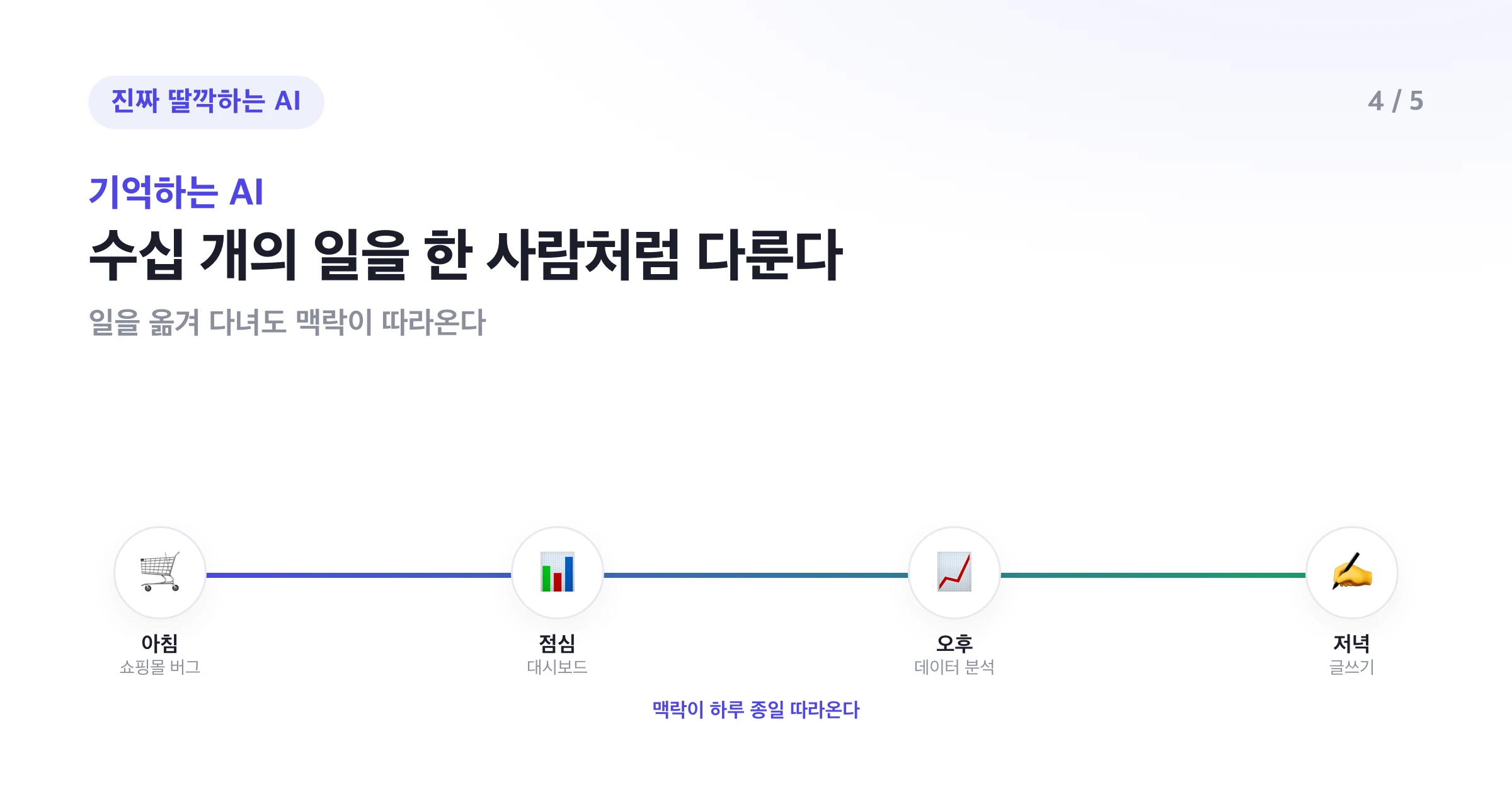
AI That Remembers (4) — Handling Dozens of Tasks Like a Single Person
If the first three installments covered concepts and methods, this one is about practice. Let's follow a single day in which someone moves back and forth between completely different kinds of work, and see how well-built memory actually functions in the middle of it. The projects that appear here are illustrative examples.
A Day Without Memory
First, picture a day from back when there was no memory device.
In the morning, you turn on the AI to fix a payment bug in your online store. But first you have to explain everything: that your payments run through an external PG, that retries are capped at three, that refunds require approval. Only after all of that has been said does the actual work begin.
Around lunchtime you switch to planning an internal dashboard. You open a new window. The AI knows nothing of this morning's context. It doesn't know anything about you either. You have to explain the general rules to the AI engine all over again: answer in formal speech, lead with the conclusion, don't repeat the mistake it was called out for last time.
In the evening you write a blog post. Another new window, another blank start. You repeat the same explanations three, four times a day. You end up more exhausted by the preparation than by the work itself.
A Day With Memory
Now spend that same day with a memory device at your side.
In the morning you bring up the store bug. All you say is, "the payment keeps failing." The AI recognizes the payment-related memory from its index. The three-retry rule and the refund approval process come along automatically. You skip the background explanation and go straight into the bug.
At lunch you move to the dashboard. The payment memory has nothing to do with this task, so it doesn't follow you. Instead, the dashboard project's goals and current status are pulled up. And memories about you yourself — formal speech, leading with conclusions, mistakes not to repeat — stay with you no matter what task you're doing. That's because they're memories about you, not memories tied to any particular job.
In the evening you write. This time, memories of your writing preferences are pulled up: what tone you use, which expressions you dislike. Instead of explaining it all again, you go straight into focusing on what you're writing today.
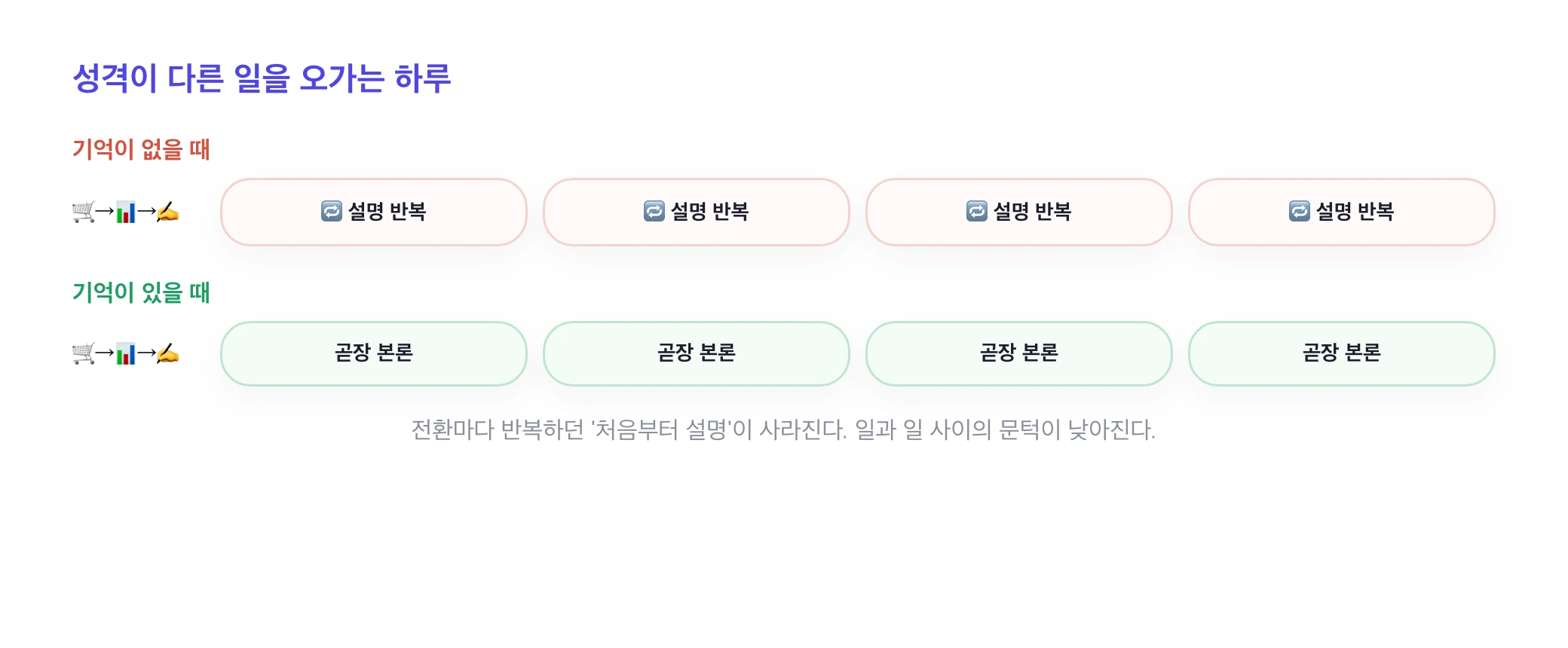
The Difference Is That Repeated Explanation Disappears
The decisive difference between the two days isn't the quality of the output — it's the friction it takes to get there. With memory, the background explanation you used to repeat at every switch disappears entirely. The threshold between tasks drops. Even moving across five different jobs in a day doesn't mean five fresh starts of explanation. You simply begin with, "shall we pick up where we left off on that project?"
Why It Gets Better the More You Use It
There's one more effect here that grows over time. Once memory is built up, it stays. Note down once that a certain mistake shouldn't be repeated today, and it's avoided tomorrow and the day after. You never have to make the same correction twice.
That's why this approach gets better the more you use it. Small daily notes earn interest, and that interest makes the next day's work a little smoother each time. At first, writing memories down feels like a chore, but after a few weeks it feels like you've gained a colleague who understands you without needing explanations.
The next installment covers the dark side of this excellent tool. Memory that's only accumulated and never managed eventually turns from an asset into a liability.