How to Repeat Small Wins (3) — Big Success Is the Sum of Small Successes
The shorter someone's career, the more they tend to crave one big swing — a single spectacular achievement that earns instant recognition, a home run. It's an understandable impulse, but most big successes don't arrive that way. More often than not, a big success is built from a pile of small ones. When someone succeeds big at a young age, it's usually because they'd been diligently stacking up wins since even younger.
The Compounding Power of 1% a Day
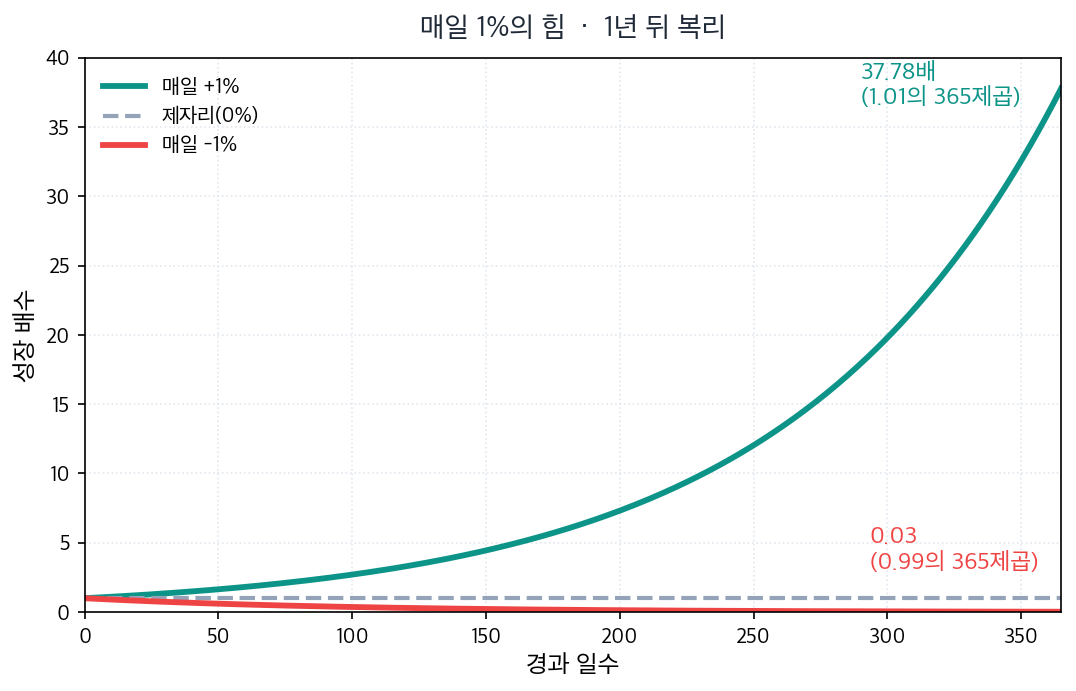
In Atomic Habits, James Clear ran the numbers: improve by 1% every day and after a year you're 37.78 times better (1.01 to the power of 365), but decline by 1% every day and after a year you're down to 0.03 (0.99 to the power of 365) — essentially zero. The difference on any given day is negligible, but repeated over time it compounds into a chasm.
Sports and Software Say the Same Thing
Dave Brailsford, who led the British cycling team, championed what he called the "aggregation of marginal gains" — the idea of improving every single element by just 1%. Before he took over, Britain had won only one Olympic cycling gold medal in 76 years. Under his leadership, the team swept 7 of the 10 track cycling gold medals at Beijing 2008 and repeated the feat in London 2012. Team Sky (effectively the British cycling team of that era) went on to dominate the Tour de France throughout the 2010s.
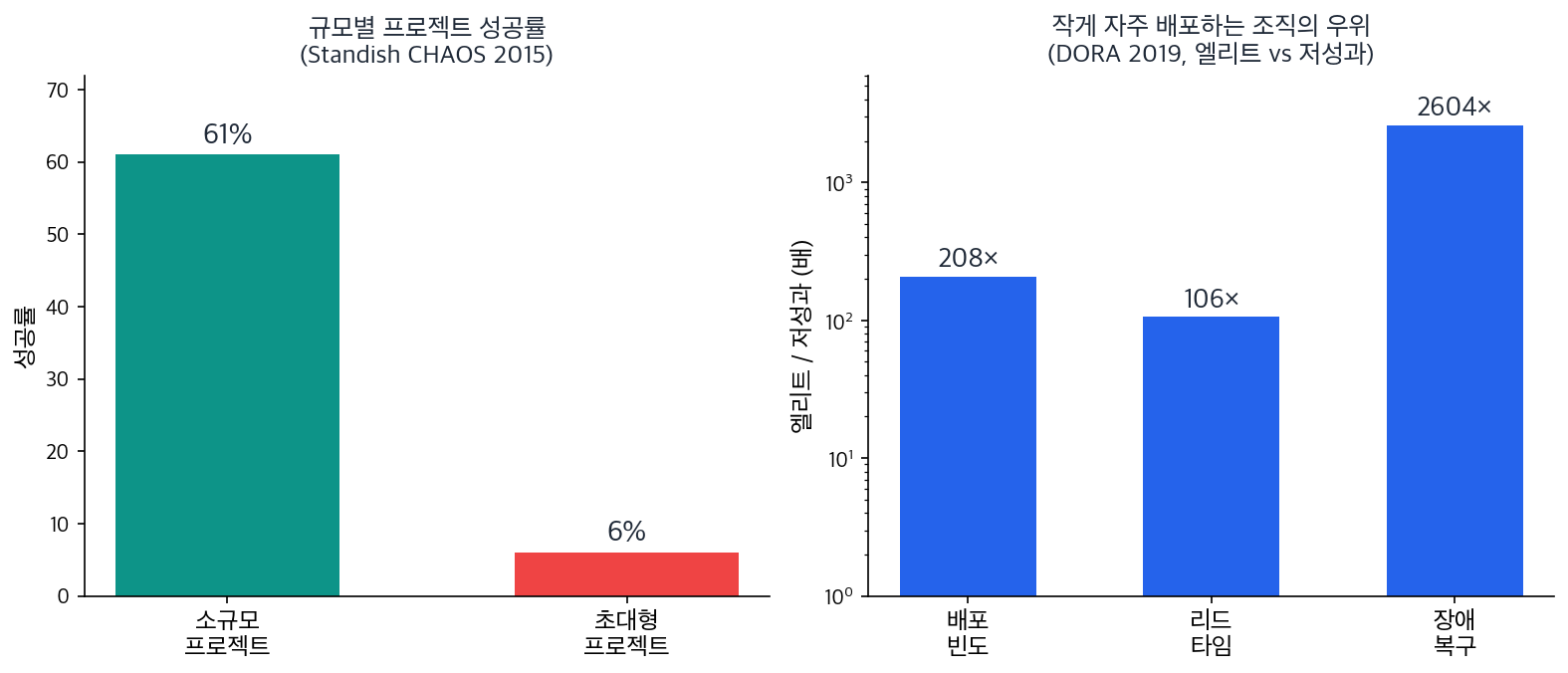
Data from the software industry points in the same direction. According to Google's DORA research team's 2019 State of DevOps report, "elite" organizations that deploy small and often had 208 times higher deployment frequency than low performers, 106 times faster lead times, 2,604 times faster recovery from incidents, and a change failure rate one-seventh as high. The Standish Group's 2015 CHAOS report found that small projects succeeded 61% of the time, while mega-projects succeeded only 6% of the time. Trying to go big in one shot actually fails more often.
How to Get a Hit Every Day
The same holds true from a motivational standpoint. A research team at Harvard Business School led by Professor Teresa Amabile analyzed roughly 12,000 work diary entries from 238 employees across seven companies and found that what most boosts daily emotion and motivation is "small progress on meaningful work." It isn't some grand reward but today's small step forward that gets you back to your desk tomorrow.
So what junior professionals really need to learn isn't how to hit a home run — it's how to get a hit every day. Get enough hits and the runs take care of themselves. The harder you chase big success, the further it recedes; the more you repeat small successes, the closer it gets.