oosioo
Read in English
I open my idea notebook to a random page and lay that day's thoughts on the line I find there. Read in order →
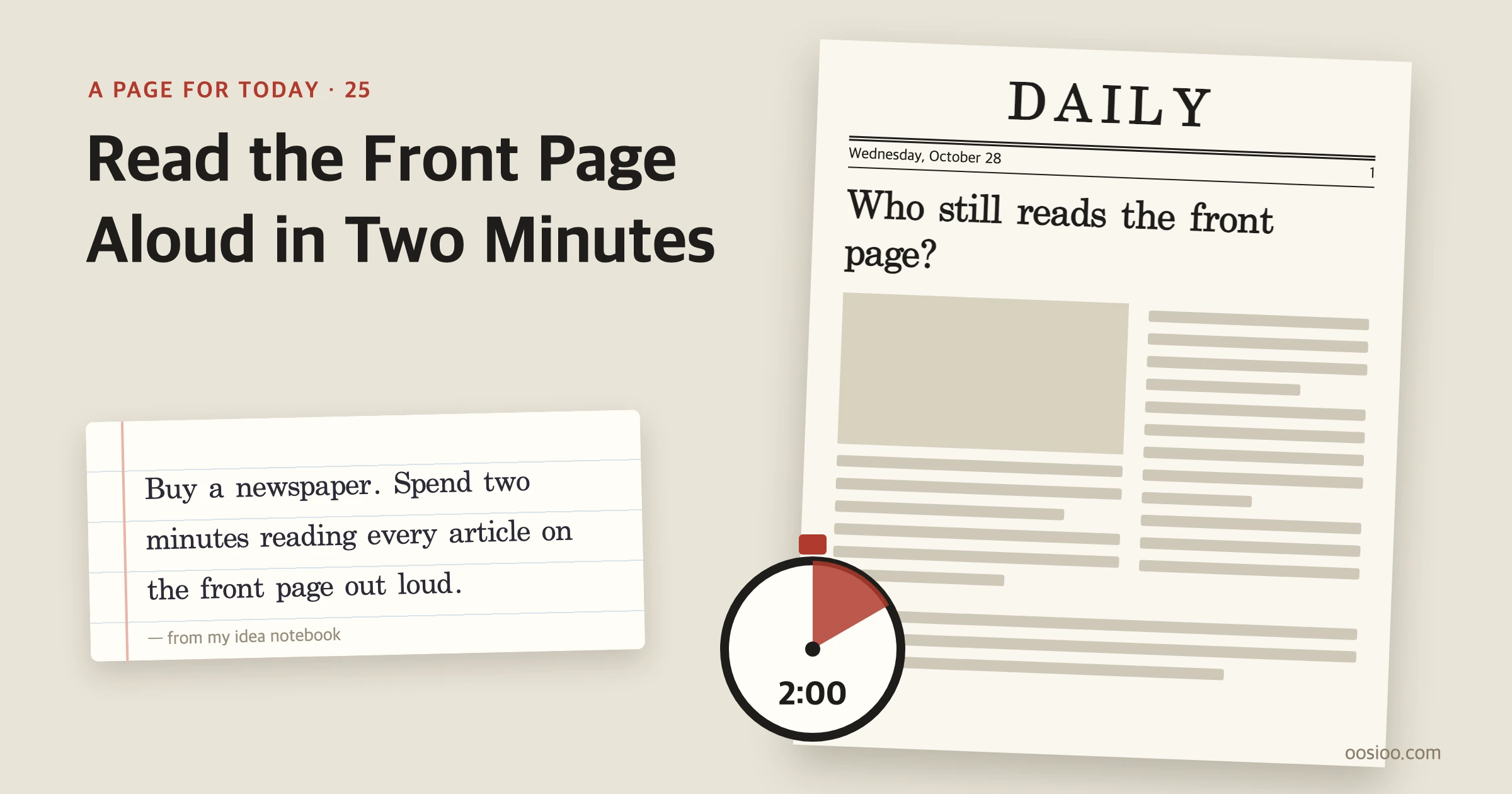
Read the Front Page Aloud in Two Minutes
My notebook said: buy a newspaper and spend two minutes reading every article on the front page out loud. The last time I opened a newspaper was in the waiting room of a vehicle inspection center. In Korea the share who read a print paper fell from 85% in 1996 to 8.4% in 2025, and news moved to portals and then to YouTube. I look case by case at how the press changed, from a circulation-inflation scandal and shrinking newsrooms to machine-written articles, follow how newspaper-based teaching and essay-exam prep gave way to media literacy education, and explain why reading aloud sticks in memory. A playground lets you read a fictional front page aloud for two minutes. The twenty-fifth piece in A Page for Today.
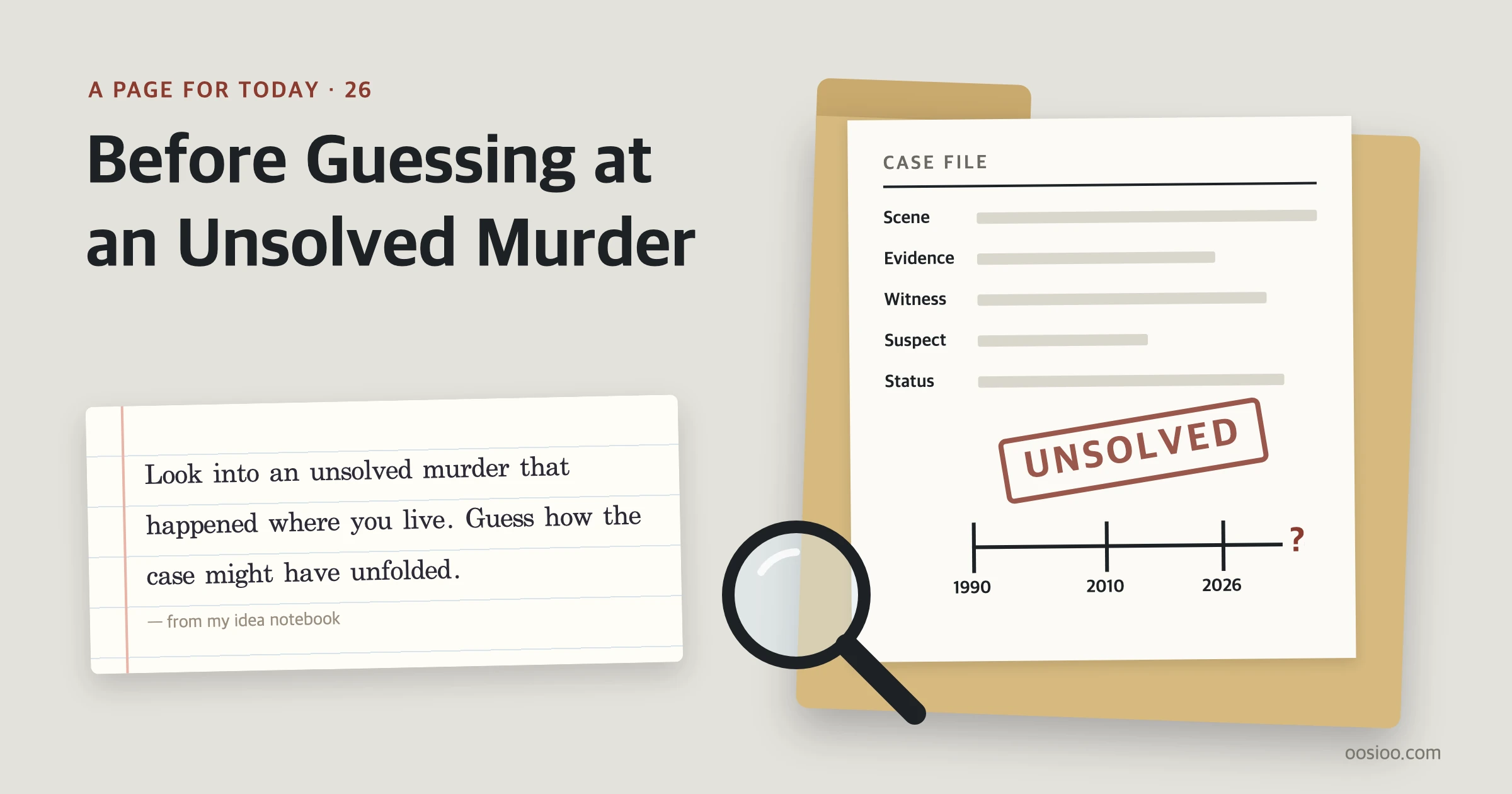
Before Guessing at an Unsolved Murder
My notebook said: look into an unsolved murder where you live and guess how it unfolded. Speculating about a real case can wound victims' families all over again, so instead of guessing I followed the numbers, the timelines and the technology. Why 86% of Korea's 274 unsolved murders since 1998 date from 2000–2008, a study showing half of solved cases are solved within a week, cases cracked twenty years on by DNA and fingerprints, and a falsified forensic report that sent an innocent man to prison for nearly twenty years. I also weigh what digital forensics, CCTV and AI monitoring, genetic genealogy and face recognition add and what they cost, with an interactive fictional case that shows which evidence time erases and technology revives. The twenty-sixth piece in A Page for Today.
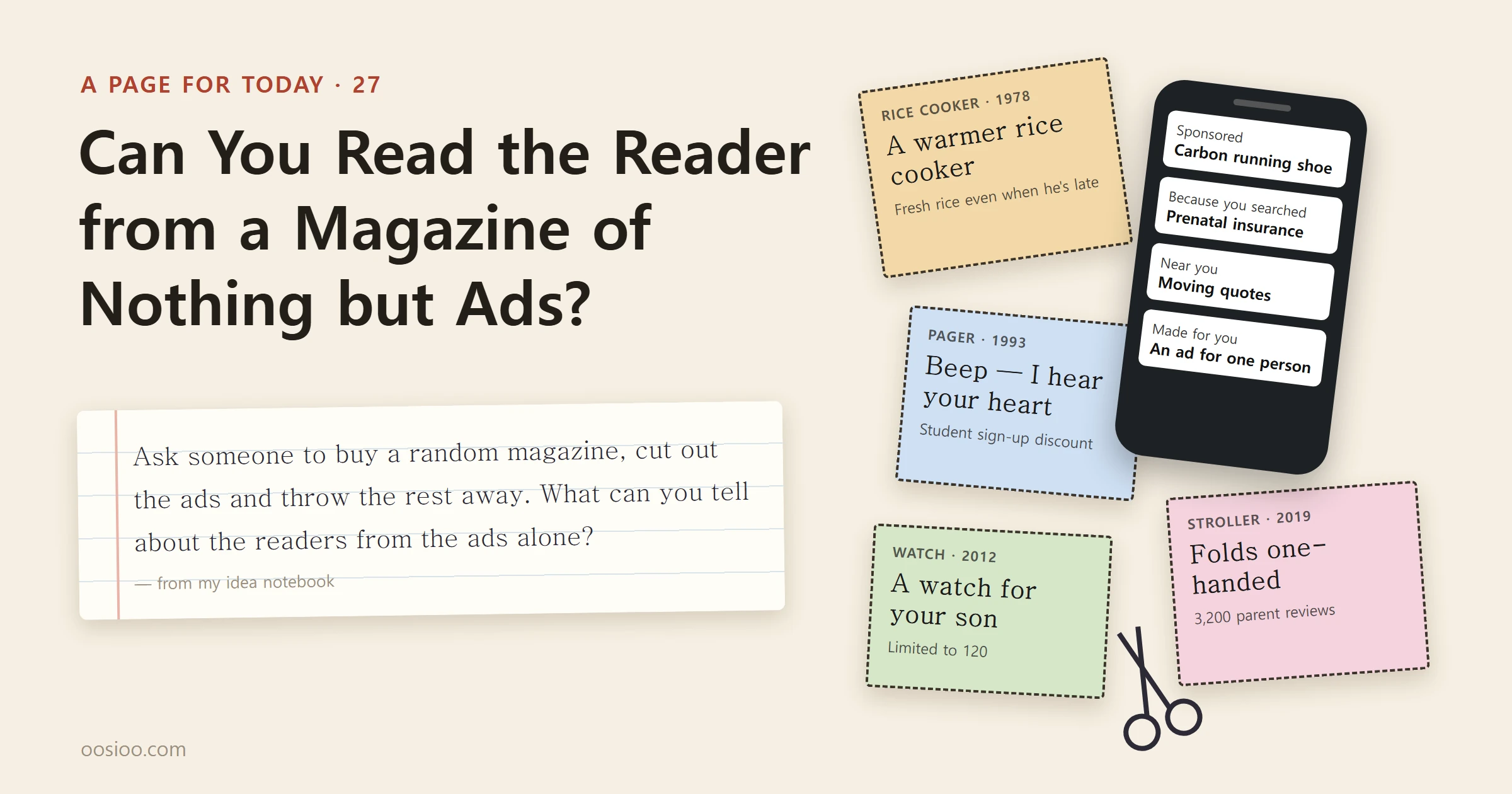
Can You Read the Reader from a Magazine of Nothing but Ads?
My notebook said: ask someone to buy a random magazine, cut out the ads and throw the rest away — what can you tell about the readers from the ads alone? Starting from Pompeii's election notices and a Song-dynasty needle-shop printing plate, I follow how advertising came to know its audience: the 1893 ten-cent magazine that began selling readers to advertisers, Listerine inventing an anxiety, Goffman reading a society's gender script from ad photos, banner ads that started counting clicks, and a 2012 study that reconstructed users from the ads on their screens. Then I look at how AI is changing how ads are made (the $2,000 commercial, Coca-Cola, full automation), the ad market (agency consolidation, algorithmic buying) and the people who see ads (AI summaries eating clicks, ads inside chatbots, distaste for AI ads, deepfake scams). An interactive lets you clip ads from imaginary magazines to guess the reader, and build a magazine for one from your own behaviour. The twenty-seventh piece in A Page for Today.
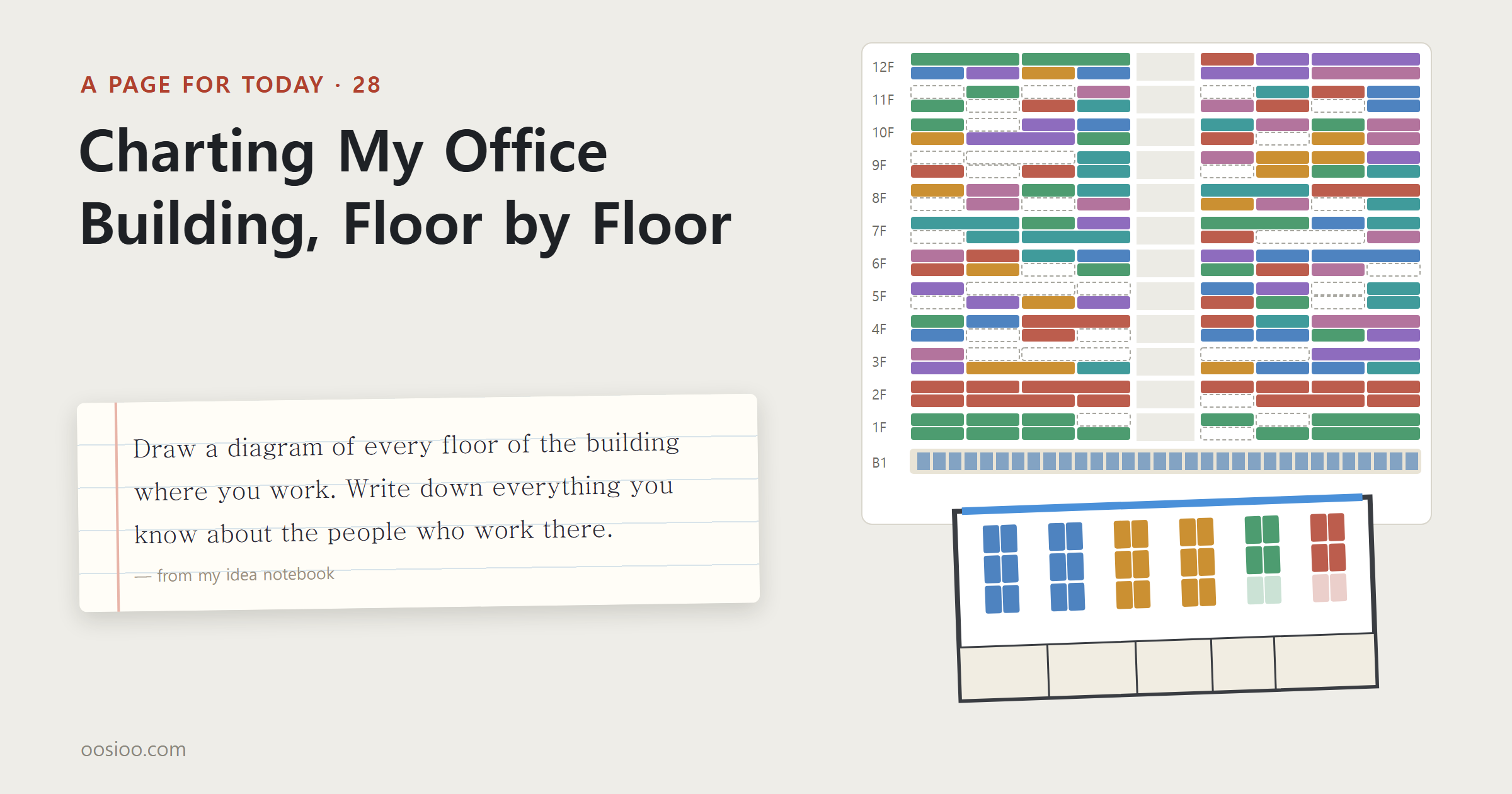
Charting My Office Building, Floor by Floor
My notebook said: draw a diagram of every floor of the building where you work, and write down everything you know about the people who work there. Thinking of the Korean office-factory block I work in, I start with what these 'knowledge industry centres' are and why so many now stand partly empty. I compare how much floor one person needs under fire codes, housing standards and office benchmarks, then follow the technology that solves space by calculation: the 1957 plant-layout problem, CRAFT and the Allen curve, parking solvers, generative office design, floor-plan datasets and furniture-layout research. An interactive stacks an imaginary building floor by floor, seats teams in an office you choose, furnishes flats and packs car parks. The twenty-eighth piece in A Page for Today.
Who Decides the First Snow?
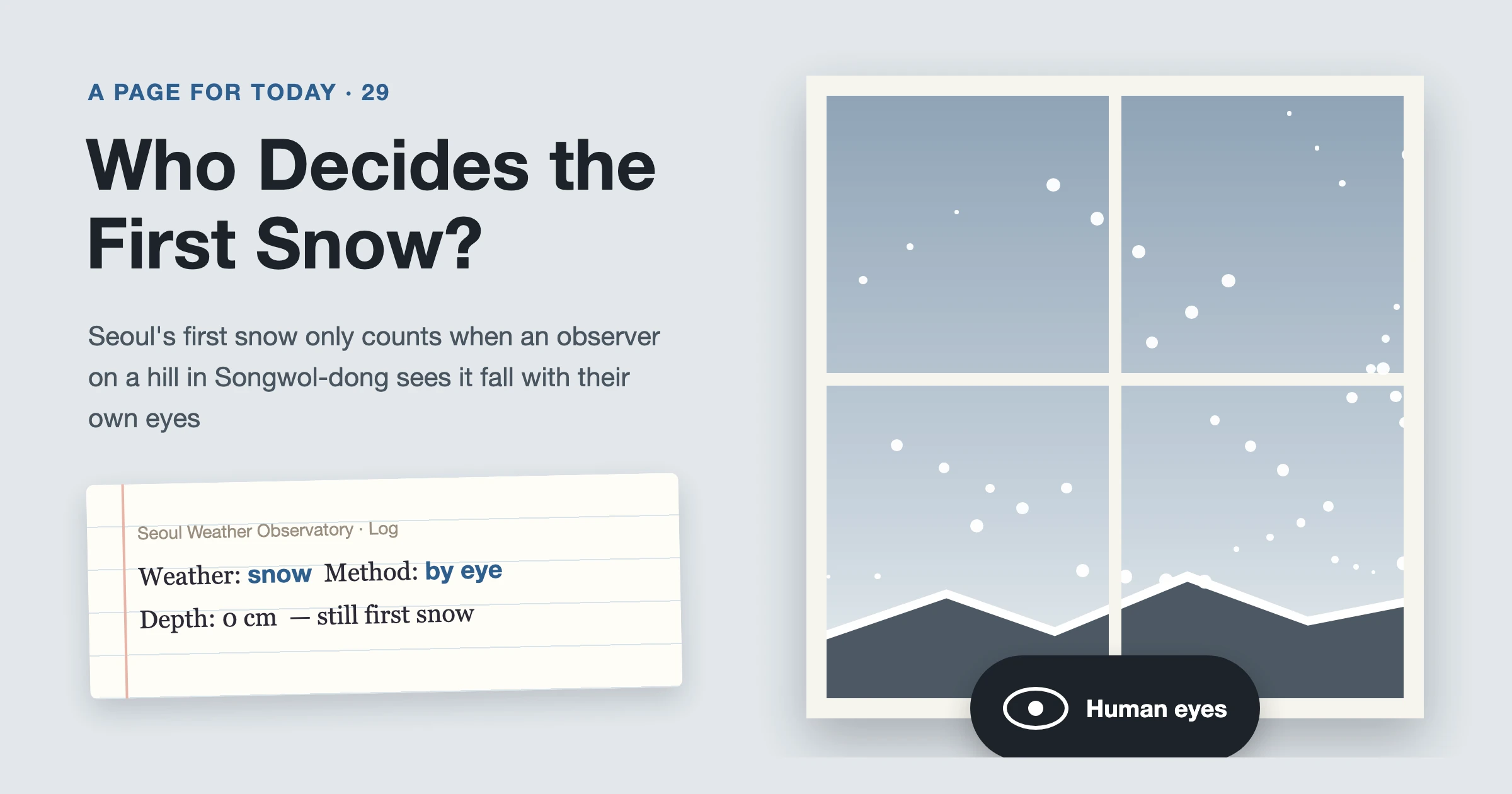
Seoul's first snow is not decided by whether it snows somewhere in Seoul. It is recorded only when an observer at the Seoul Weather Observatory in Songwol-dong, Jongno-gu, sees snow falling with their own eyes. Sleet on Bukhansan or snow pellets in Gangnam don't count unless they reach Songwol-dong. Matching press reports of KMA announcements for twelve winters, 2014 to 2025, the earliest and latest first snows were 30 days apart. After Kyoto switched to machine judging in 2020, its normal first snow moved six days earlier, and in the United States snow under 0.1 inch is only a "trace". Under the same sky, the first snow date depends on who measures it and with what. An interactive lets you judge "Is this first snow?" yourself. This year's first snow was seen on Seoraksan on 29 October, but as of 4 November Seoul's first snow has not come. The twenty-ninth piece in A Page for Today.
Is There Really a CSAT Cold Snap?
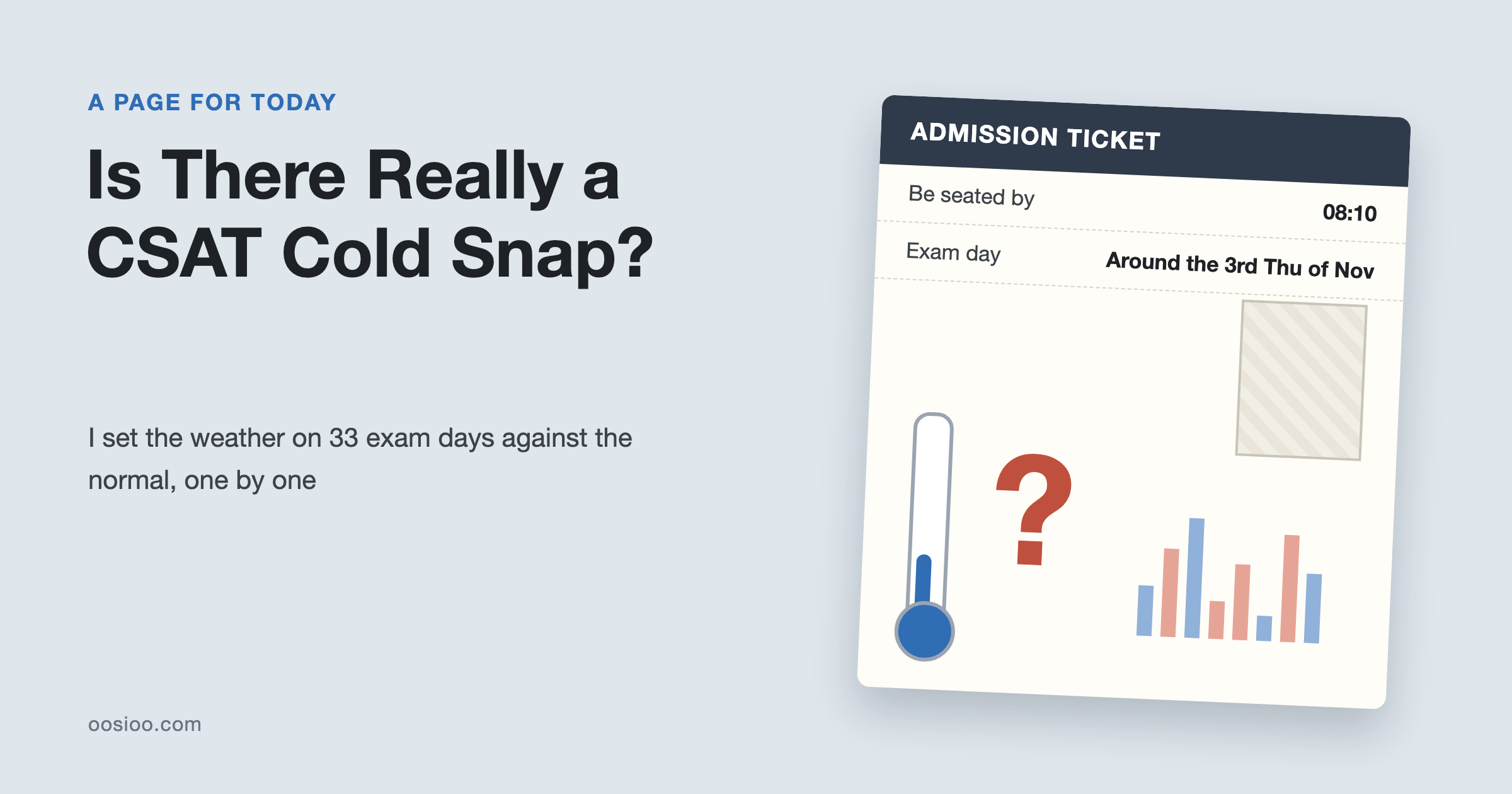
Every November Koreans say it is always cold on the day of the CSAT, the national university entrance exam. I checked the temperature on all 33 exam days, from the 1994 to the 2026 CSAT, against the normal for each date. In Seoul, exam day was 2℃ or more below normal 9 times (27%), almost exactly as often as any day picked at random between 5 and 25 November (29%). At six other stations, exam day was below normal 13 to 16 times out of 33, never more than half. Yet there are reasons we remember it as cold: the exam falls in the ten days of the year when the weather cools fastest, so exam day was colder than the week before in two years out of three; memory counts the day before and the day after; and students leave home before dawn. An interactive chart lets you pick the station and the year. The thirtieth piece in A Page for Today.
Jobs That Will Survive the Age of AI
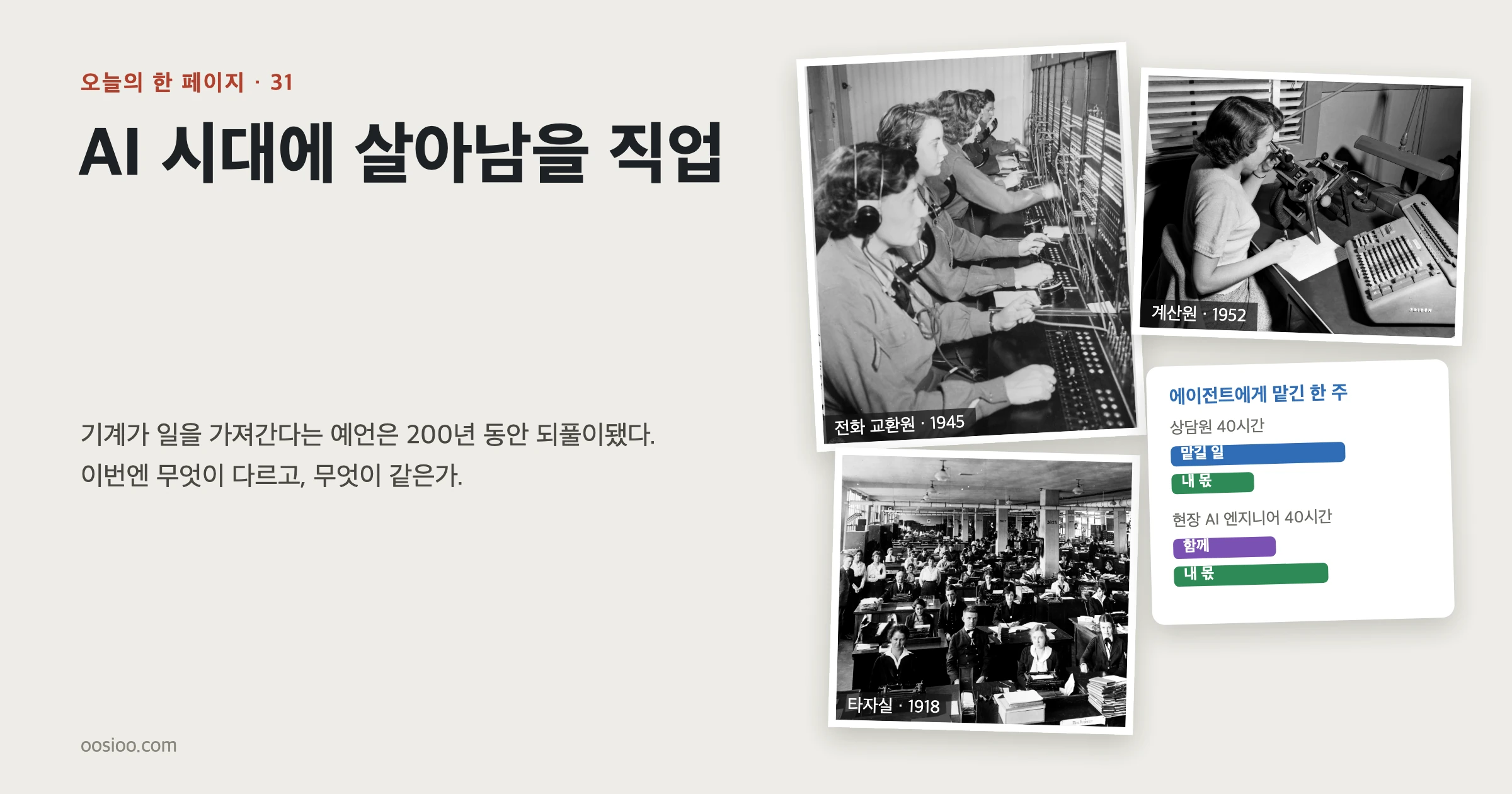
All my notebook said was “Jobs that will survive the age of AI.” This piece starts with former colleagues who say they have nothing left to do after handing all their work to agents. It then uses company cases and 2026 research to look at what is actually being replaced right now. Next, it follows the market that sells anxiety and the prophecy that “machines will take our work,” repeated for 200 years, from the Luddites through telephone operators, ATMs, spreadsheets and radiology, and shows how each turned out. It also looks at how agents scored in tests that handed them whole pieces of real work. The conclusion: tasks change hands, not jobs. People who go into the field and solve problems with AI, and people who make new things, are still far better at it than AI. Also included: a playground for breaking your job into tasks and estimating the agent's share, 14 jobs that were supposed to disappear with the predictions and what actually happened, and a record of the new work that emerged. The thirty-first installment of A Page for Today.
A Warm Meal
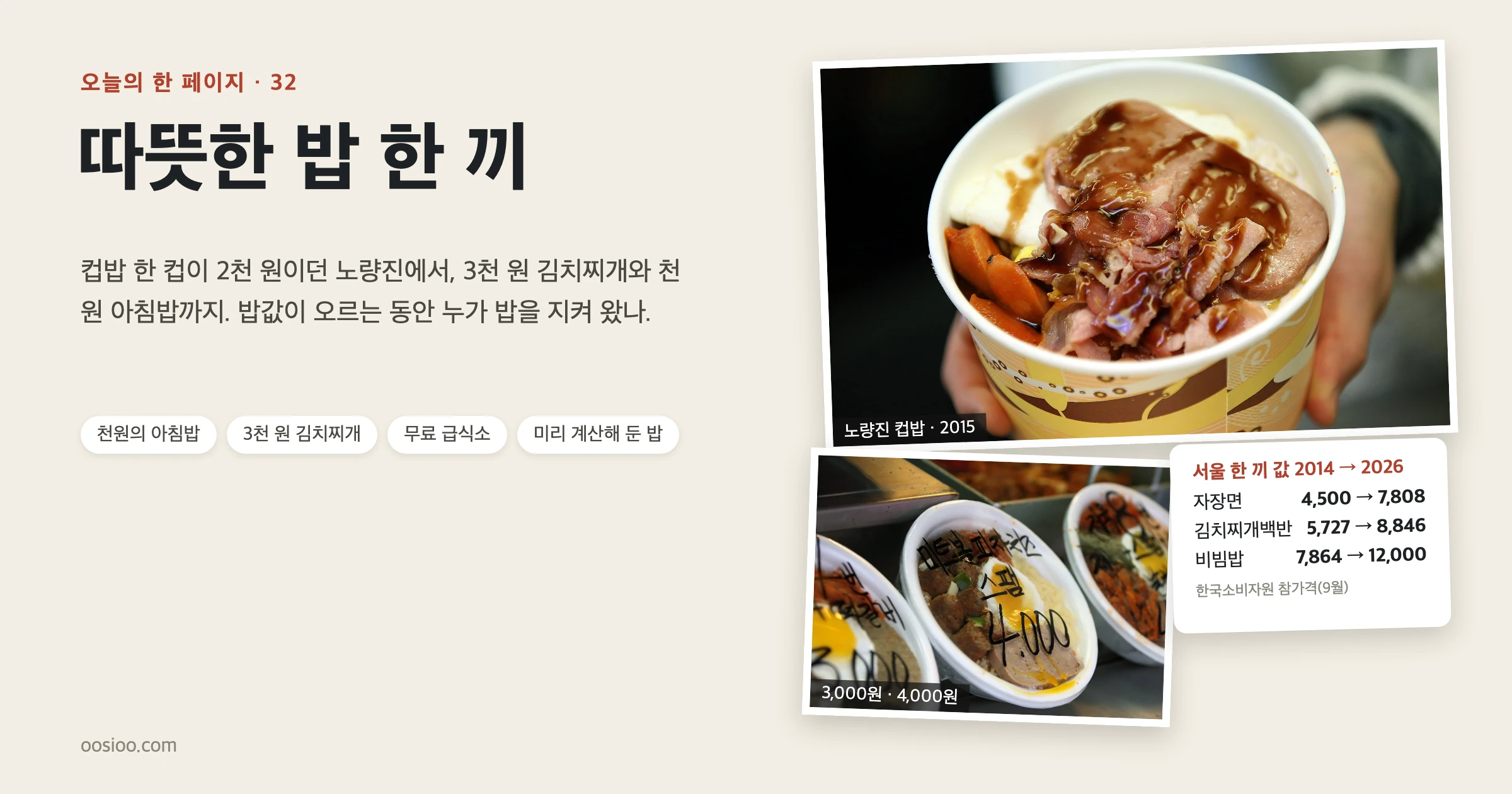
The notebook said only “A warm meal.” This piece follows the 15 years in which Noryangjin's cupbap went from around 2,000 won to 4,500 won and the cupbap street dwindled to just four open stalls, then sets Seoul dining-out prices against the minimum wage to work out how many minutes of work it takes to buy a meal. The burden comes less from how fast prices are rising now than from how high they've piled up over the years. After looking at the numbers on young people waiting for their first jobs, it revisits the ways communities have paid the difference in meal costs: the 1,000-Won Breakfast and 3,000-won kimchi stew, free meal centers where hundreds line up every day, meal cards for children at risk of going hungry, and Japan's children's cafeterias and the langar at India's Golden Temple. It also includes an interactive that converts the price of a meal into working time, and another that counts how many meals' worth of the difference your contribution would cover at each table. The thirty-second installment of A Page for Today.
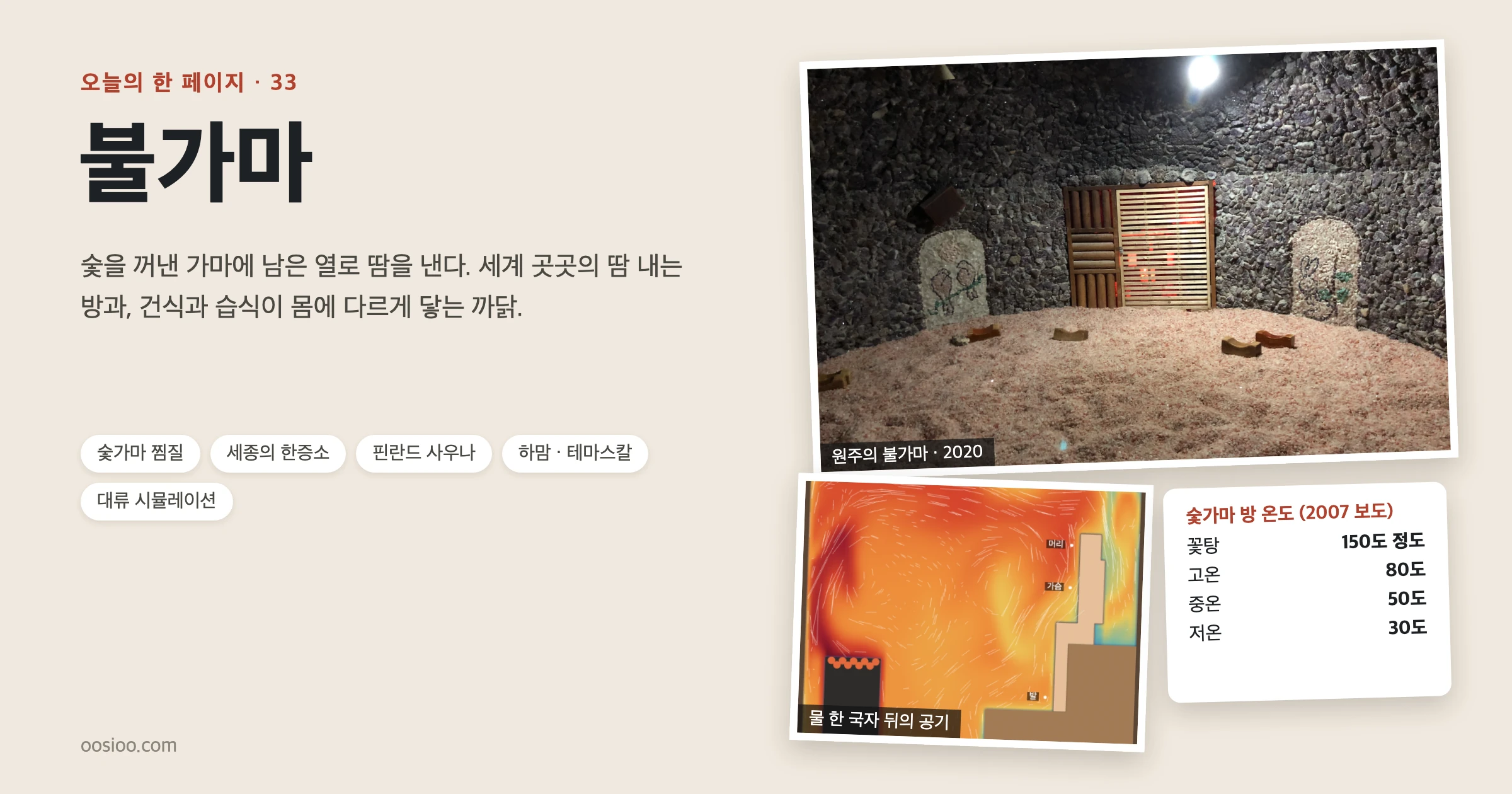
Bulgama: Sweating in a Charcoal Kiln
The notebook said only "bulgama" — fire kiln. It traces how a charcoal kiln's leftover heat, once the charcoal was pulled out and used for sweat bathing, became the round room of today's jjimjilbang, then reaches back 600 years to King Sejong's state-funded hanjeungso even as he doubted their benefit, and on to Finland's smoke sauna, Russia's banya, the hammam, Japan's ishiburo, the temazcal, and Ireland's sweat house, sorting the world's sweat rooms into three branches. It then explains, through a single idea — the dew point — how dry and wet heat differ in the way they put heat into the body, and runs two-dimensional convection calculations on cross-sections of a sauna, a steam room, and a charcoal kiln. It separates, with notes on which claims are backed by evidence and which are still anecdote, why some people struggle especially with dry heat and others with wet. A playable panel for spinning the air inside the room yourself, plus a temperature-humidity map, are included. The thirty-third piece of A Page for Today.
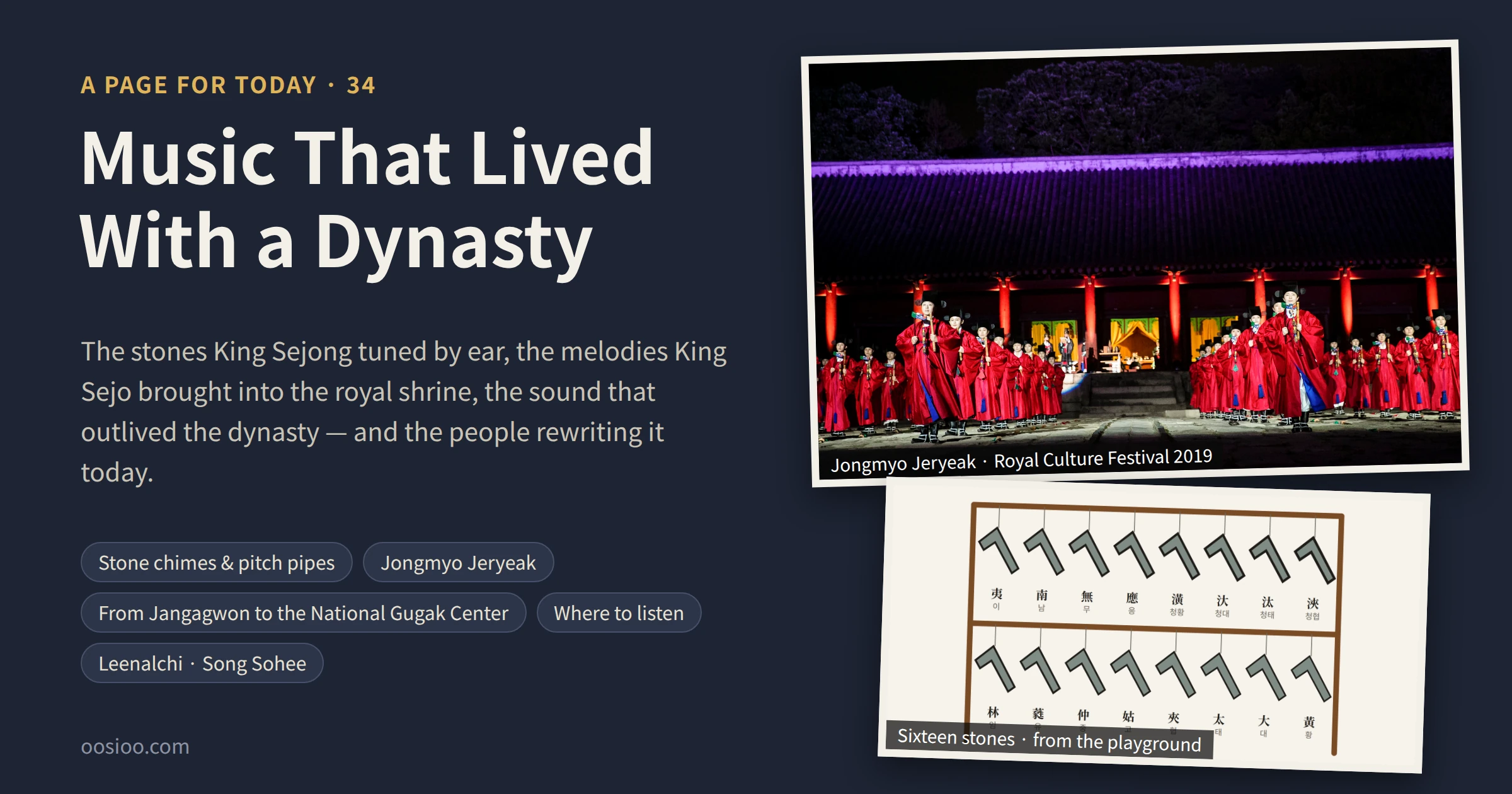
Music That Lived With a Dynasty
My notebook asked: have you ever heard the music that lived with a dynasty? After seeing the stone chimes and bronze bells at the Story of King Sejong exhibition in Gwanghwamun, I followed that music through the Annals: Bak Yeon making pitch pipes and chimes from Haeju millet and Namyang stone, King Sejong hearing that one stone was a little high, and his question about hearing native music in life but Chinese ritual music in death, which led to new music that King Sejo made into Jongmyo Jeryeak. Then how nearly a thousand court musicians shrank to 57 after the dynasty fell and carried on into the National Gugak Center, why school gugak stopped at the danso, where and how to hear court music today, and the musicians rewriting gugak, from Leenalchi and Song Sohee to SsingSsing, HAEPAARY and CHUDAHYE CHAGIS. A playground lets you strike the stone chimes, find the off stone as Sejong did, hear the eight sounds and write a tune in jeonggan-bo. The thirty-fourth piece in A Page for Today.
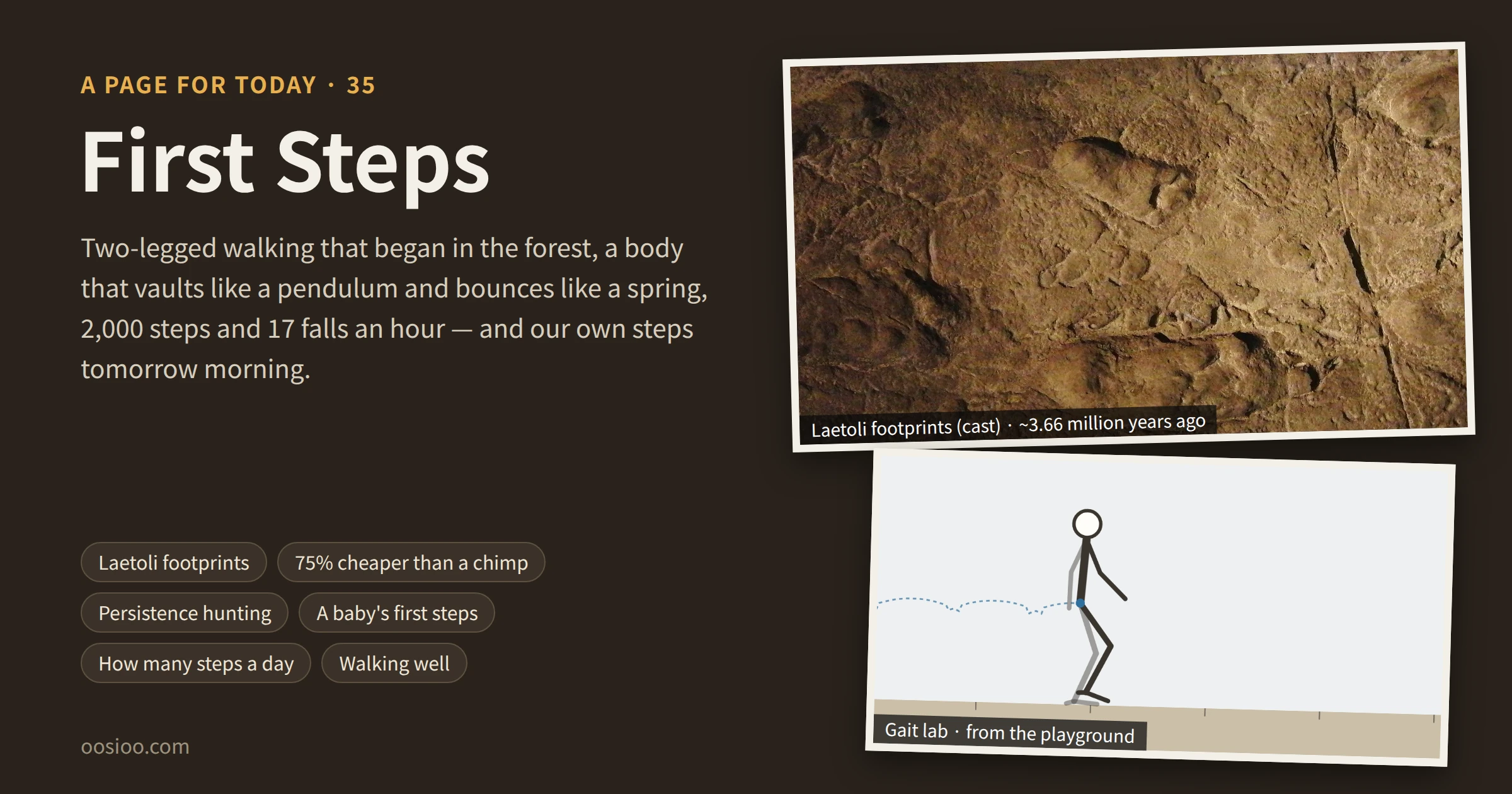
First Steps
My notebook held a single word: geoleumma, a toddler's first steps. Only humans stride on two legs. I follow two papers that read the same seven-million-year-old thigh bone in opposite ways, the recent turn towards standing up in the forest while still climbing trees, and the footprints pressed into volcanic ash at Laetoli, with a different gait beside them. Then the body that lets us walk a given distance on 75% less energy than a chimpanzee, walking as a pendulum and running as a spring, the persistence hunt in which sweating hunters ran down antelope, and toddlers who take 2,000 steps and fall seventeen times an hour. Finally: how many steps a day are enough, how fast you need to walk for it to count as exercise, and which claims about walking correctly have evidence behind them. Playgrounds include a gait lab, a persistence hunt and a walking plan. The thirty-fifth piece in A Page for Today.
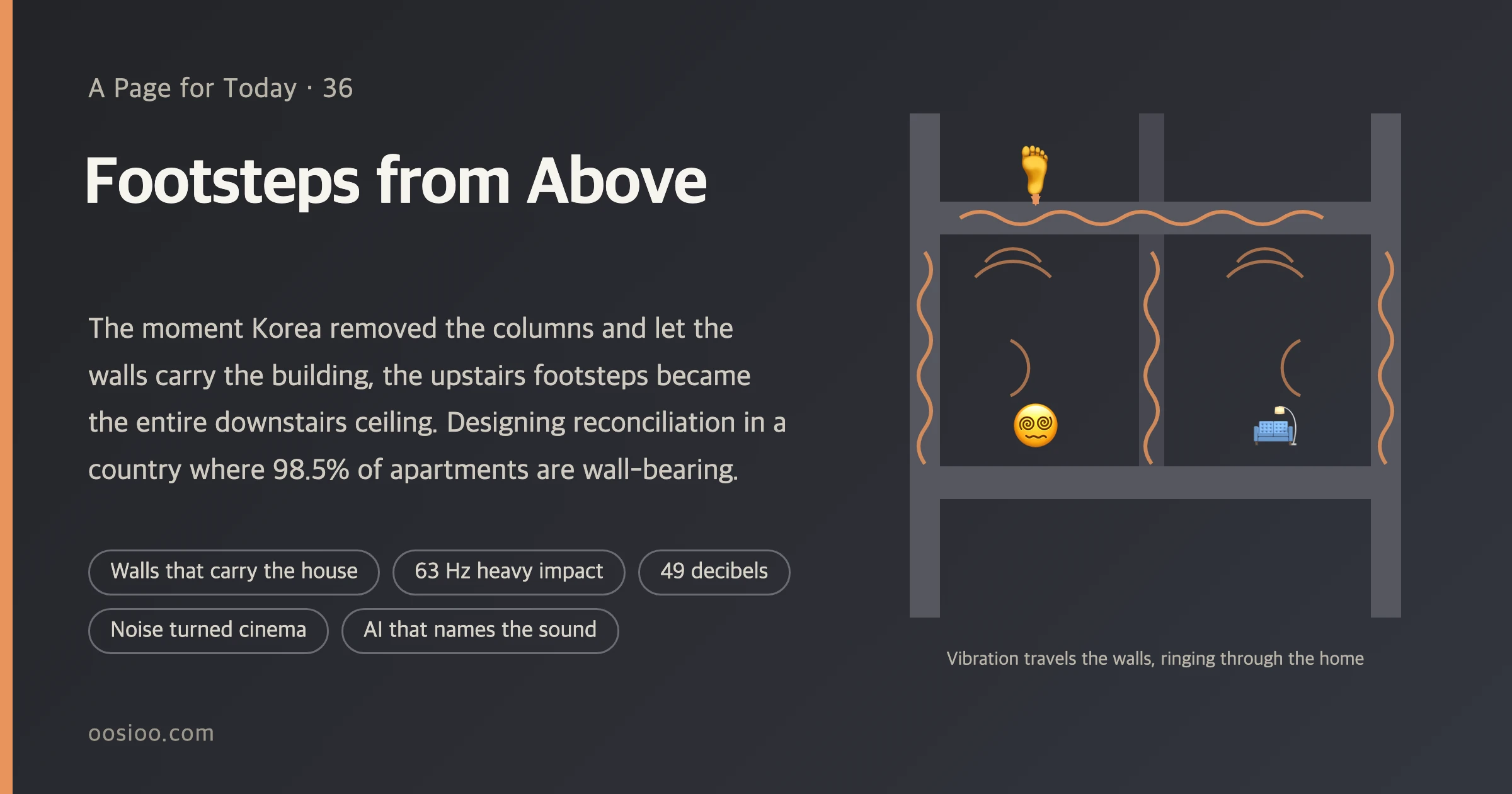
Footsteps from Above
The notebook asked: what would be the wisest way to reconcile two households at war over inter-floor noise? Korean apartments saved storey height and construction cost by removing the columns and letting the walls carry the building — and those walls became roads for the upstairs footsteps, which now ring from the entire downstairs ceiling. 98.5% of large apartment complexes completed over a decade were wall-bearing. I trace why cushioning layers fail against a child's 63 Hz footfall, how much a thicker slab actually buys, how the floor-impact rules chased the noise for twenty years and where they have stalled; the wave of inter-floor noise films that filled Korean screens last year; the grade-1 floors the builders are racing to make; and the AI research that names a noise with 95% accuracy, locates it, and measures it with vibration sensors instead of microphones. A floor-lab playground lets you rebuild the floor and hear the difference. The thirty-sixth piece in A Page for Today.