oosioo
Read in English
I pick one kind of shop I walk past every day and read its industry ledgers and the quarter ahead. Read in order →
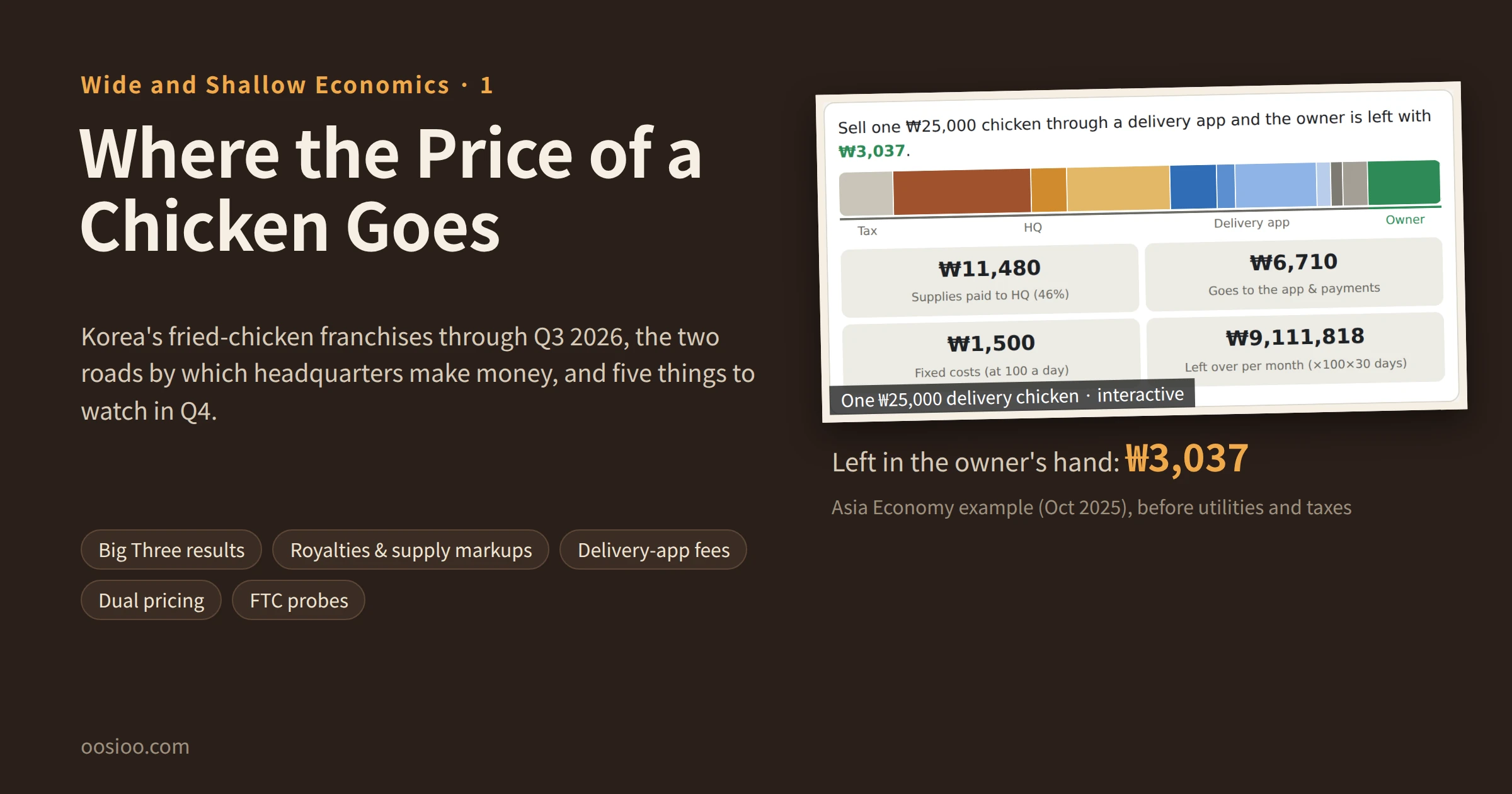
Where Does the Price of a Chicken Go?
₩25,000 on a delivery app, ₩23,000 in the shop. The same chicken now has two prices. The first installment of “Wide and Shallow Economics” looks at chicken franchises. Three numbers sum up where the sector stood through Q3 2026: 28,750 franchise outlets, a 9.5% supply-markup ratio, and chicken prices down 37.7% in six months. bhc, BBQ and Kyochon all post head-office revenue of ₩500–600 billion, yet their operating margins are 26.8%, 13.1% and 6.7%, a fourfold spread. We explain why through the two ways a franchisor makes money: royalties and supply markups. We also cover the franchisee lawsuits that followed the Supreme Court's Pizza Hut ruling, the FTC's October 2026 on-site inspection of the Big Three, and the Franchise Business Act amendment that takes effect on December 31. In the playground, you can split the price of a chicken into taxes, head-office ingredients, the delivery app, rent and labor, and work out how much is left in the owner's hand. At the end are five predictions to be scored against Kyochon's Q4 results in February 2027 and other data.
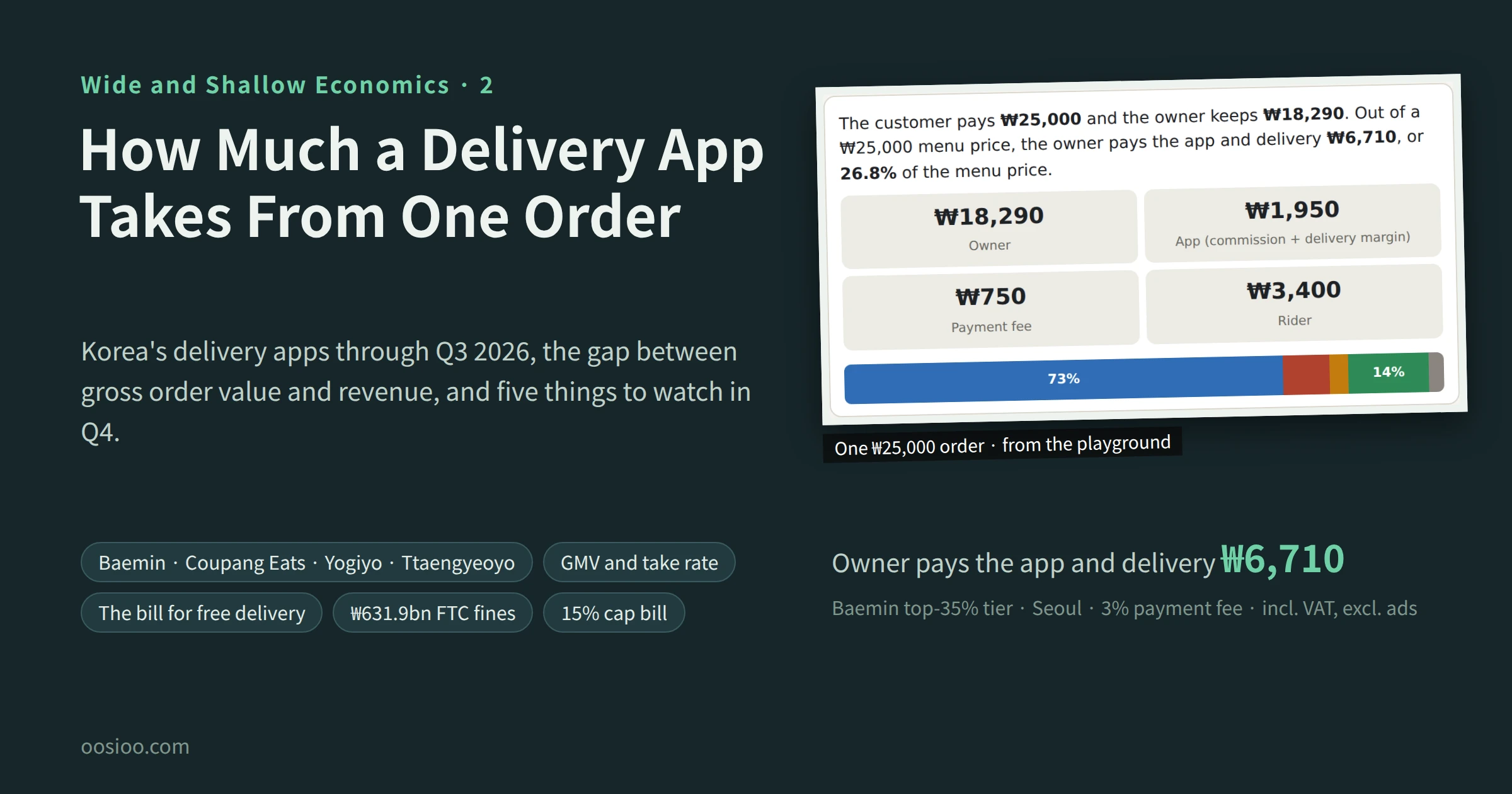
How Much Does a Delivery App Take From One Order?
This episode of Wide and Shallow Economics follows a single 25,000-won delivery order in Korea as it splits between the restaurant owner, the app, the rider, card payment and tax. Online food service transactions reached 11.39 trillion won in Q3 2026, up 7.6% from a year earlier, and in 2025 Baemin and Coupang Eats together took 92.89% of the market by order value. On November 9 the Fair Trade Commission imposed provisional fines of 631.9 billion won on the two, and a bill to cap combined fees and delivery charges at 15% is pending in the National Assembly. The accounting concept this time is GMV, revenue and take rate: in Delivery Hero's Asia segment, which includes Baemin, revenue divided by GMV rose from 18.1% to 21.8% while GMV barely moved. I look at why that ratio grows when an app takes over delivery, and where the cost of "free delivery" lands on the income statement. In the playground you can change the app, sales tier, delivery fees and rider pay to split one order yourself. At the end are five checkpoints to score against Q4 2026 and Q1 2027 results.