oosioo
Read in English
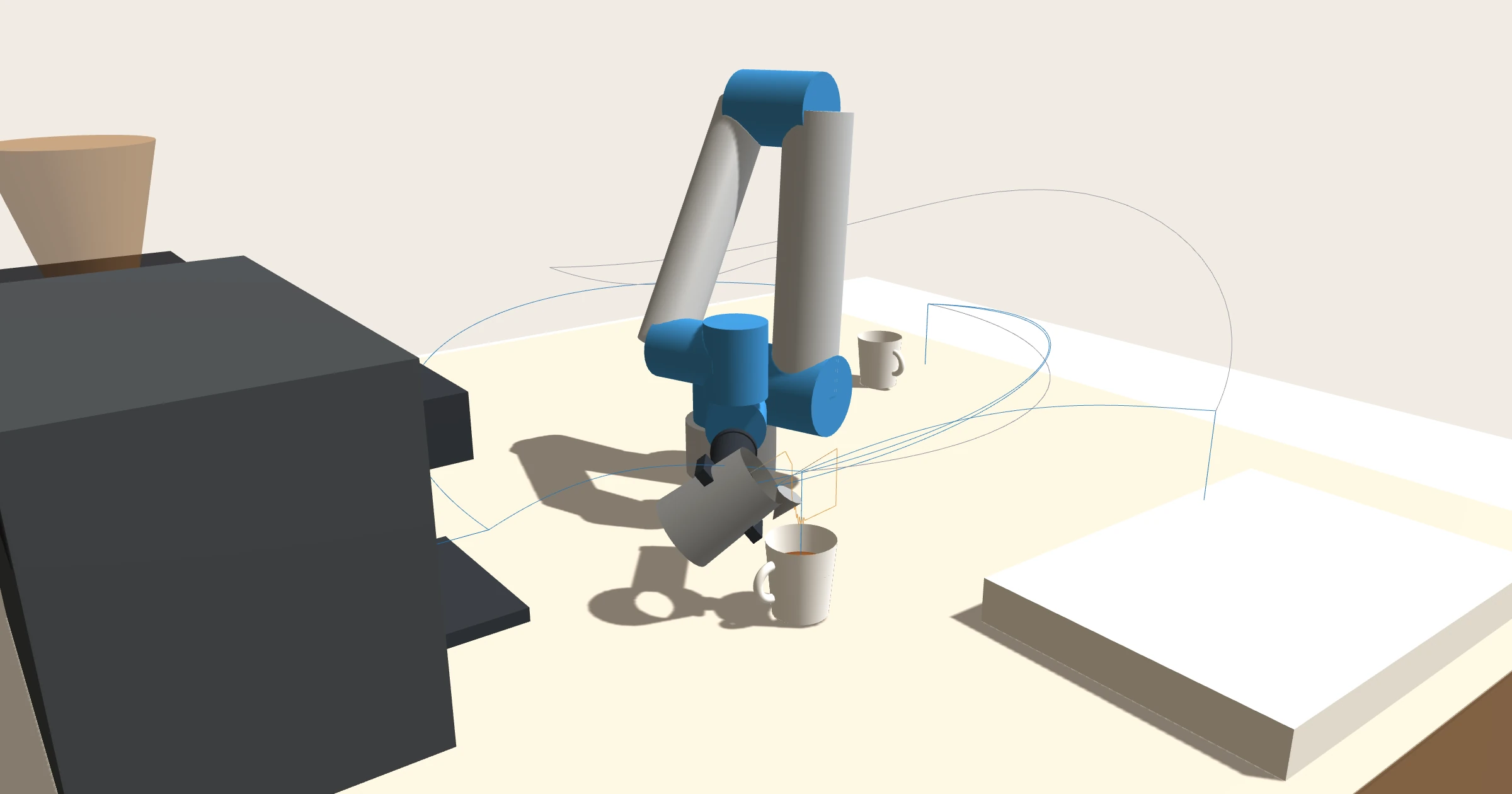
How Does a Robot Barista's Arm Decide Its Pose? — Solving the 56 Seconds a Collaborative Robot Takes to Make a Latte with a Pose Solver
Most robot arms making coffee in cafés are collaborative robots, industrial robots built to work beside people without a fence. I look at what cobots are and how they spread, and how far robot baristas have come in Korea and abroad. Then I built a pose solver that makes one latte with the most common form, a 6-axis arm (UR5e published dimensions). Give it a tool position and it computes eight candidate arm shapes, then picks one that hits nothing and gets there fast. It plans paths that keep the cup from spilling and slows down when a customer comes close. For the same tool point, choosing the wrong arm shape flipped the cup 180 degrees on the way. Solving 2,000 random poses numerically found answers for only 77%, and just 32% matched the chosen solution. Using the standard separation formula as is, the robot stopped as soon as a customer stood at the pickup shelf.
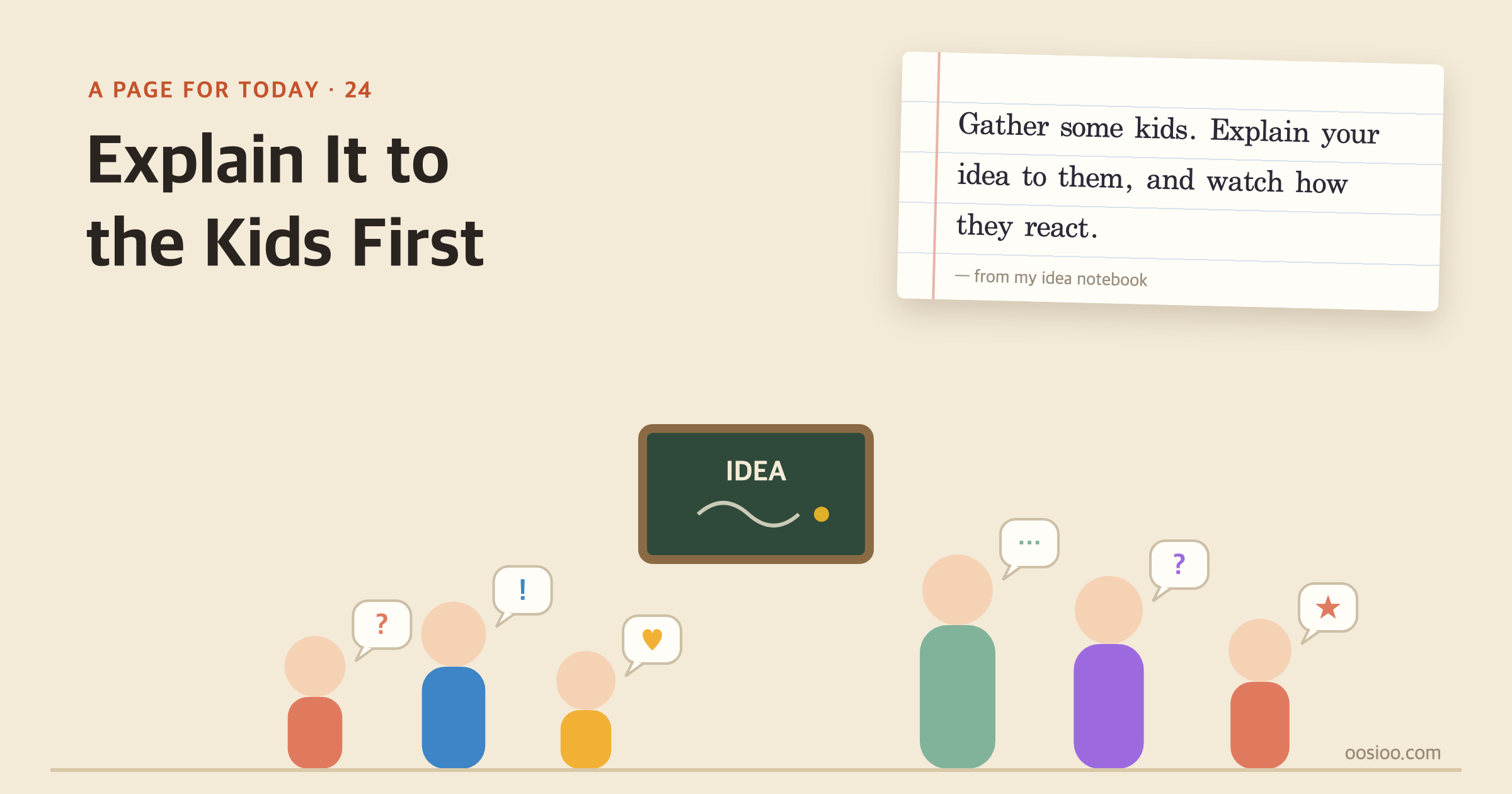
Explain It to the Kids First
My notebook said: gather some kids, explain your idea to them, and watch how they react. Products aimed at one generation are harder to make than they look, because the people making them are rarely in that generation. I compare cases that asked and watched their audience, like Sesame Street and Lego, with cases that pretended to be a friend, like Facebook's Lifestage and Pepsi's protest ad, and look at today's numbers on how each generation's media are drifting apart. Then I cover how to use generational labels carefully, quick ways in such as reverse mentoring, and attempts to ease generational conflict from the other side, from care homes merged with nurseries to students sharing homes with older people. A playground lets you guess age, period and cohort effects. The twenty-fourth piece in A Page for Today.

We Are All the Same (1) — The Invisible War Across Three Layers
Juniors, leaders and executives each pile up grievances, sure the others are the problem. Yet none of the three layers was saying anything untrue. A look at where the conflict really comes from.
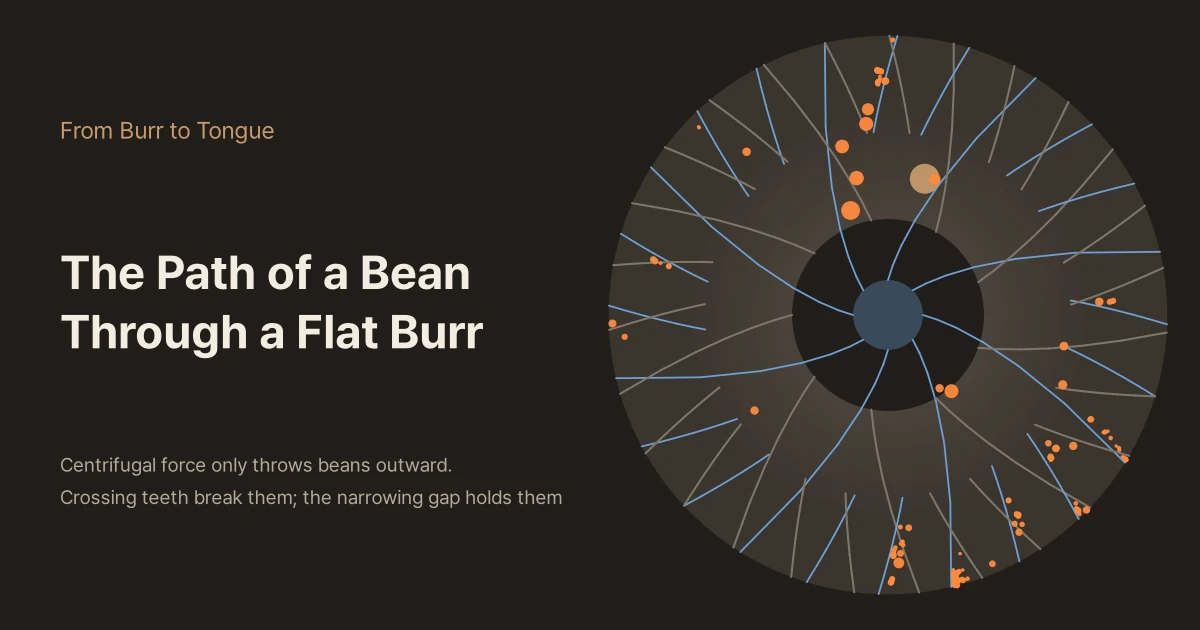
The Path of a Bean Through a Flat Burr
What path does a bean take between two flat burrs, and how long does it stay? With no study that measured the inside of the burrs, I built a virtual 64 mm flat burr in a 2D DEM and ground beans in it. Centrifugal force is a few thousandths of the breaking force, so it only sends beans outward; 82% of breaks piled up between crossing teeth where the gap finishes narrowing. At any speed from 300 to 2,000 rpm, a bean passed through while the burr turned half a revolution, and the gap changed how often beans broke rather than how long they stayed. With a simulation you can run yourself.
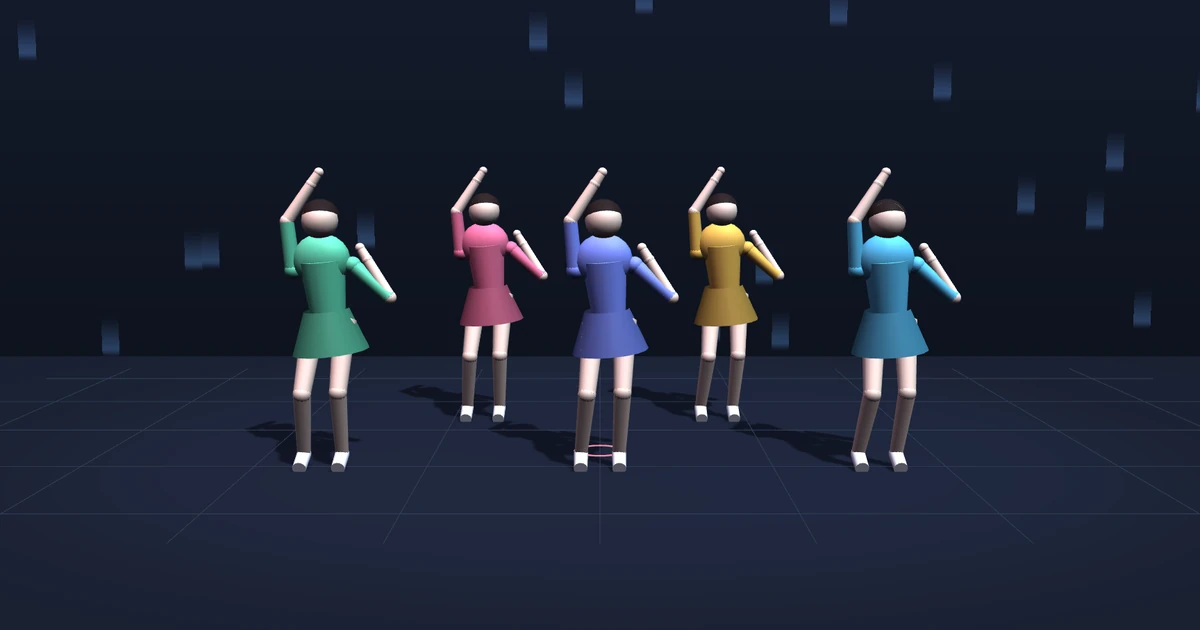
Can Five Dancers Move to a Song Just by Listening? — A Choreography Generator That Writes Point Moves, Formations and Paths for an Idol Track Made from Hwang Sun-won's "Sonagi"
An idol stage is not finished by the song alone. There is a point move repeated in every chorus, and there are the formations and paths five members use to trade places. Borrowing motifs from Hwang Sun-won's short story "Sonagi" (The Shower), I made a 2:30 girl-group track on a laptop GPU and built a generator that listens to it and choreographs for five. Five figures with 20 joints each dance on a 3D stage. Along the way I lay out how dance can be written as numbers: beat alignment, moving together, repetition structure, closest gap, Laban Effort. I made 300 candidates and picked one by those numbers. Removing repetition dropped the structure score from 0.147 to 0.019, and removing path detours made all 60 seeds collide. Given the same dictionary, an AI writing the plan itself produced one plan that ranked 2nd of 300 and another that ranked 164th.
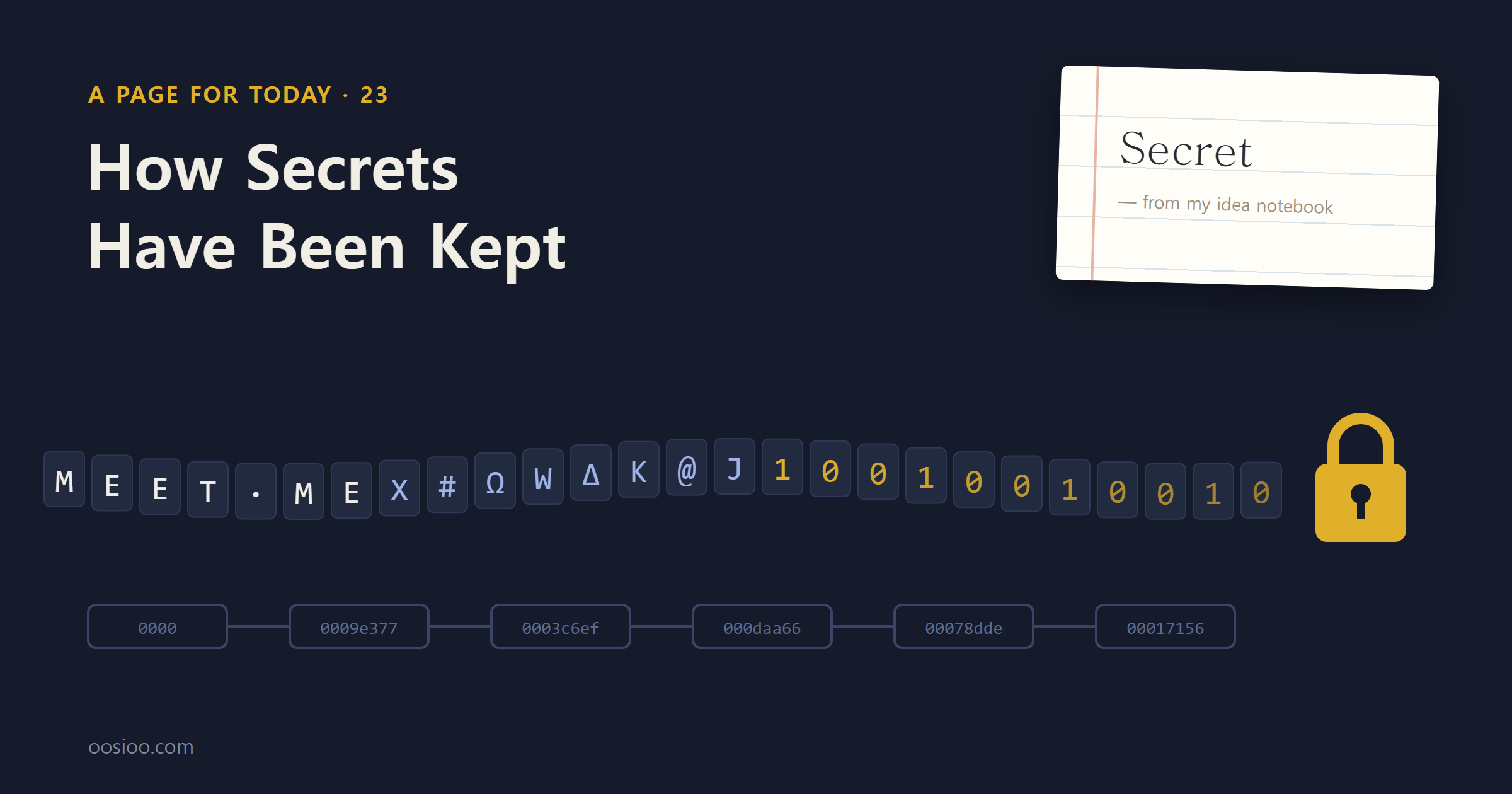
How Secrets Have Been Kept
My notebook held a single word: secret. The best way to keep a secret is to write it down nowhere and keep it only in memory, but most secrets have to be passed on. From a message tattooed on a slave's head and Caesar's letter shift to Enigma, frequency hopping and North Korea's numbers stations, I follow how people have hidden and scrambled secrets. Then I look at proving instead of hiding, as Bitcoin does, computing without opening through homomorphic encryption, and the quantum computers that threaten today's public-key cryptography, along with the move to post-quantum cryptography. A playground lets you try frequency analysis, a hash chain, a homomorphic sum and a quantum clock. The twenty-third piece in A Page for Today.

Leading While Walking Together (5) — Not by Title, but by Heart
A title can move people, but it can't move their hearts. Not someone who pulls from the front, but someone who walks alongside. The final chapter on leadership.
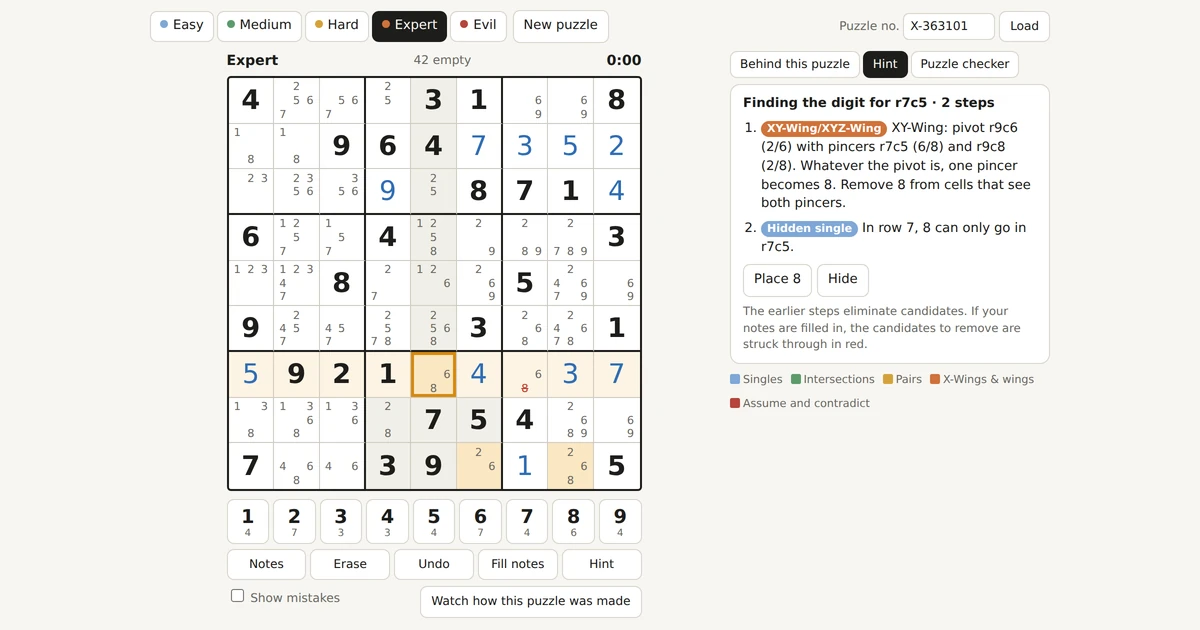
Why computers are good at making sudoku — a generator that proves the solution is unique and grades difficulty by the techniques people use, at five levels you can solve right here
Most game levels need a person to play them to know whether they can be beaten or are fun. Sudoku is different: checking an answer takes 27 looks, uniqueness can be proven by search, and difficulty can be measured by playing human solving techniques from easiest up. A machine can play both maker and sceptic. So I built a generator for five levels, Easy to Evil, with a solving screen on the same page. Across 3,000 random puzzles the clue count had almost nothing to do with difficulty, and Hard took 23 tries to get one. I also graded today’s three New York Times puzzles. An AI asked to make puzzles without tools handed in only the two easy ones and declined the rest as unprovable.
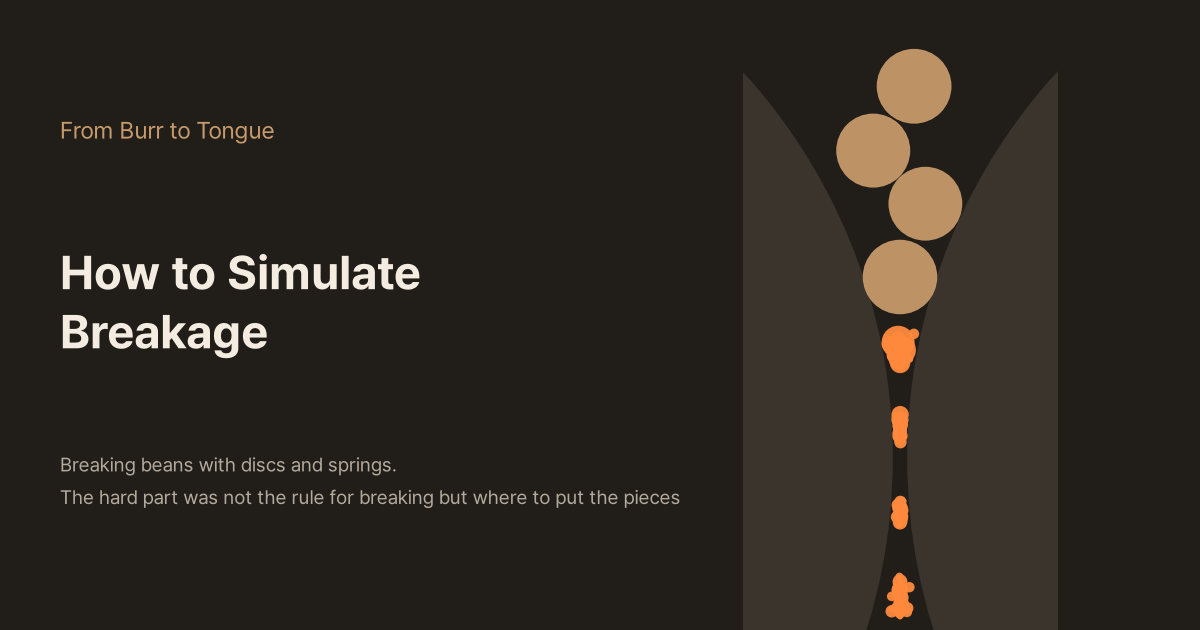
How to Simulate Breakage
The standard way to compute how beans break inside a grinder is the discrete element method (DEM). I built a 2D DEM from discs and springs and broke beans between two rolls. A bonded model shows the shape of the crack but did 4,000 times more work than particle replacement, and with particle replacement, where the fragments are placed changed the share going below 0.4 mm from 33% to 100%. Resolving down to the fines would turn one bean into ten million particles. With a simulation you can run yourself.
Can I Rewrite an Ending I Didn't Like?
My notebook asked: what film let you down lately? Imagine a better ending. Wanting to rewrite endings is old, as an unfinished Dickens novel, a musical whose audience votes on the murderer and more than 18 million fan works show. AI has made this old game something anyone can play in seconds, and services like Wrtn's Crack have turned it into a market. But how far is it fine to rewrite someone else's ending? Following copyright for AI output, the gray zone of fan fiction and the divided reactions to AI-revived voices of people who have died, I drew a line, and added a playground with a short story written by AI from the start whose ending you can rebuild 81 ways. The twenty-second piece in A Page for Today.

Leading While Walking Together (4) — A Leader Is Not a Perfect Person
Team members don't expect a perfect leader. What they distrust is a leader who pretends to be perfect. Saying "I don't know" and searching for the answer together is what builds trust.
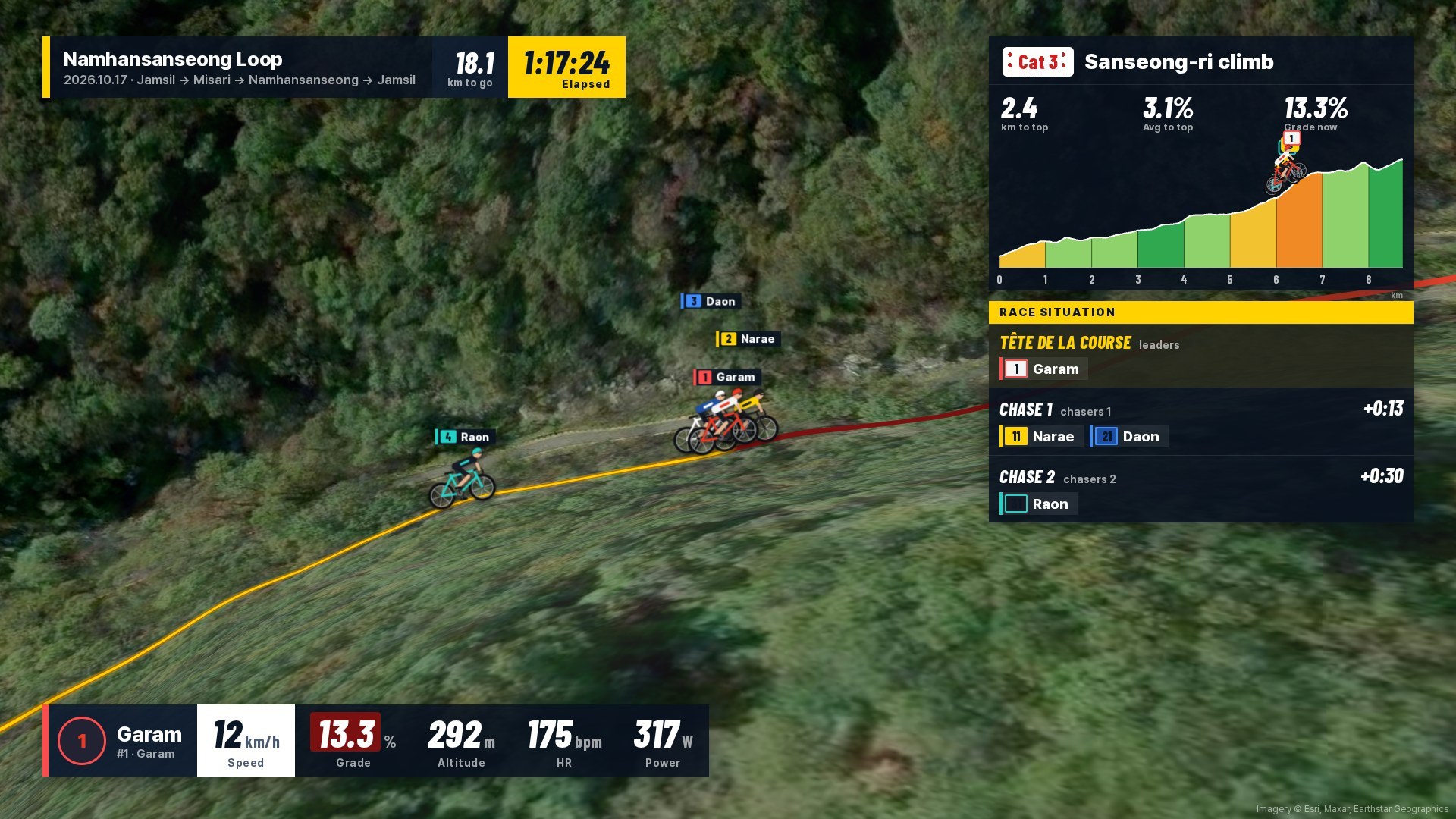
My Ride as a Tour de France Broadcast — a video maker where you drop in a GPX file and a director picks the shots
The 3D flyover videos that ride apps make are one camera following the course at the same angle, and they get boring fast. So I built ridecast, a “broadcast director” program: drop in GPX or FIT files and it picks helicopter, motorbike and side cameras for each stretch and cuts between them, stops time before a climb to show a gradient card, and ends with a photo finish and final standings. A four-rider, 2 h 19 min ride became a 197-second video. No AI is called at any point while the video is made. The first version was too fast, the camera got buried in the mountain, and the last rider never crossed the finish line. You can play it yourself inside the post.
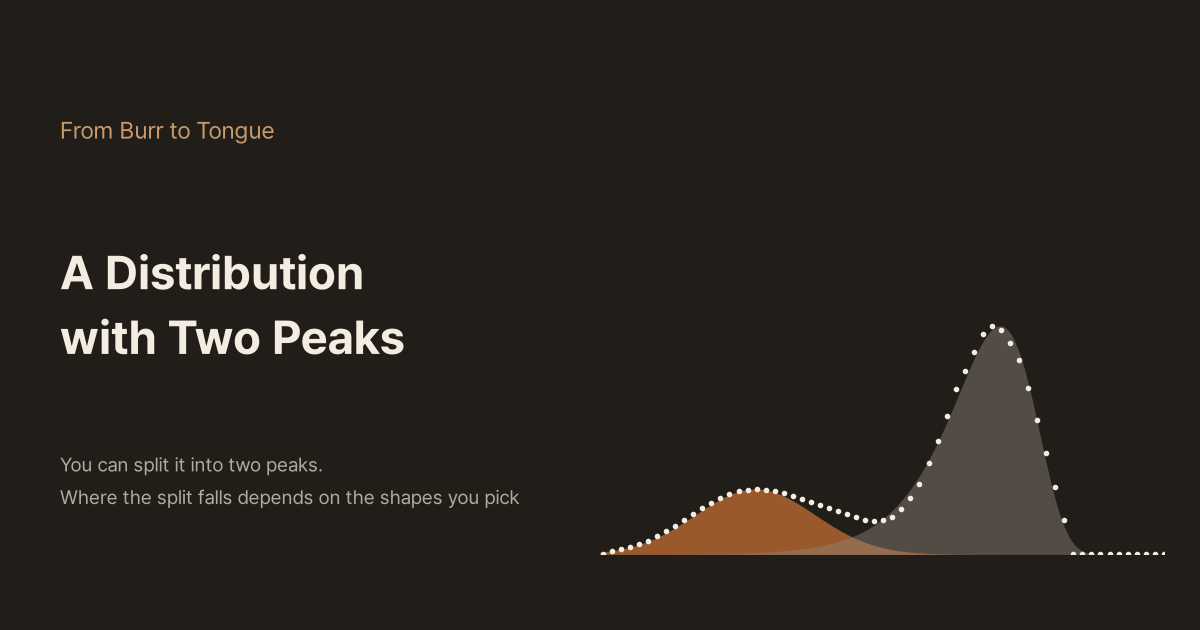
A Distribution with Two Peaks
The volume distribution of ground coffee has two peaks. The classic distributions of comminution theory, Rosin–Rammler and lognormal, have one, so they miss most of the fines, yet on Rosin–Rammler paper they still score R² of 0.93–0.95. Five-number mixture models follow the curve well, but the fines share they report varies by up to a factor of two with the shapes chosen. Using model grounds with true labels and the Part 1 camera data, I check what can be trusted, with a tool to try the fits yourself.
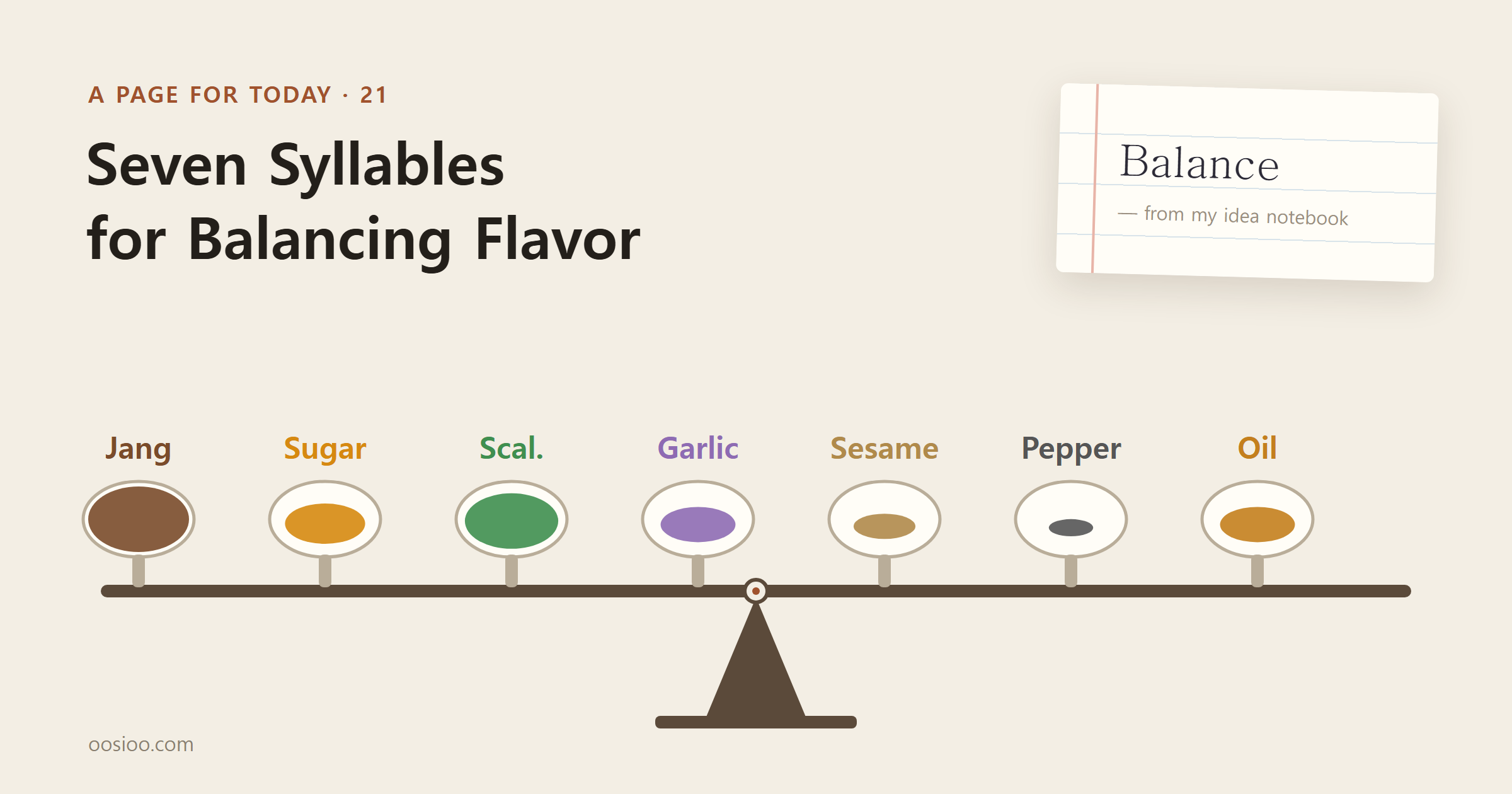
Seven Syllables for Balancing Flavor
My notebook held a single word: balance. That evening I happened to mix chili crab paste with tomato pasta sauce into a well-balanced plate. Flavor is a total art form, the five tastes plus smell, texture and even pain, and tastes push and pull on each other: salt suppresses bitterness, sweet and sour suppress each other, and umami multiplies. By way of electronic tongues that try to measure taste in numbers, I turned the seven syllables Korean cooks use to remember seasonings, jang-seol-pa-ma-kkae-hu-cham, into an 18-sauce dictionary that rescales spoon counts to your amount of food, compares your own sauce with a target, and finds a good ratio for mixing two sauces. The twenty-first piece in A Page for Today.

Leading While Walking Together (3) — Direction Matters More Than Perfection
Putting off a decision for lack of information is the worst option. At 70%, decide, and fill in the rest while executing. A fast direction beats a perfect decision.
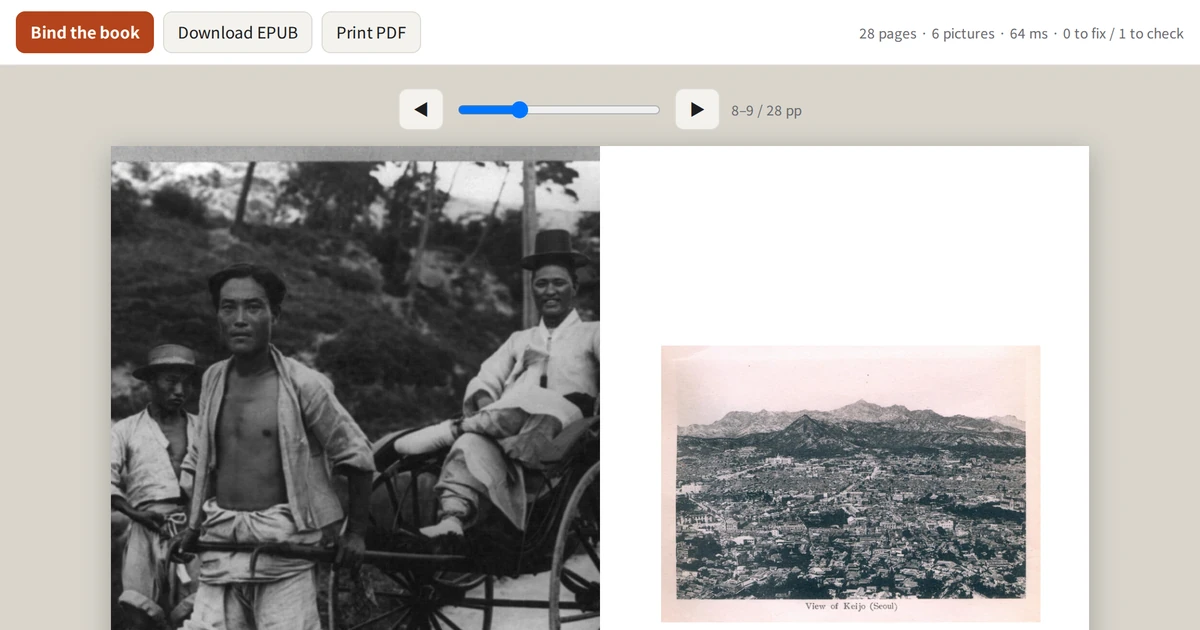
Can Book Typesetting Be One Click? — Put in a manuscript and photos, press one button, and get an EPUB and a print PDF: a book bound from “A Lucky Day”
Writing with AI is now normal, but typesetting that writing into a book still means learning InDesign or LaTeX. I built “Bind a Book”, a typesetting tool that runs in the browser: put in a manuscript and photos, press one button, and it divides the pages, places the pictures, builds the contents and index, and exports an EPUB and a print PDF. I bound Hyun Jin-geon's “A Lucky Day” (1924) with six photos of 1910s–20s Seoul into a 26-page sinkukpan book, and the EPUB passed the official checker EPUBCheck with 0 errors. I also added a story bible to catch continuity breaks in characters and settings, and it found where two AI-written sequels departed from the original.
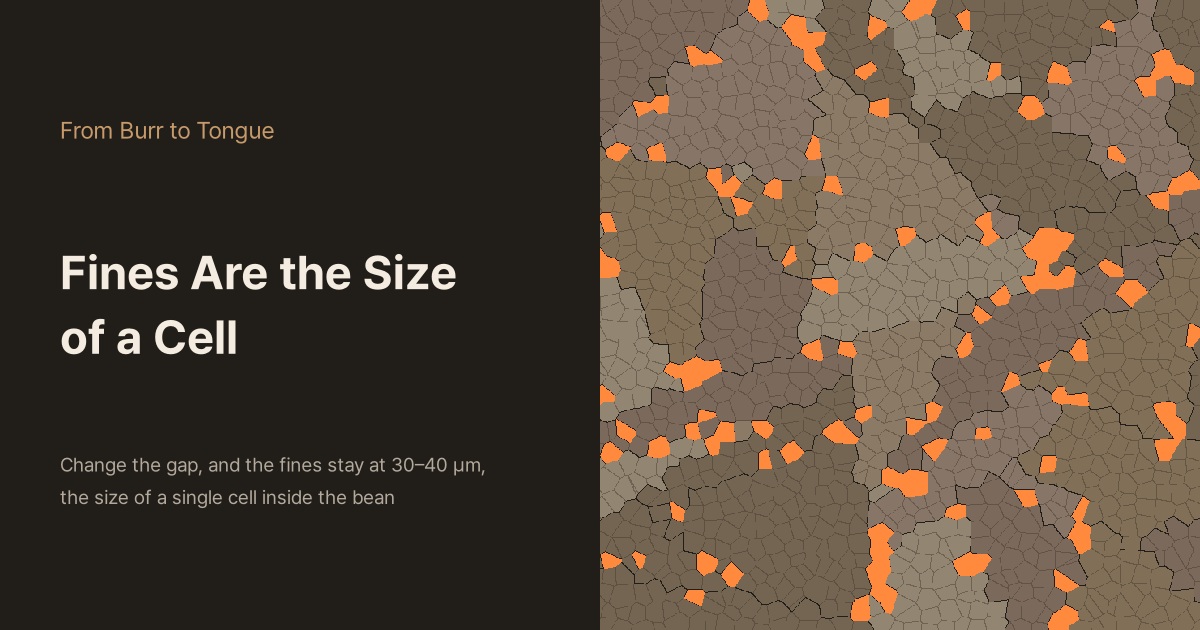
Fines Are the Size of a Cell
Turn the grinder dial and the large peak of ground coffee follows, but the fines peak near 30–40 µm stays where it is. The cells of a roasted bean are 20–45 µm across, the same size as that peak. In a cell-tissue model that only assumes cells along a crack fall away, the fines peak stayed at the cell size as the gap changed, and vanished when the cells were removed. The amount of fines roughly followed cell size ÷ gap. With a simulation you can grind yourself.
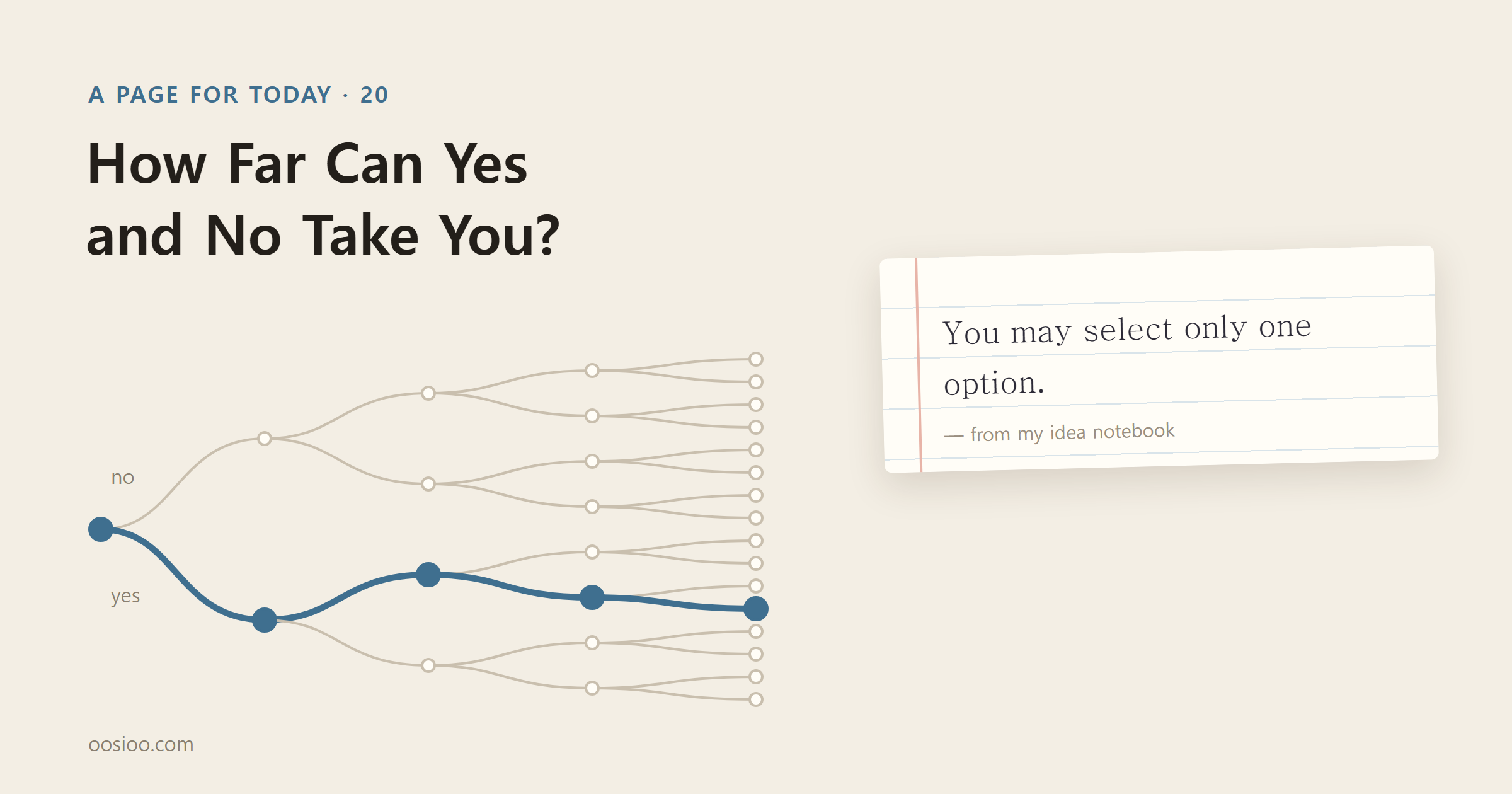
How Far Can Yes and No Take You?
My notebook said: you may select only one option. Picking one of two makes a problem as simple as it gets. I followed the power of yes and no from twenty questions, which picks one in a million with twenty answers, to Jev, the much-discussed new model that writes nothing and only judges. I lay out five ways to solve big problems with weak binary judges (repeat, split, pool, filter, compare) and wire the Altman Z-score, the Piotroski F-score, a trend rule and the Kelly formula into four gates of an investment judge, with a playground that runs it on 400 made-up companies. The twentieth piece in A Page for Today.

Leading While Walking Together (2) — A Good Leader's Fundamentals Aren't a Special Talent
A good leader isn't someone who excels at one thing, but someone who has the five things from the earlier pieces as basics. The conditions of a good manager that Google found in its data weren't technical skills either.
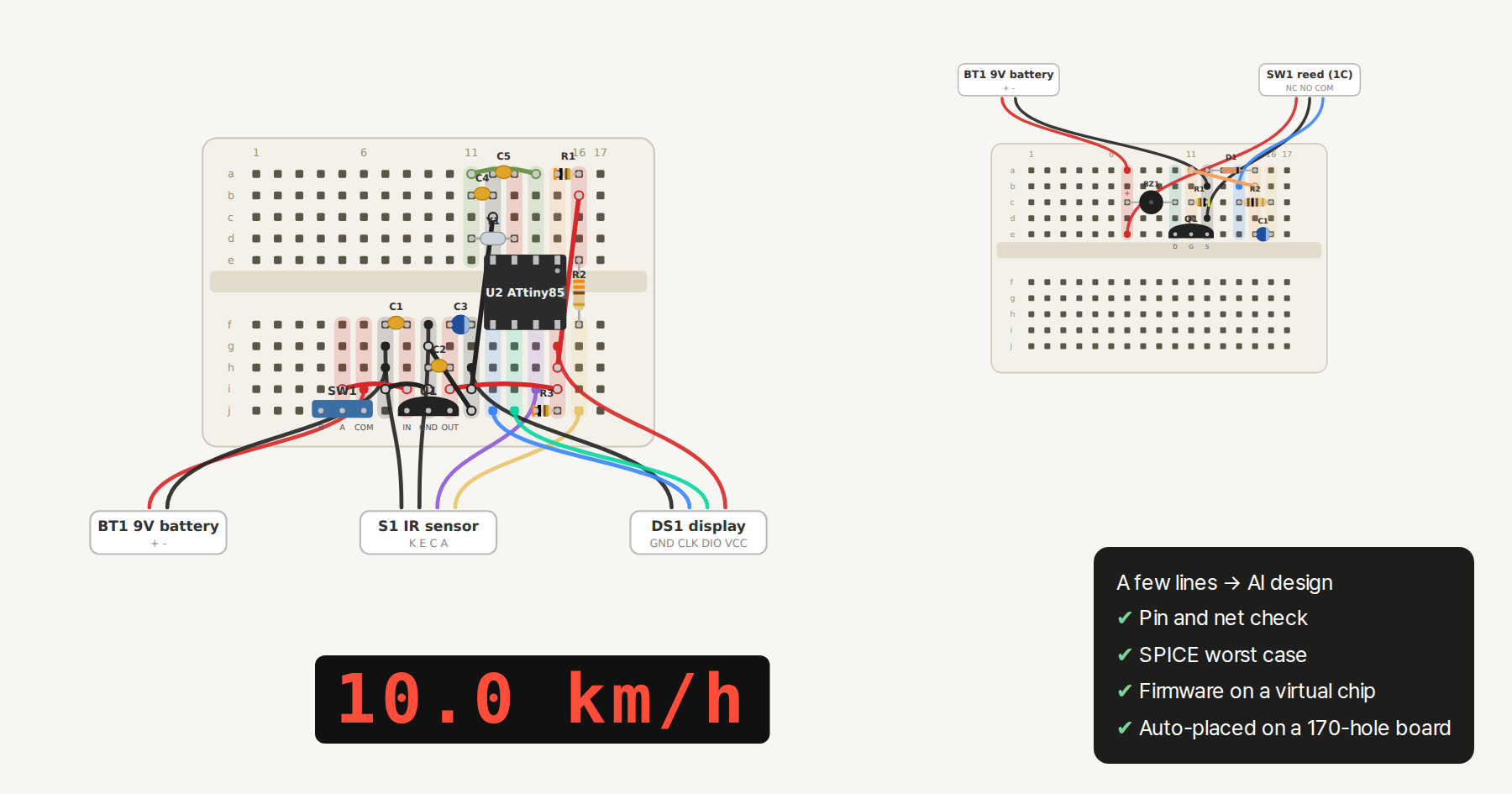
Can Circuit Design Be One Click? Giving an AI a Plain-Words Requirement, Verifying It in a Simulator, and Placing It on the Smallest Breadboard
Circuit tools like PSpice are powerful once you know them, but they ask for circuit knowledge and software skills first. Could circuits work like vibe coding, where you describe the feature and get a design? I traced 65 years from the 1961 maze algorithm and 1973 SPICE to 2026's AI design agents, then had an AI design a door chime and a treadmill belt speedometer that run on a 9V battery. An automatic verifier (pin checks, ngspice worst cases, a virtual microcontroller) judged each design, and the ones that passed were placed automatically on a 170-hole mini breadboard with a bill of materials and a quote.
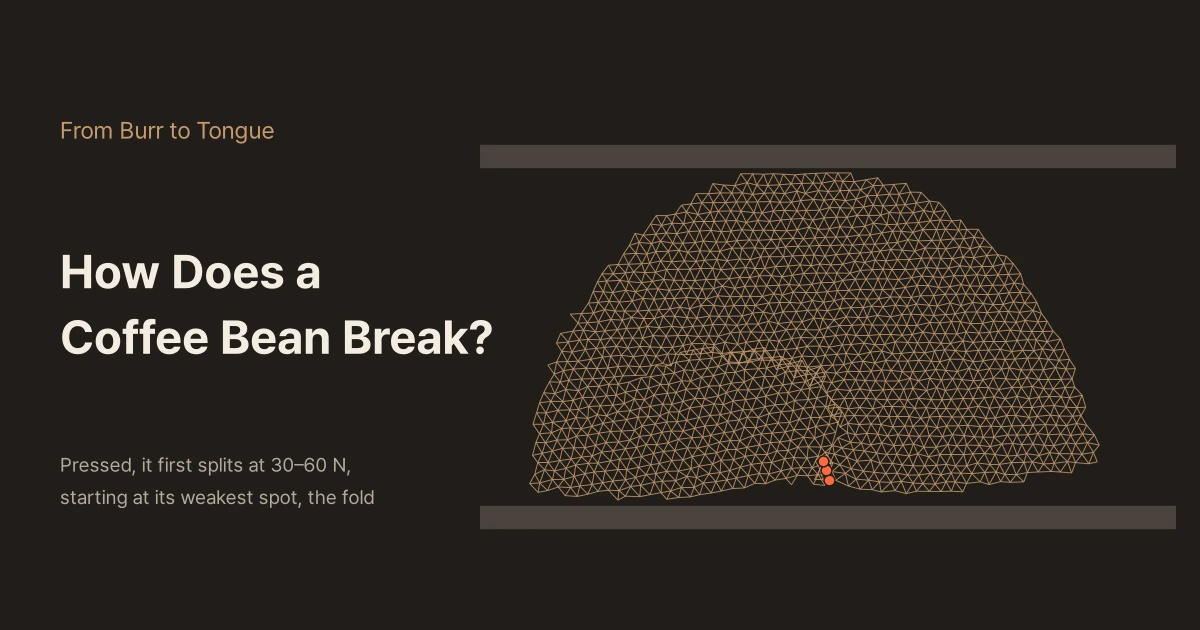
How Does a Coffee Bean Break?
Pressed through its thickness, a coffee bean first splits at 30–60 N after squeezing 6–8% of its thickness, and it breaks in a saw-tooth, piece by piece, not into powder at once. Inside, a roasted bean is a dry foam with a porosity of about 0.5; at 8.8% moisture, the same grinder's main peak moved from 424 µm to 1,949 µm. In a bean-slice model tuned to measurements, most first cracks began at the centre cut. With a simulation you can press yourself, and a look at the weakest-link principle that makes smaller pieces stronger.
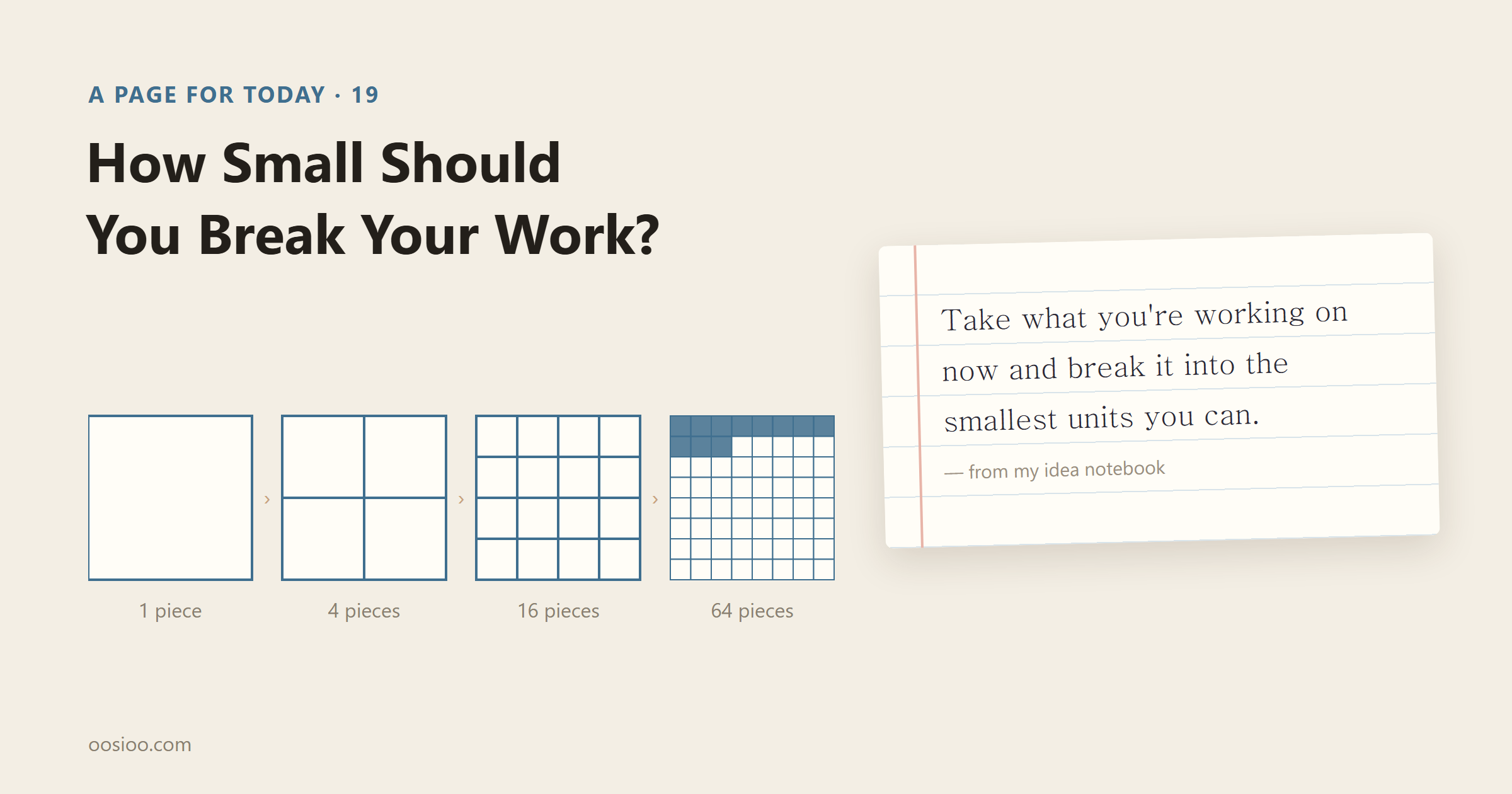
How Small Should You Break Your Work?
My notebook said: take what you're working on now and break it into the smallest units you can. I followed, with numbers, how breaking work down has changed it: Descartes's second rule, Adam Smith's pin factory, Ford's assembly line, and Galaxy Zoo, where 100,000 people split the classification of 900,000 galaxies. I also gathered research on why small pieces feel easier: children given near goals, schedules that get more accurate once you list the steps, and a coffee card with two stamps already on it. Alongside them are the warnings the same people left behind: communication costs that grow as you divide, a division of labor that makes people smaller, and the urge to rest at every milestone. The nineteenth piece in A Page for Today.

Leading While Walking Together (1) — The First Thing a Bad Leader Breaks
What bad leadership destroys first isn't performance — it's motivation. This is a story about how people grow cold under a leader who demands hard work without giving direction.
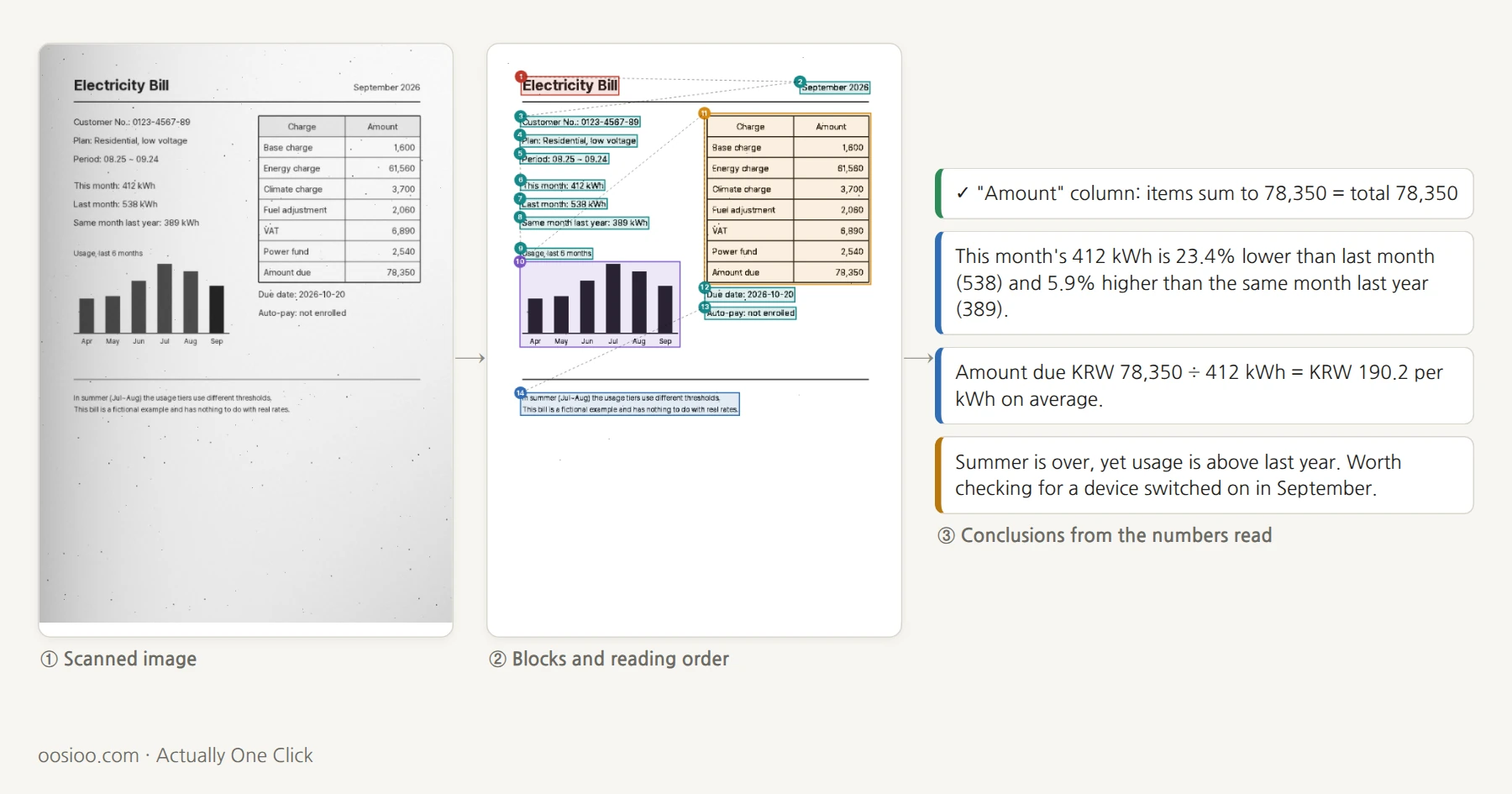
How Does AI Read a Sheet of Paper? 112 Years of OCR, and a Toy That Takes a Scanned Document All the Way to Conclusions
OCR, reading text from photographed or scanned documents, began in 1914 with a machine that turned letters into sound. Today models of about 1B parameters convert tables and formulas to Markdown and plug into tools like Claude Code through MCP. I traced those 112 years and built a single-file Document Reading Dissector that binarises scanned receipts, bills and statements, finds the text, decides the blocks and reading order, recognises the letters, turns tables and key-values into data, and checks the sums.