oosioo
Read in English
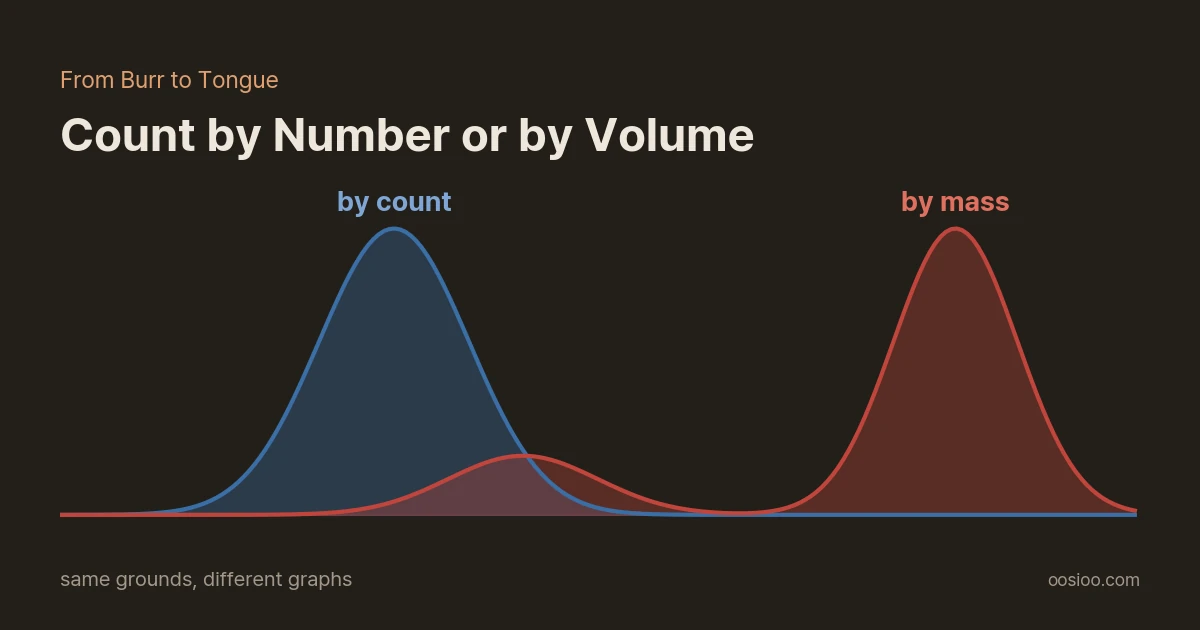
Count by Number or by Volume
What is the vertical axis of a particle-size graph a percentage of? The same ground coffee peaks at 13 µm if you count by particle number, but past 800 µm if you count by weight. Using the actual 1,578 particles from a public example photo and a model that adds back in the fines, I worked out how much the graph changes depending purely on how you count — and why a camera-measured count graph ends up looking more like the camera than the coffee.

Who Sent the Spam That Told Only the Truth?
The sentence written in the notebook read: 'The internet is overflowing with bad information. But what if the junk mail you just received contains nothing but perfect truth? Who sent it?' This piece traces the cat-and-mouse game from early word-counting spam filters through Bayesian filters, sender authentication, and machine learning, up to AI phishing that has erased its old clumsiness, deepfake video calls, and emails aimed at AI assistants. It examines why well-made lies start with the truth, why opinion manipulation now targets the answers of AI search engines, and closes with five questions to ask whenever you receive information. The twelfth piece in the 'One Page Today' series.

The One Who Gives First (4) — Sustaining a Relationship Is Harder Than Starting One
Reciprocity breaks down the moment one side feels "I'm the only one giving." Here's how to make reciprocity explicit, how to repay and forgive, and what becomes of those who only take.
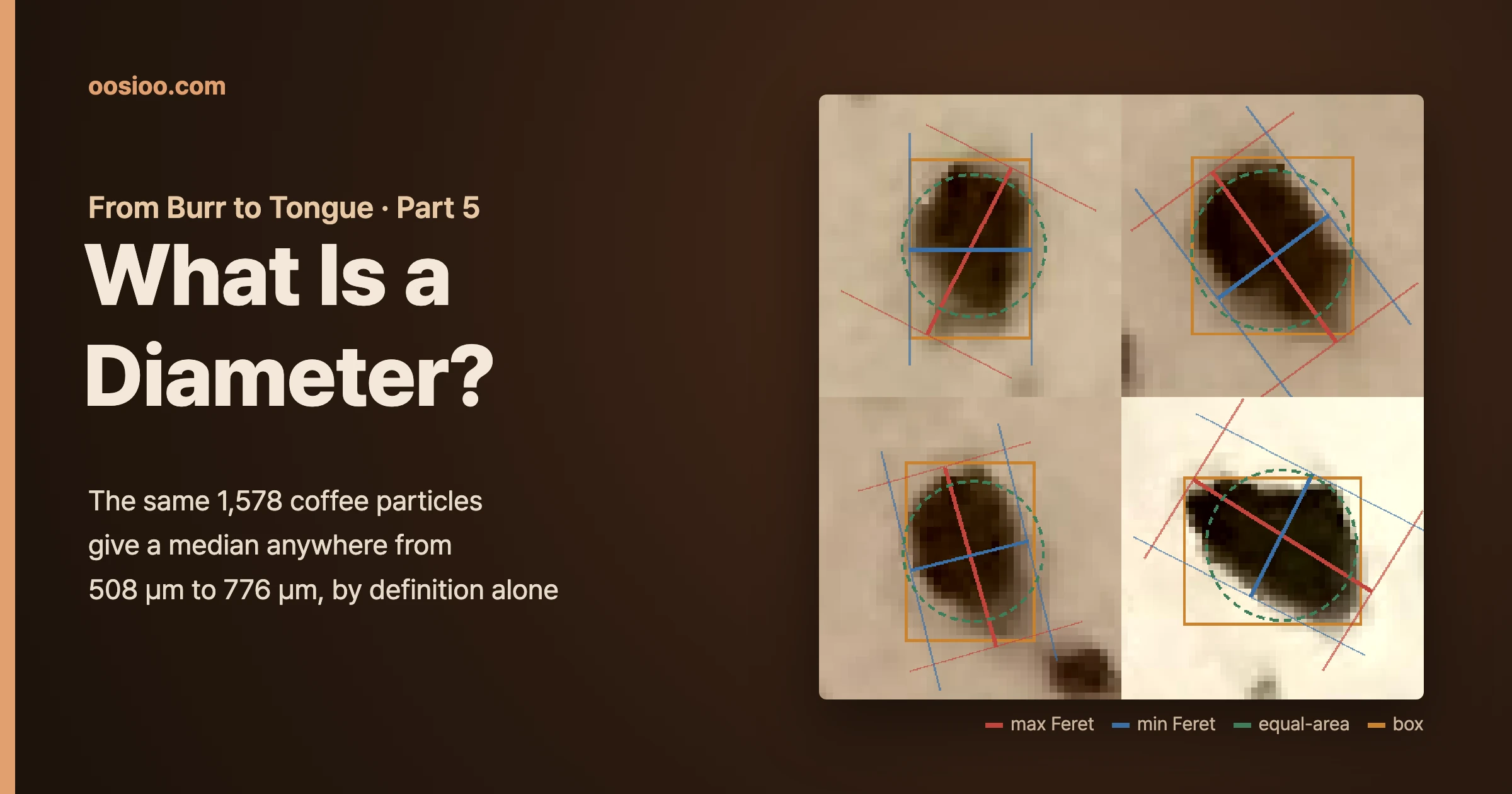
What Is a Diameter?
Once particles have been picked out of a photo, their size has to be written down as a single number. But flat, elongated coffee particles don't have just one diameter. Measuring the same 1,578 real particles from a public example photo under five different definitions, the median ranged from 508 µm to 776 µm. The piece also calculates how the thickness axis — invisible in the photo — changes both the sieve-measured size and the volume.
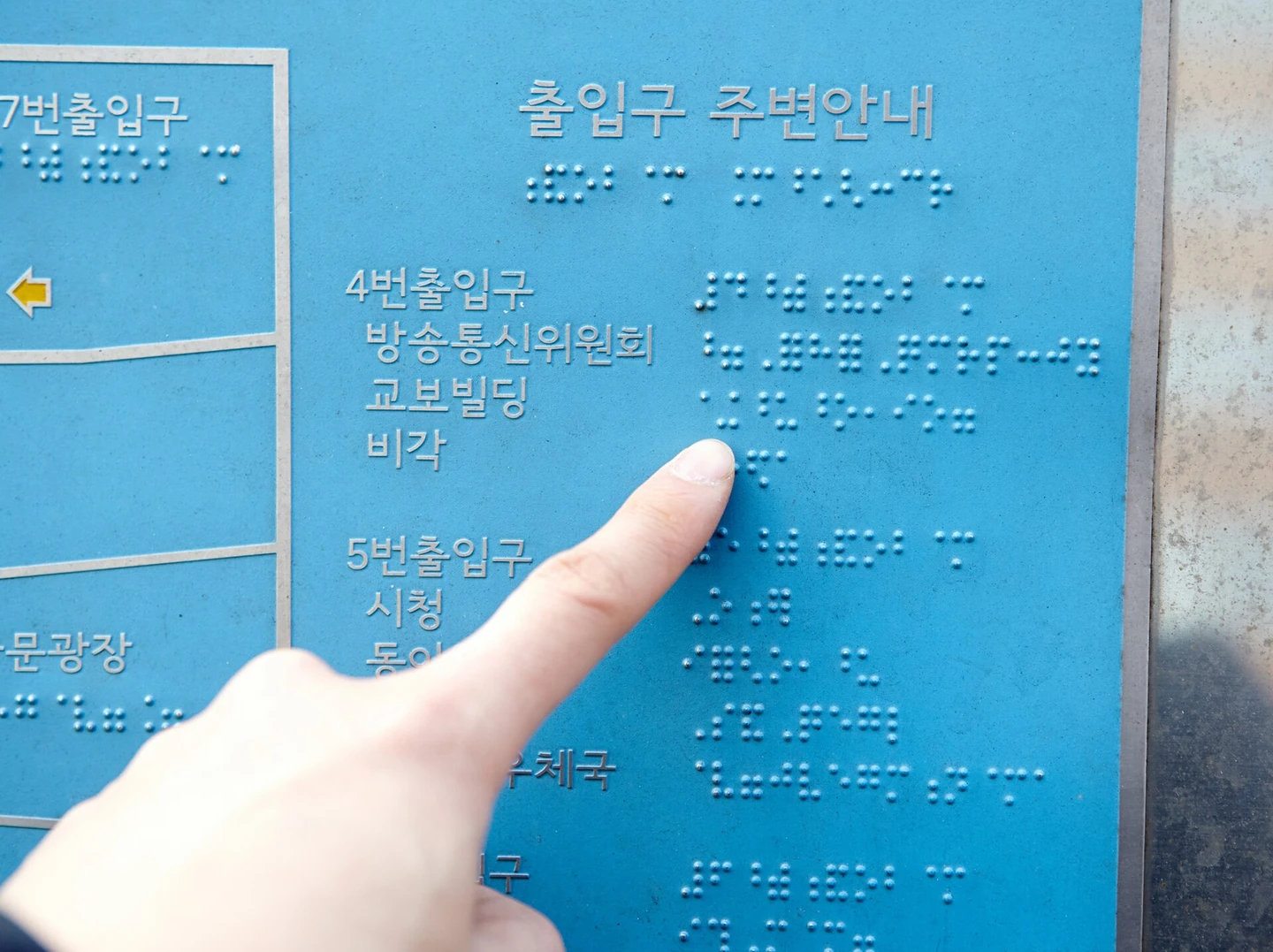
Thinking About the Story of Someone Who Can't Say What They Need to Say
The sentence written in my notebook read: 'There is a person who cannot say what they need to say. Think about their story.' This piece follows the technology that has spoken on people's behalf — from braille and Stephen Hawking's robotic voice to voices rebuilt from family members' speech, devices that turn brain signals directly into sentences, and the difficulties of sign-language translation. I also built a small tool of my own that transcribes speech into braille and lets you tap pictures to speak instead. Finally, it looks at companion animals that can't say they're in pain even when they are, and tomatoes that emit ultrasound when they're thirsty. The eleventh piece in the 'One Page Today' series.
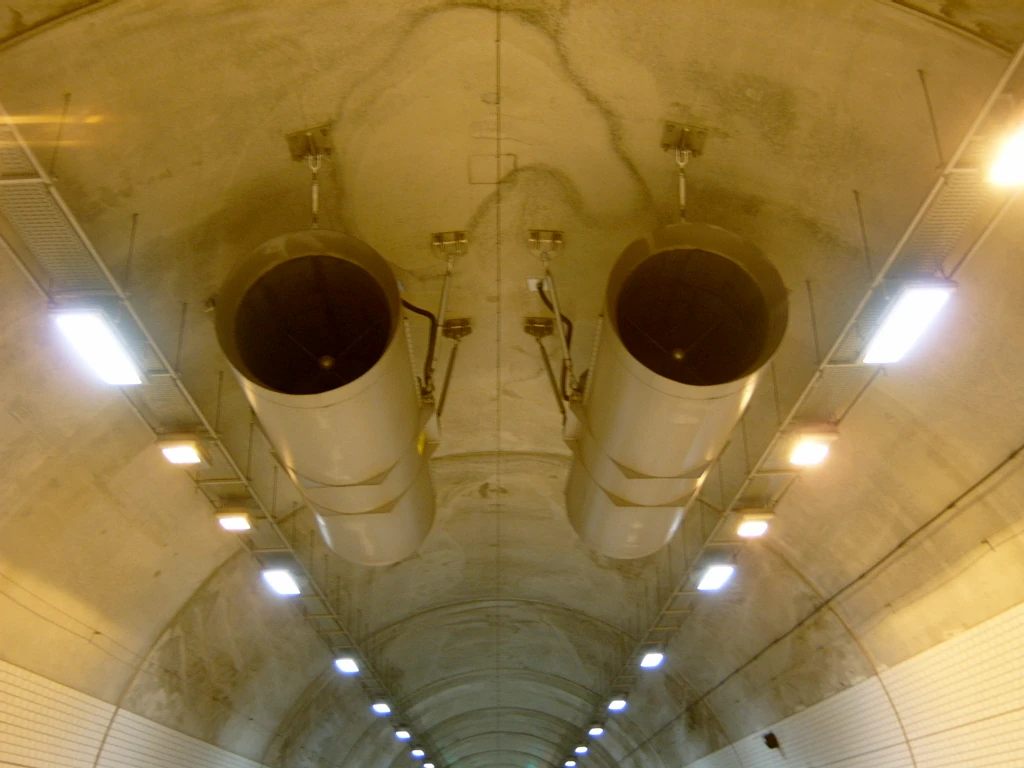
Was the Bus Driver Who Told Us to Close the Windows in Tunnels Right? — Running Tunnel Air Through a Simulator
Tunnels have jet fans hanging from the ceiling and cars rushing through fast, so it seemed like dust would clear out quickly. I tracked down real measurement data and built a simulator that calculates tunnel airflow and dust by varying the number, size, and speed of vehicles along with road-surface dust, to check the old folk wisdom. While I was at it, I also looked into whether AI-built simulators are a threat to simulation software companies.

The One Who Gives First (3) — Thirty Minutes Buys You Three Days
Reciprocity works best when something trivial for me becomes a big help to someone else. Let's talk about the power of this asymmetry — giving little and gaining much.
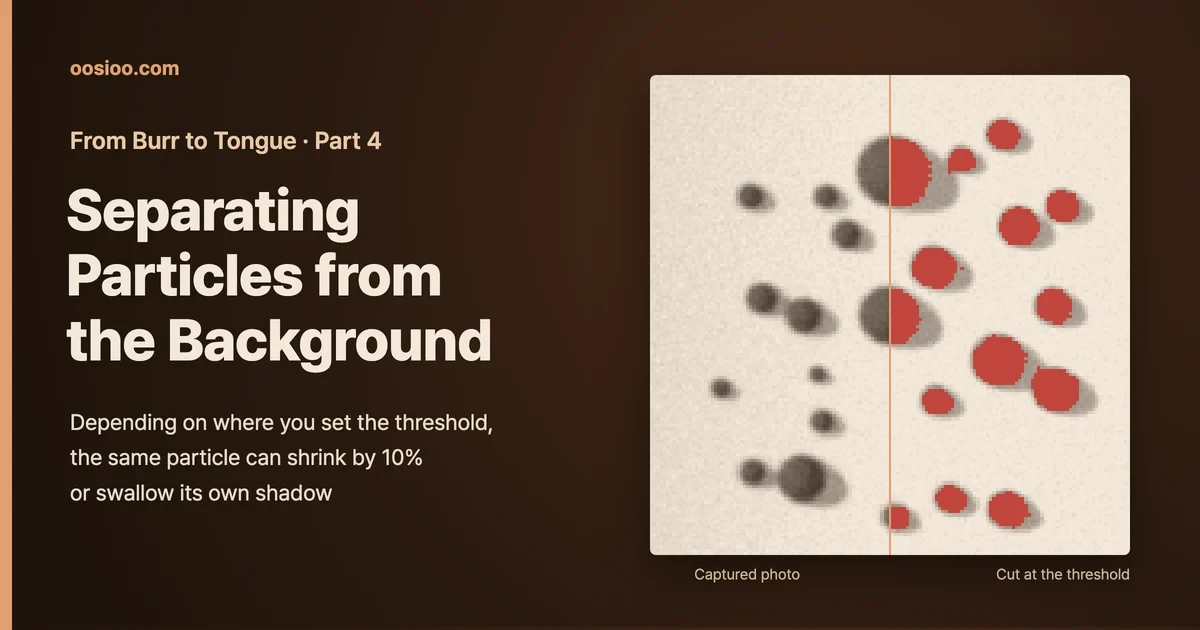
Separating Particles from the Background
To measure particles in a photo of coffee grounds, you first have to decide where the background ends. I calculated how much oblique light’s shadows, the gap between pixel values and amounts of light, and Otsu’s method can sway the threshold, and used one public example photo to check what flattening the background does.
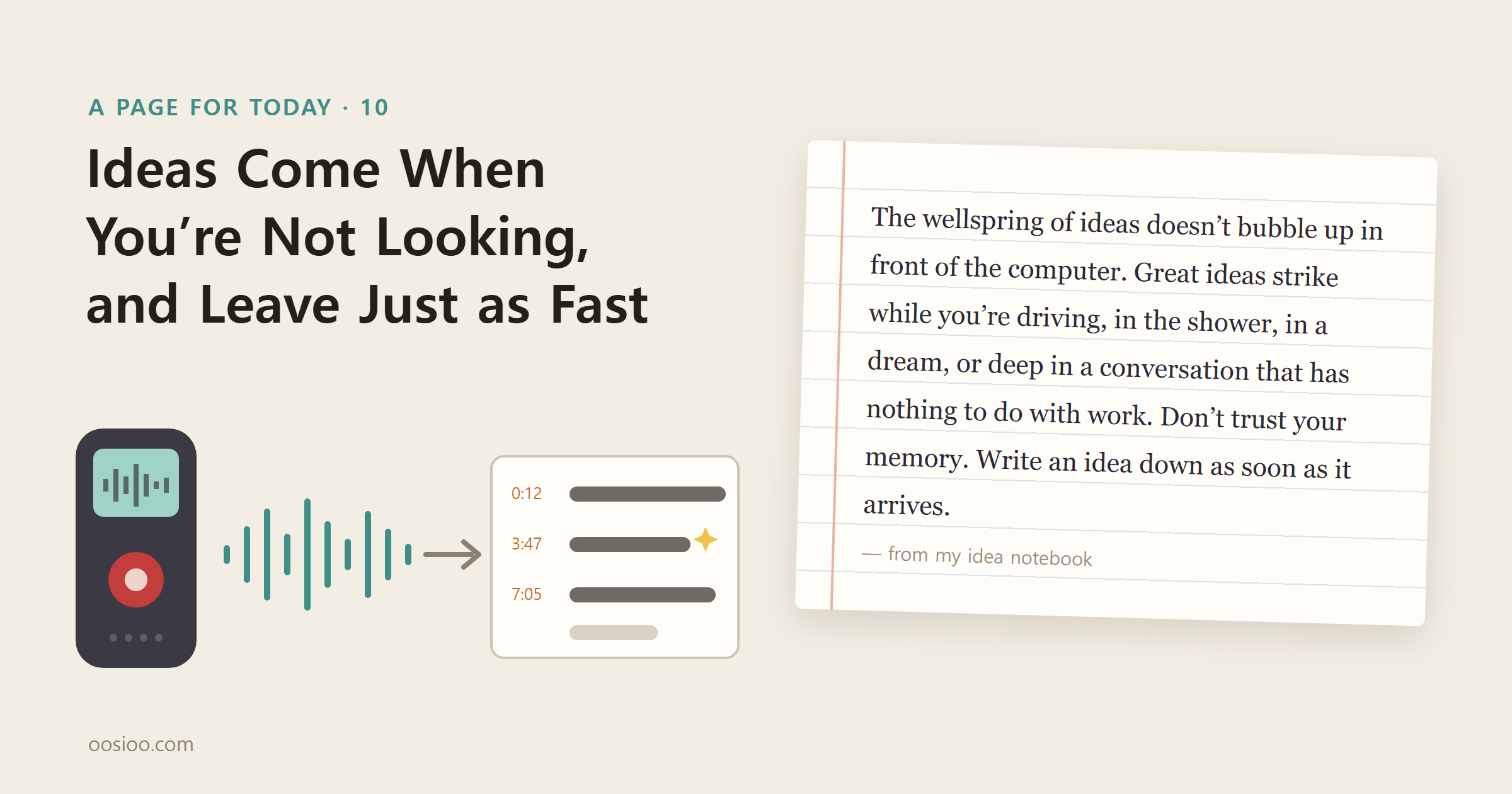
Ideas Come When You’re Not Looking, and Leave Just as Fast
The sentence in my notebook read: “The wellspring of ideas doesn’t bubble up in front of the computer … Don’t trust your memory. Write an idea down as soon as it arrives.” Through physicists’ and writers’ idea diaries, experiments on showers, driving and the 15 seconds before sleep, and a 200-year-old essay on how thoughts take shape as we speak, this post looks at when ideas arrive and why they vanish so fast. Then it turns to the transcription engines that changed my all-day-recorder routine: how they turn sound into text, what happened when I installed one and transcribed a Korean reading, why they hallucinate, and the apps and devices built on top of them. The tenth post in A Page for Today.
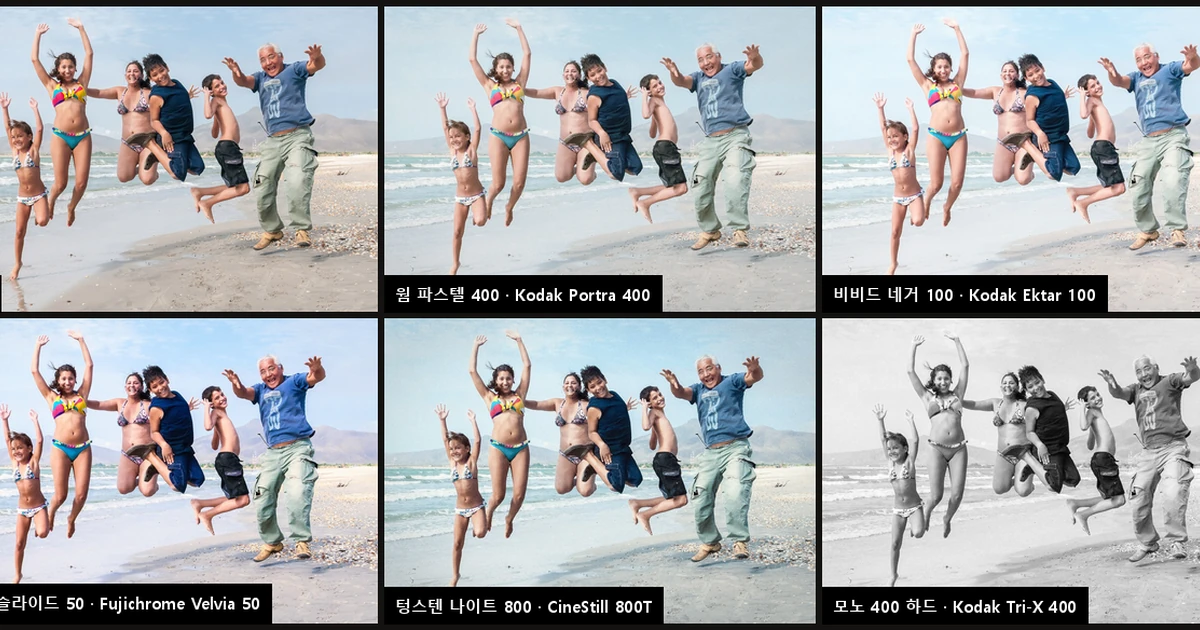
A One-Click Film Camera Built by Reading 1,027 Film Photos — Twenty Film Looks, and the Films the Samples Could Never Tell Apart
I gathered public sample photos of films like Portra, Velvia, and Tri-X, measured their differences in color and tone, and built an app that turns one photo into twenty film looks at once. Tone followed the samples. But color casts followed whoever scanned the film, not the film itself, and four slide films couldn't be told apart from samples alone.

The One Who Gives First (2) — The Cheapest Investment Is Offering First
The cheapest and most valuable things you can give first are your goodwill and your ability. Trust comes back to the people who share credit and open up what they know first.

Scrub the Tub, and You'll Want to Write Again
The line in my notebook read: 'Give the bathtub, or the bathroom, a hard scrub. You'll be surprised how fast you want to get back to creative work.' From Agatha Christie plotting her novels while washing up, and experiments where ideas multiplied after a boring task, to six rulers that separate scrubbing work from making work, the economists' task model, why robots still can't scrub a tub, and what happened when people were handed AI. At the end I built a board for sorting work yourself. The ninth essay in A Page for Today.
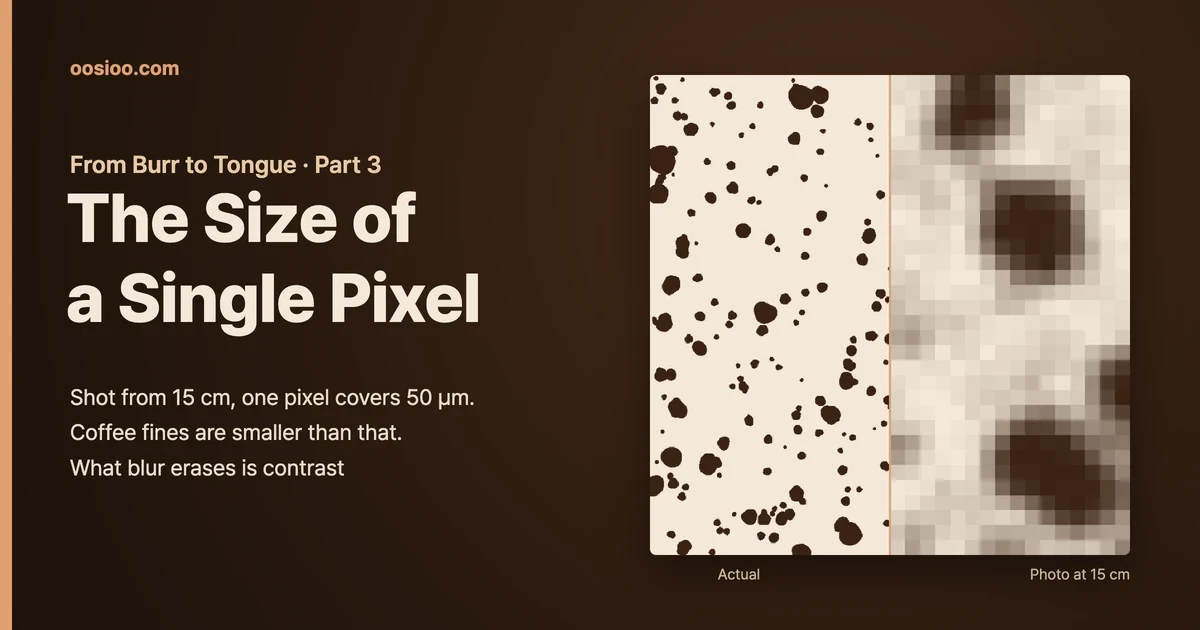
The Size of a Single Pixel
Hold a phone 15 cm above the paper and one pixel covers about 50 µm, while coffee fines peak at 30–40 µm. Following a single particle through lens blur, pixels, noise and a brightness cutoff in synthetic photos shows that, with 0.8 px of blur, particles under about 96 µm vanish entirely and measuring size within ±5% takes a diameter of 8–10 pixels. Photograph a virtual sample that is 20% fines by volume, and the fines shrink to 0.1%.

The Day a Line Hung Over Gwanghwamun — Computing a Course for a Downtown Bike Race
On October 1 I watched a man walk a line 120 m above Gwanghwamun, then came home thinking about events that borrow the city for a day: soapbox races, urban downhill, and the criterium, a bike race that circles a short loop dozens of times. I designed a web app that lays out such a course on a map, keeping as much traffic moving as possible while placing grandstands and ad boards with some logic, and ran a prototype on the real street network around Gwanghwamun.

The One Who Gives First (1) — Why People Start Out Guarded
Relationships come down to give and take. But people are wired to be wary of strangers. Let's talk about the first key to getting past that wall: the science of reciprocity.
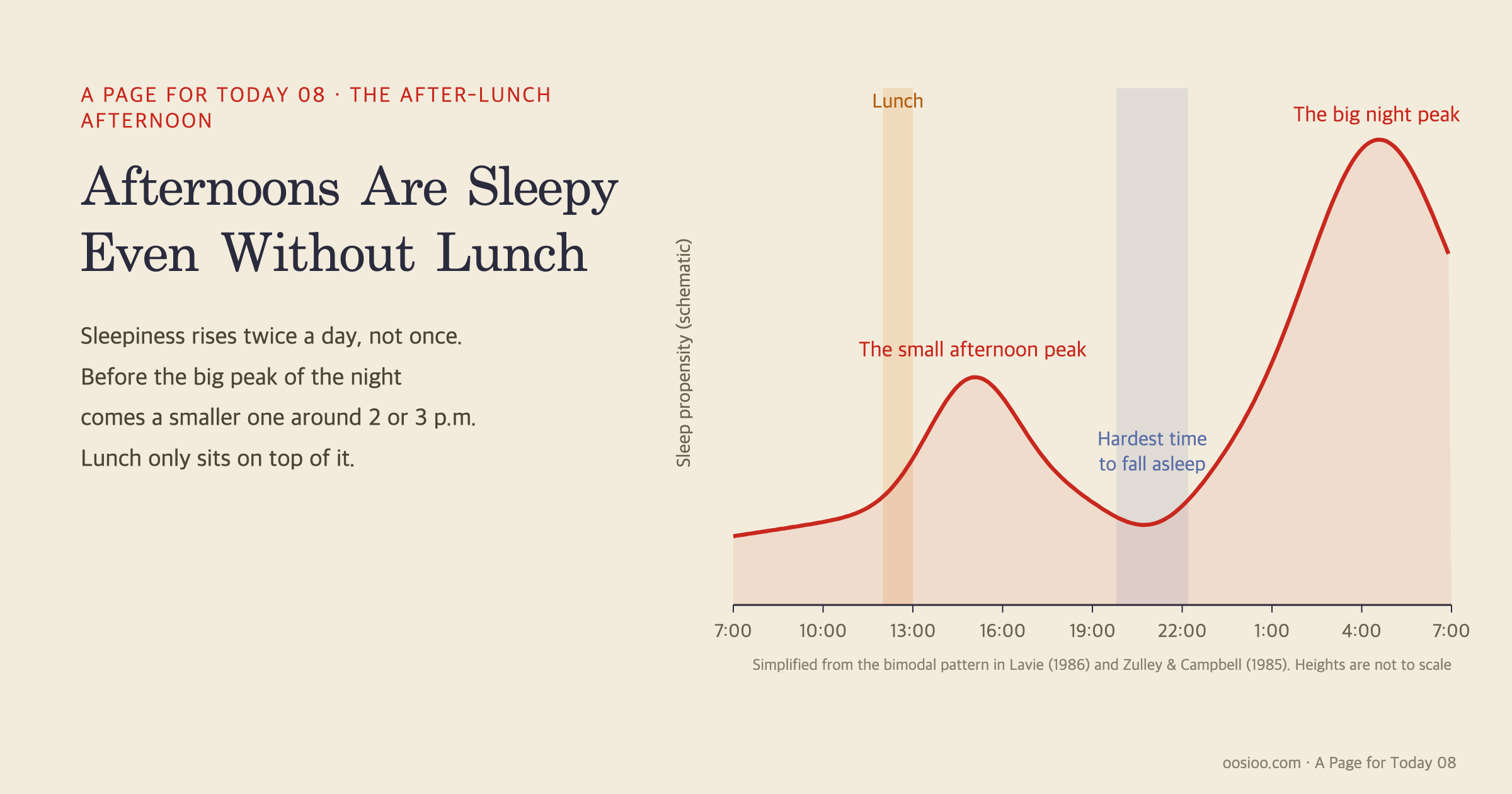
Afternoons Are Sleepy Even Without Lunch
The line in my notebook read, "how to get through the afternoon when sleep comes crashing down after lunch." I trace experiments showing that the afternoon slump arrives even when lunch is skipped and that eating only piles on top of it, check the truth behind folk theories like turkey and blood flow, weigh ten-minute naps against coffee naps, and note the warnings around long or frequent napping. I also look at how a car's eyes catch drowsiness and build my own drowsiness mirror that reads eyelids through a webcam and sounds a warning. The eighth piece in A Page for Today.
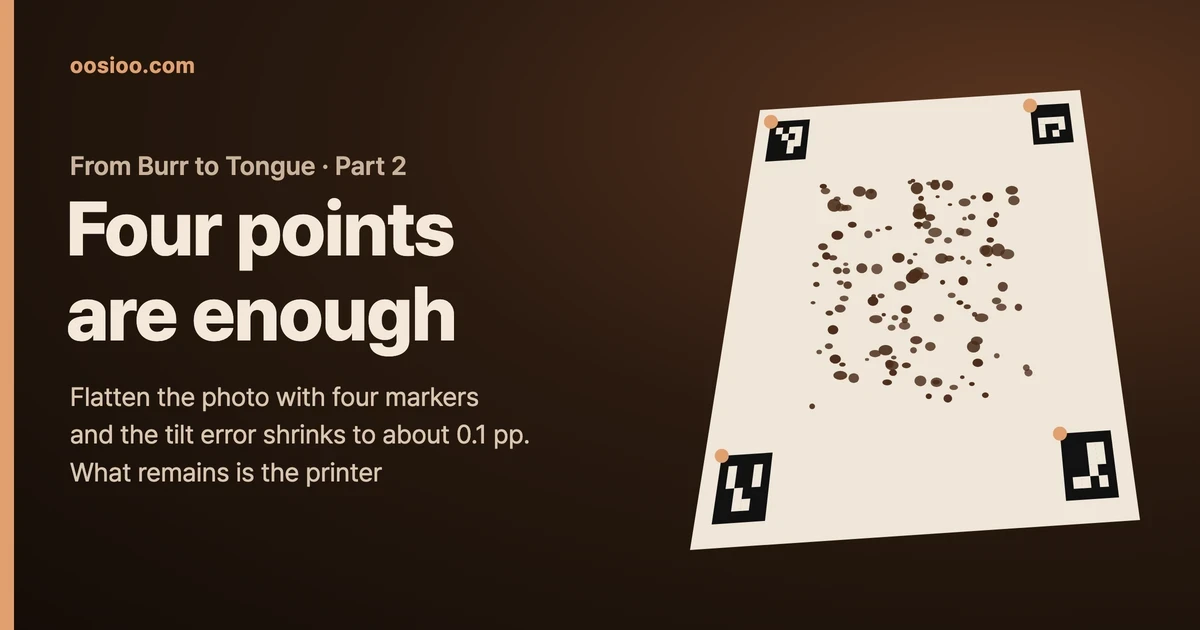
Four Points Are Enough
A single coin can't straighten a tilted photo. Stick four ArUco markers on the paper, and a perspective transform (homography) can flatten the shot — in synthetic-photo tests, the tilt error dropped from 7.7 percentage points to 0.08. But some error still remains, especially a print-scale problem that no photo alone can reveal, and that's what the marker sheet v1 introduced here is designed to catch.

The Messenger (5) — Packaging Can't Stand in for Substance Forever
Storytelling isn't about inventing what doesn't exist — it's about organizing the value that already does. On the end point of substance-less packaging, and how to start today.
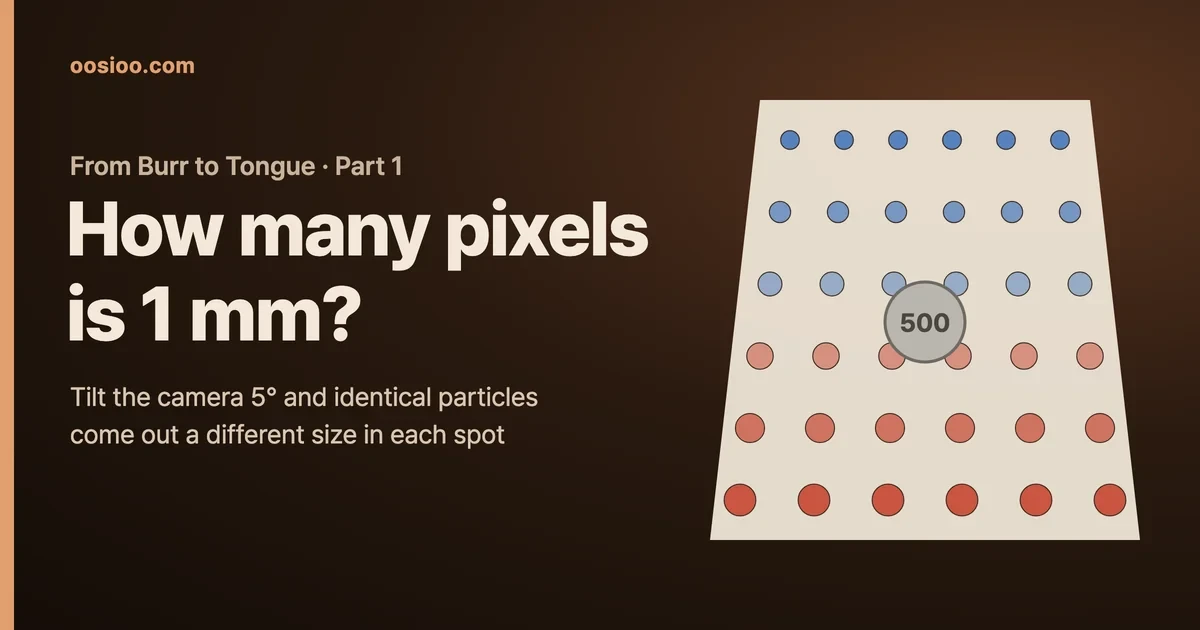
How Many Pixels Is 1 mm in a Photo?
Set the magnification with a single coin, and you're assuming the whole photo shares that same magnification. Tilt the phone 5° and particles of the same size get captured nearly 9 percentage points differently depending on where they sit — yet the coin itself distorts by only 0.4%. A pinhole-camera look at the first step of measuring photos.
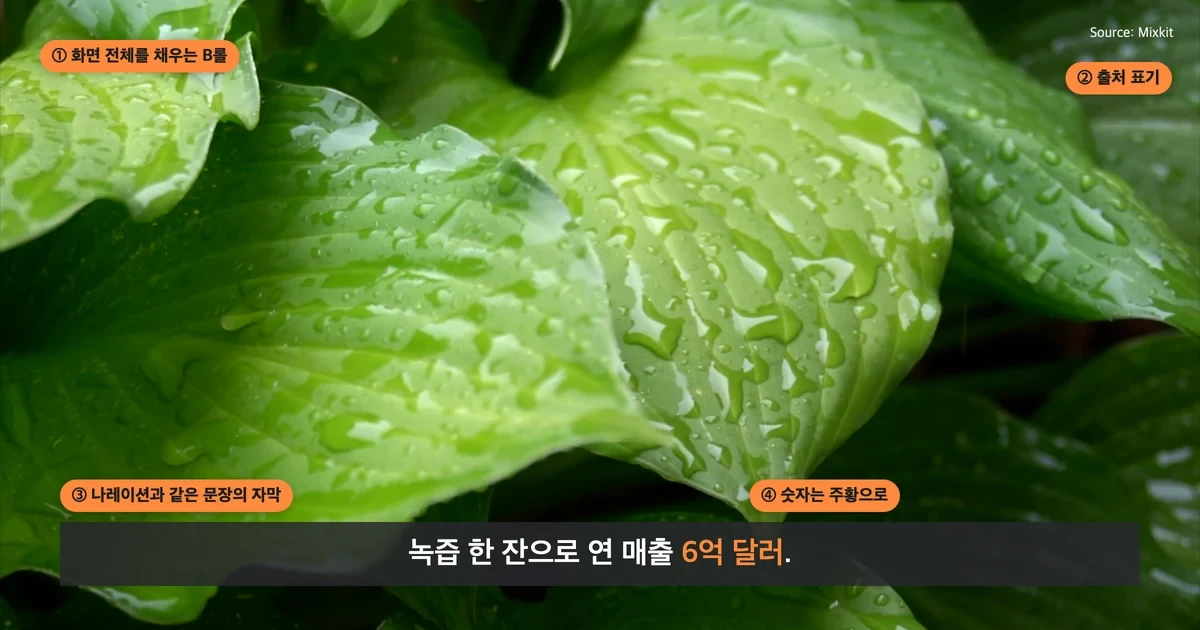
I Fed It One Article and Got a Narrated Video Back — Handing Script, Voice, and Footage Search to AI for 1 Minute 17 Seconds
Feed it an article, and AI writes the script, reads it aloud with TTS, finds footage and photos, attaches sources, and stitches it all into a narrated video. Here's what happened when I tested it with the AG1 story, how it compares to similar services at home and abroad, and where YouTube draws the line.

The One Who Conveys (4) — Sell the Story, Not the Spec
A good brand doesn't sell a product's specs — it sells meaning for the customer. Here's how a story laid on top of the same object can change its value.

Looking at a Cup of Coffee as a System
From the moment a bean fractures between the burrs to the moment it touches the tongue, I've mapped the process in eight stages, charting what research has established at each stage and where the gaps remain. The starting point for the series "From Burr to Tongue."
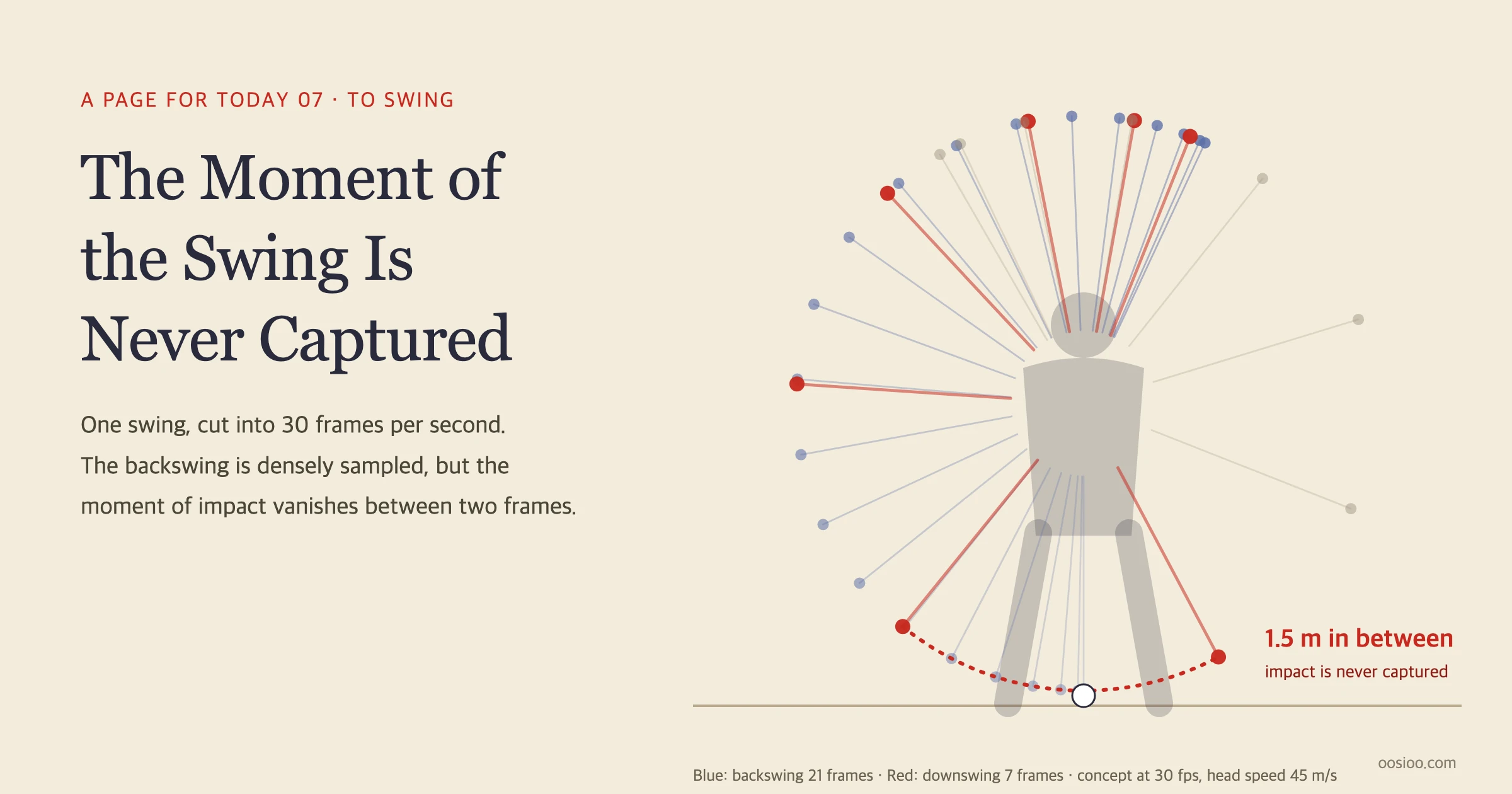
The Moment of the Swing Is Never Captured
The word in the notebook was "to swing." From Muybridge, who photographed a tennis swing with dozens of cameras 140 years ago, to radar built to chase missiles, sensors on the end of a bat, 300-frame-per-second cameras in every ballpark and swing analysis with a single phone, this piece follows the machines that measure a swing. It then sketches a blueprint for a Swing Mirror built from nothing but a webcam and a browser: which libraries and algorithms it would use, and what it would have to give up. Finally, it looks at where the technology can go beyond the stadium. The seventh piece in the A Page for Today series.

The One Who Conveys (3) — Tell People Why, and They'll Move
Without context, there's no goal and no result. Layer the company's meaning, the customer's meaning, and your own meaning onto the same task, and an assignment becomes your work. This is a story about delivering meaning.