oosioo
Read in English
How Does an AI Umpire Call a Strike?
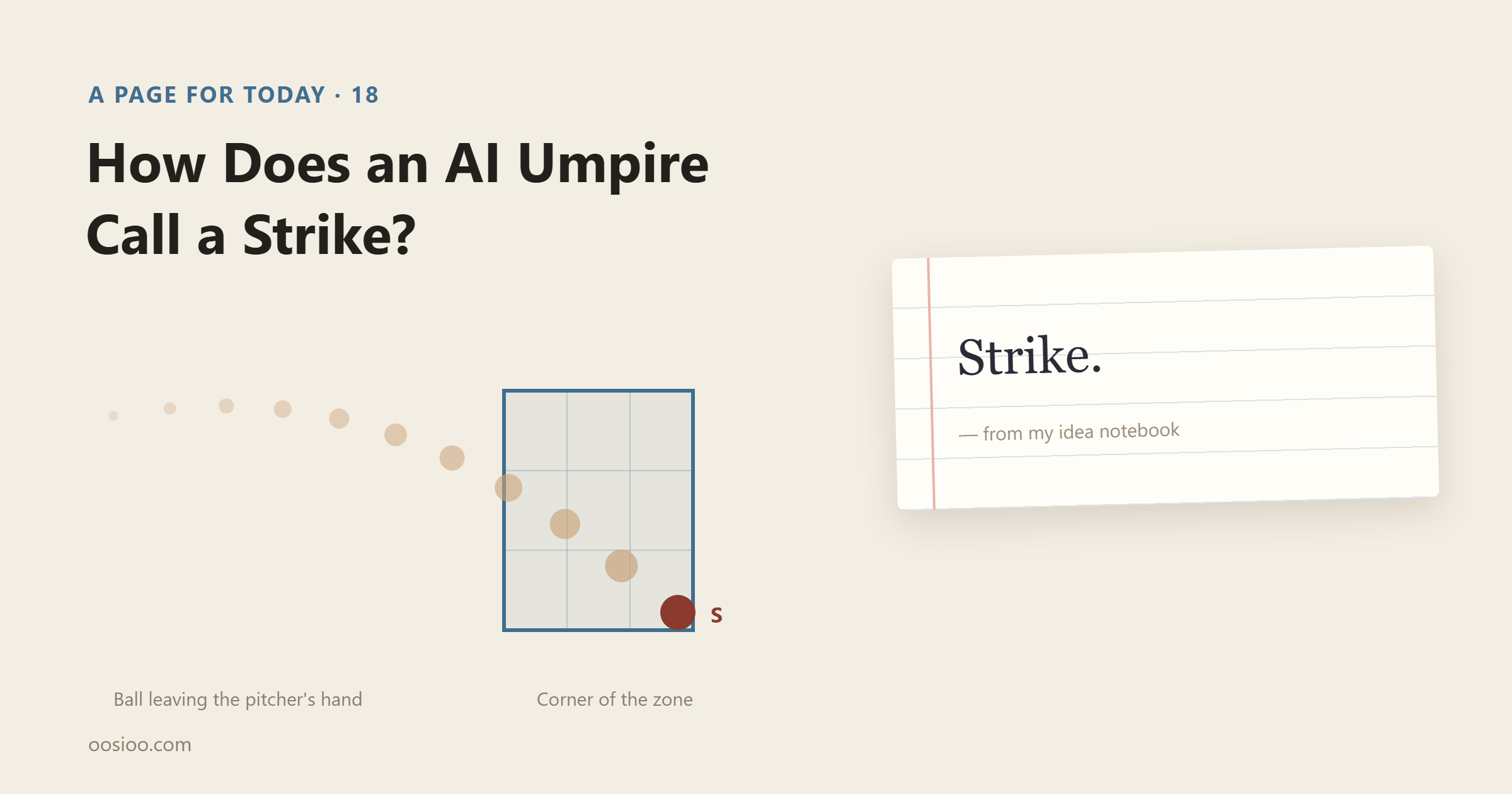
The only thing in my notebook was the word "strike." Since 2024 the KBO, Korea's top professional league, has had a machine call every ball and strike in every game. I walk through how it works, with numbers: cameras track the pitch and produce coordinates, a ratio applied to the batter's height builds the zone, and the call goes to the plate umpire's earpiece as audio. I also look at why MLB brought in the same technology in a different form, the challenge system; which calls are next in line, from checked swings to balls near the foul pole to close plays at first, and what makes them hard; and how far machine officiating has come in tennis, soccer, cricket, gymnastics and F1. There's an interactive tool for placing pitches yourself and watching the zone move as the batter's height changes. The eighteenth piece in A Page for Today.
Does a Different Graph Mean a Different Taste?
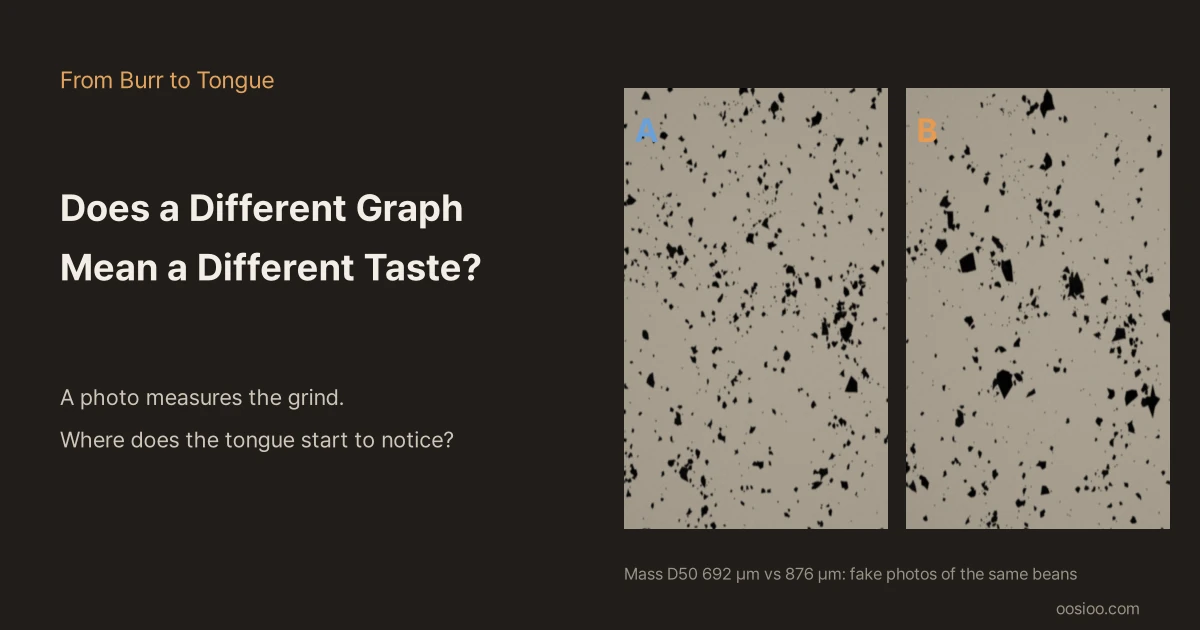
If two photo-measured grind graphs differ, do the cups taste different? In triangle tests people could not tell apart a 25% difference in median particle size (TDS +0.15 pt), and the threshold for drip TDS was estimated at about 0.24 pt. Immersion barely responds to the grind; in drip one taste step takes a D50 change of 50% or so, while a photo resolves 4%. AI eyeballing got the mass D50 within 7–13% but was pulled towards common sizes. Also: the Part 1 grind meter v1.

The Power of Knowing Together (5) — When We Know Together, We Move Together
Share information and people start looking in the same direction on their own. They act without being told, and the team keeps running even when you're not there. That's real leadership.
Who Made the Song I Heard with My Eyes Closed?
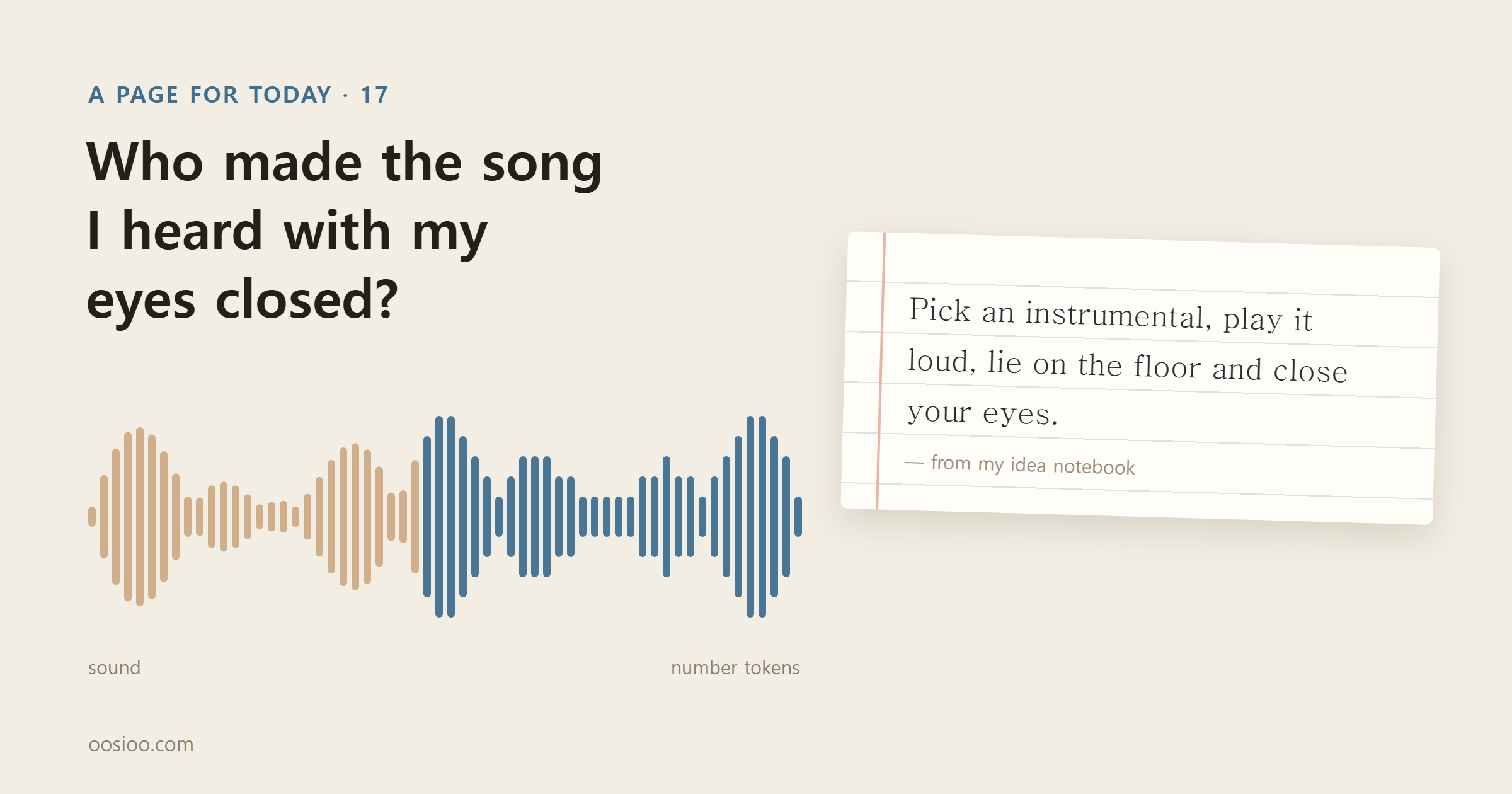
The sentence in my notebook was "Pick an instrumental, play it loud, lie on the floor and close your eyes." Now that the song might be made by a machine rather than a person, I looked at how far Suno, which turns a few lines of text into a song, has come, and what songwriters fear and gain from it. I walked through the two ways machines turn sound into number tokens to make music and the trends in open-source models on GitHub, then made an instrumental, a theme song and a trot version on a single gaming-laptop GPU and measured time and memory. There is also a guide for anyone who wants to try with a DGX Spark or the graphics card they already have. The seventeenth piece in A Page for Today.
Forget the Flying Roadster: Tesla's Real Weapon — Taking Apart How a Self-Driving Car Sees and Decides, with a Simulator
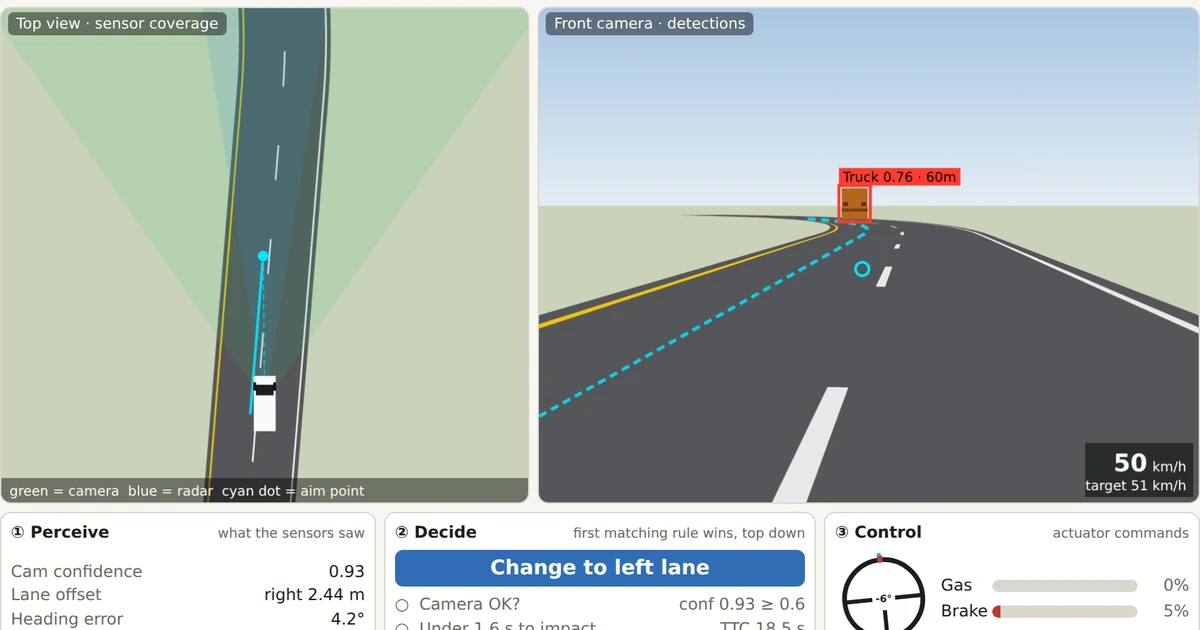
Tesla's flying Roadster grabbed the headlines, but what made Tesla famous is physical AI such as FSD. Today, open data and open-source simulators let individuals experiment with self-driving too. I sorted what is out there by the hardware it needs, then built a very simple self-driving simulator that sees with a camera and radar, decides by rules and moves the steering wheel and pedals, so perception, decision and control all move together on one screen.
Checking Photos Against Sieves
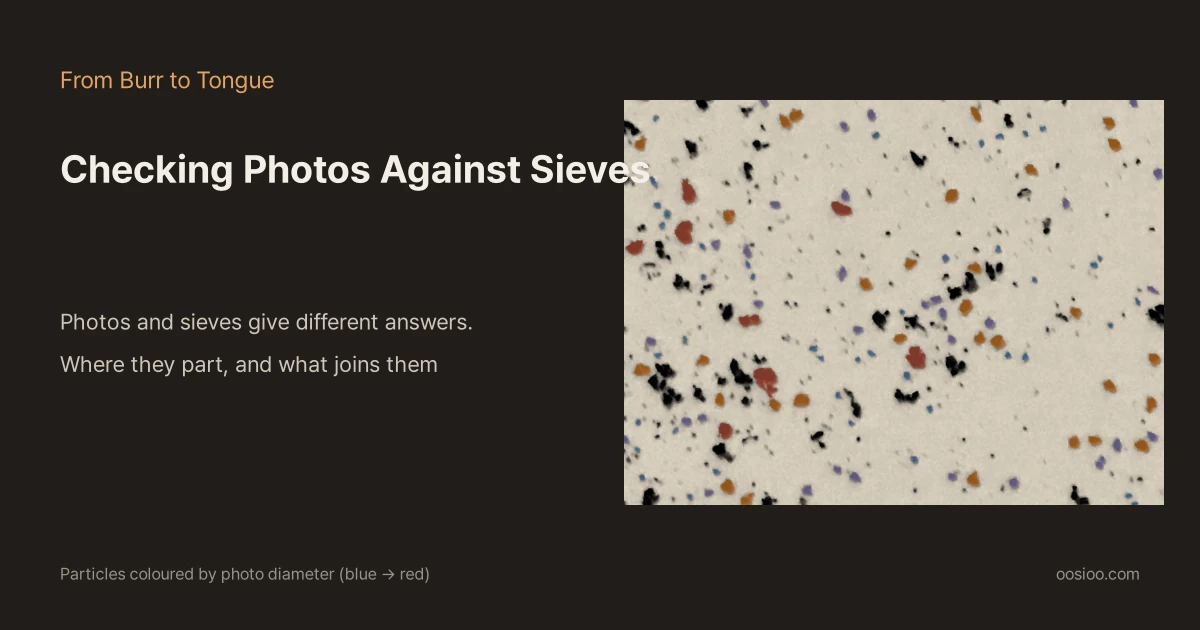
When you calibrate coffee-grounds photos against a sieve such as Kruve, what exactly are you calibrating? I ran round-hole sieves, square-mesh sieves and a photo on the same virtual coffee. The photo D50 came out 27% above the round-hole sieve (11% from the definition of diameter, 14% from unseen fines). A single factor missed by 7–10% when the fines share changed, but adding the weight from one 300 µm sieve to the photo's width matched within 1%.

The Power of Knowing Together (4) — The People Who Put It All Out There
Leaving information wide open feels unsettling. But the moment you open it, the team changes. From not creating secret chat rooms to opening up the finances, these are the rules of transparency.
While I logged meals for my AI coach, one injection changed the game: AI diet coaching, GLP-1 weight-loss drugs, and the AI used to make them
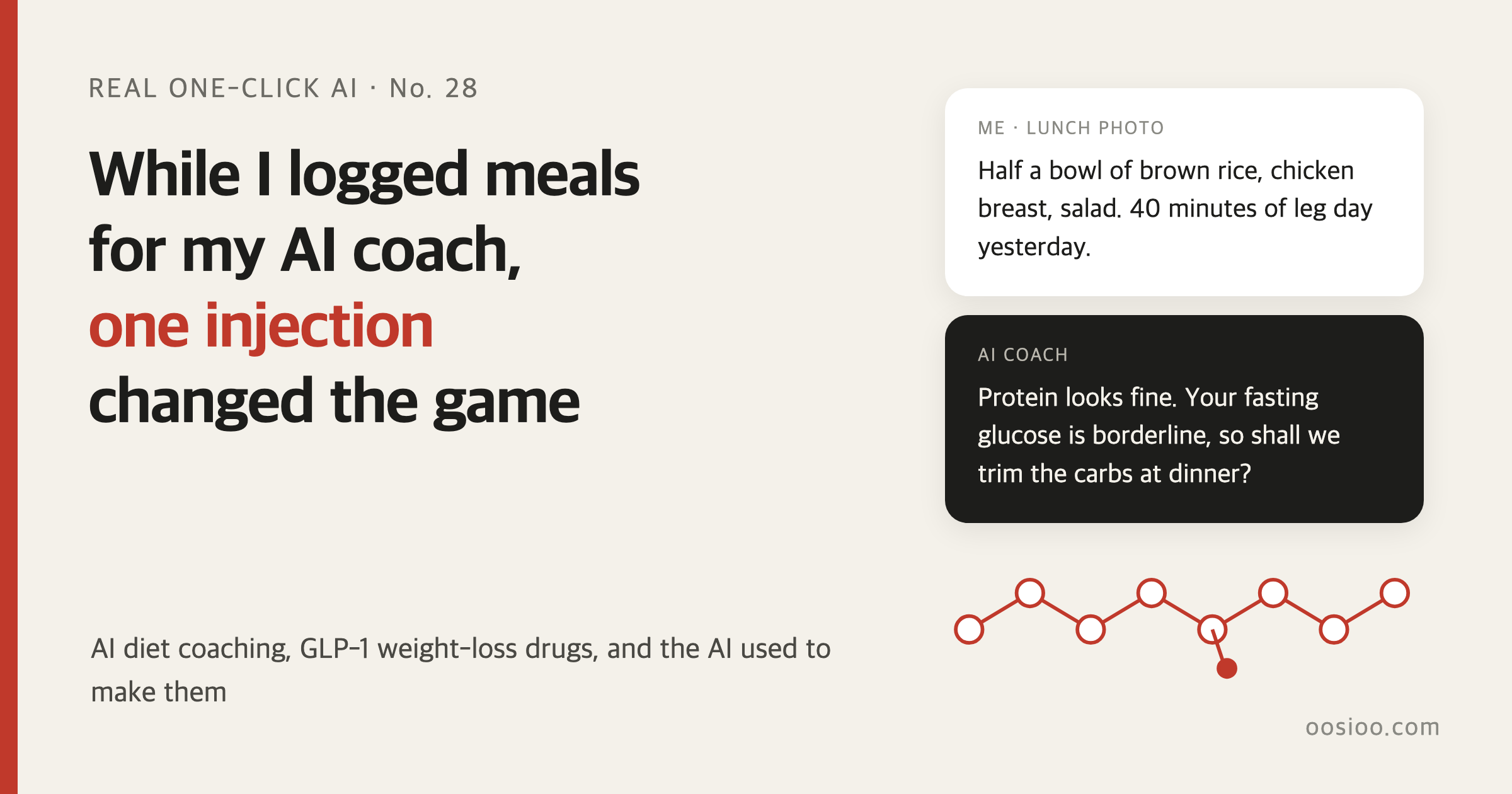
Feeding an AI your check-up results and logging meals and workouts so it can advise you like a personal trainer is already a crowded market at home and abroad. I sorted out, from papers and company announcements, whether people actually lost weight and where the AI gets it wrong. Meanwhile Wegovy and Mounjaro have arrived, and word is that gyms and the diet industry are reeling. I separated what the numbers confirm from rumour, and rounded up where AI is really used in developing these drugs, with examples from Korea and abroad.
Those Who Have Not Yet Raised Their Own Banner
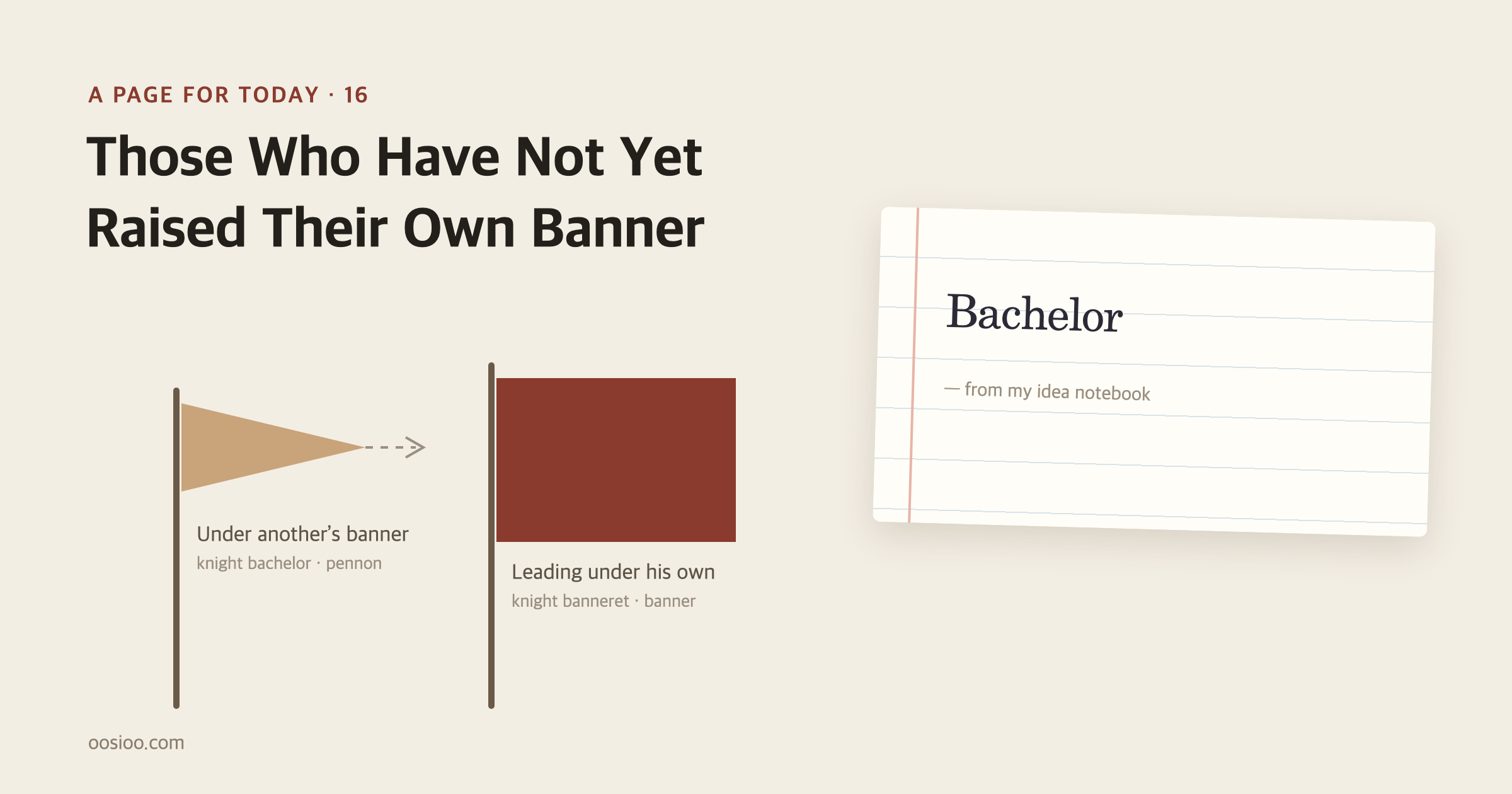
The word in my notebook was "Bachelor." I had only known it as the bachelor of a bachelor's degree, but it first meant a young knight who could not yet raise his own banner and fought under someone else's. I traced how it came to mean both an unmarried man and a college graduate, then followed the numbers on how many more people in Korea and the United States are not marrying and how many more hold degrees. Finally I sorted out who is saying what about where to focus as entry-level jobs for graduates shrink after AI, and how solid each claim is. The sixteenth piece in A Page for Today.
Ten Photos of the Same Coffee
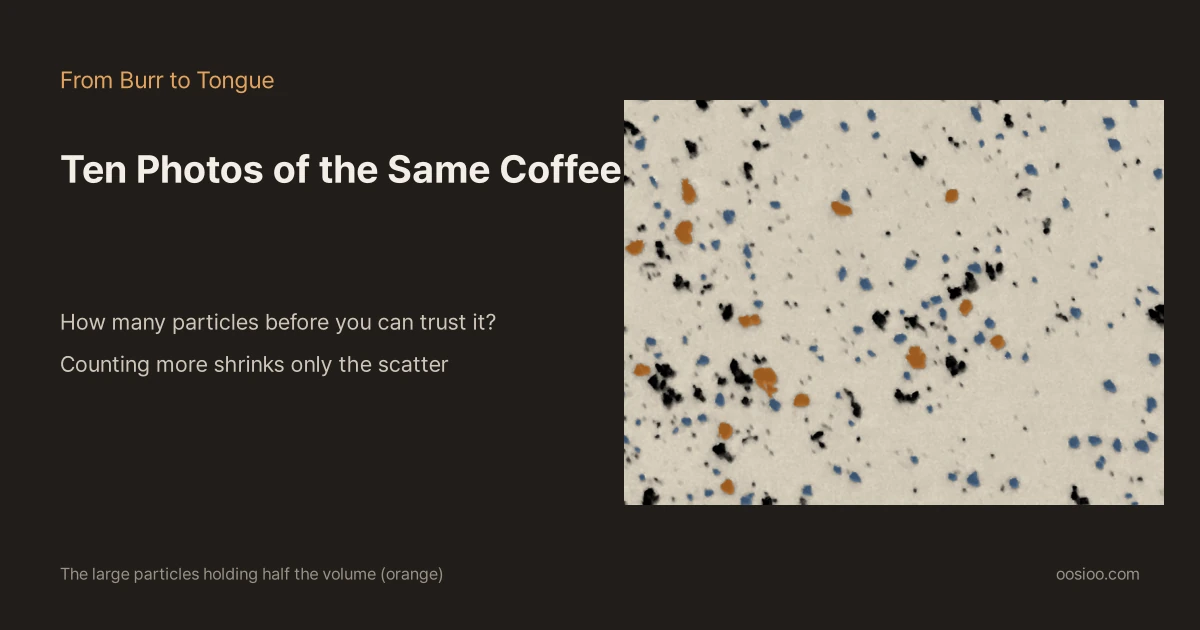
How far can you trust one photo of coffee grounds? Using the bootstrap and a population with a known answer, I measured how many particles you need to count. Reaching ±5% took about 400 particles for the number median, 3,000 to 4,000 for the volume median and over 20,000 for volume D90, and pooling 30 fake photos of the same coffee left the measurement bias (+31%) untouched.

The Power of Knowing Together (3) — Silos, the Cost of Walls
When walls go up between departments and each guards only its own turf, the same company ends up doing the same work twice. That is the price of not sharing information.
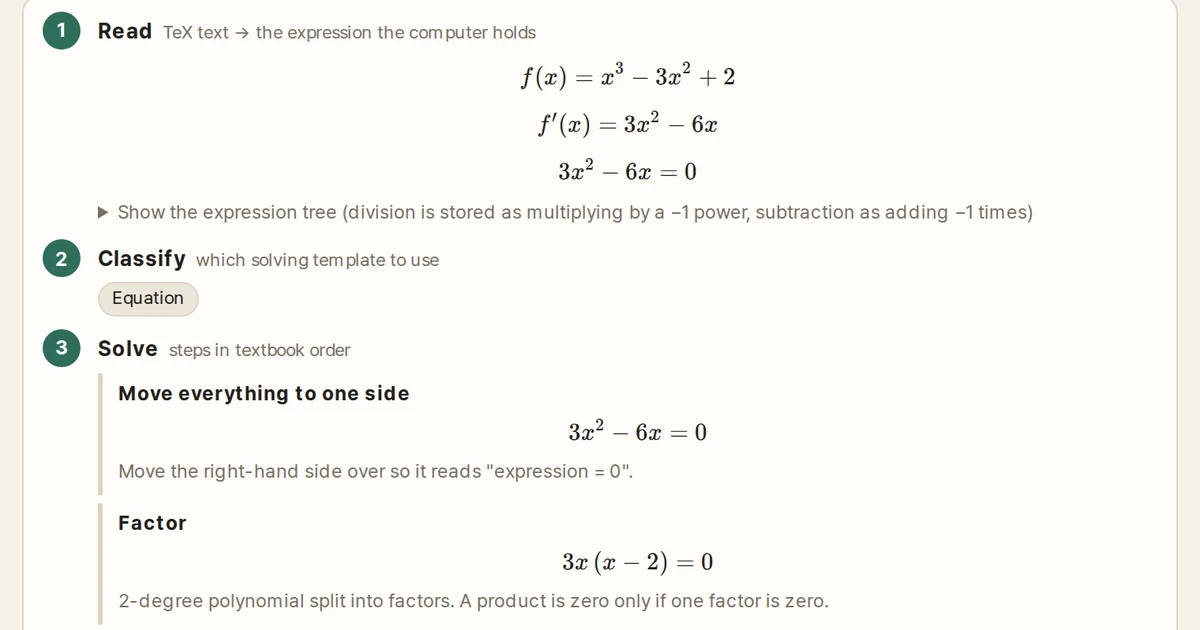
AI Solved a Hard Maths Problem? What Exactly Was Solved — Sorting the Headlines by Kind, and an Engine That Solves Your Equation and Checks the Answer
Headlines like "a 90-year-old problem cracked in 88 hours" or "Riemann hypothesis proof included" now appear several times a month. But the same word "solved" mixes exam problems with known answers, searches scored by a machine, finding papers that already existed, and genuinely open problems. I start with what solving a maths problem actually involves, then sort out what was really solved in 2026 and what was inflated. I also look at how AIs that solve CSAT and SAT problems work, and built a small engine that takes an expression in TeX and shows the solving steps and the check.
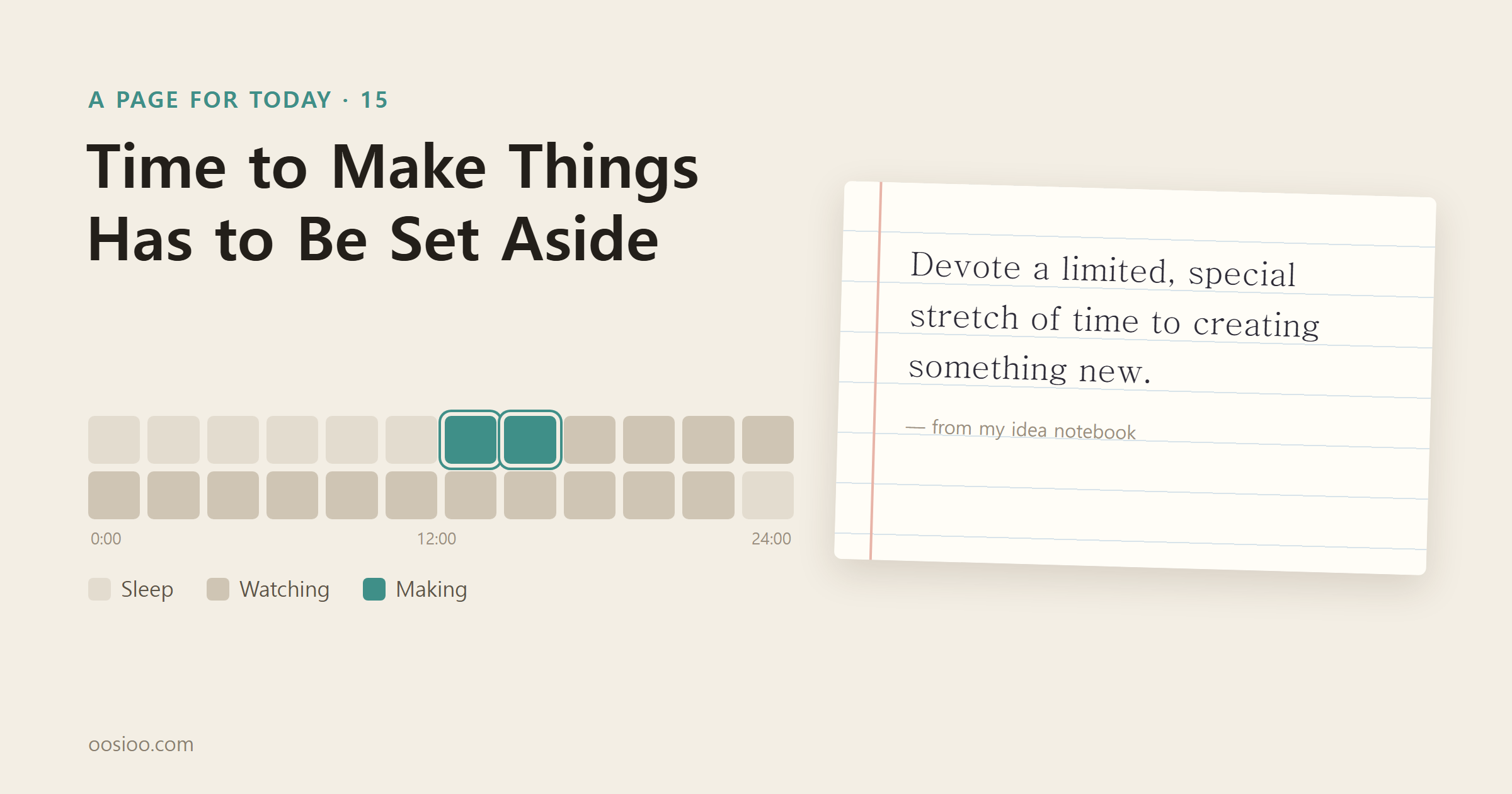
Time to Make Things Has to Be Set Aside
The line in my notebook read, "Devote a limited, special stretch of time to creating something new." These days we spend most of the day looking at things other people made, and with AI making production cheap, the supply grows faster still. I went through studies showing AI beating people on creativity tests and studies showing the best people still ahead, then the claim that plumbers are making a comeback and where it falls short. Finally I set out which hours of the day to set apart, and how, to keep human creativity alive. The fifteenth piece in A Page for Today.
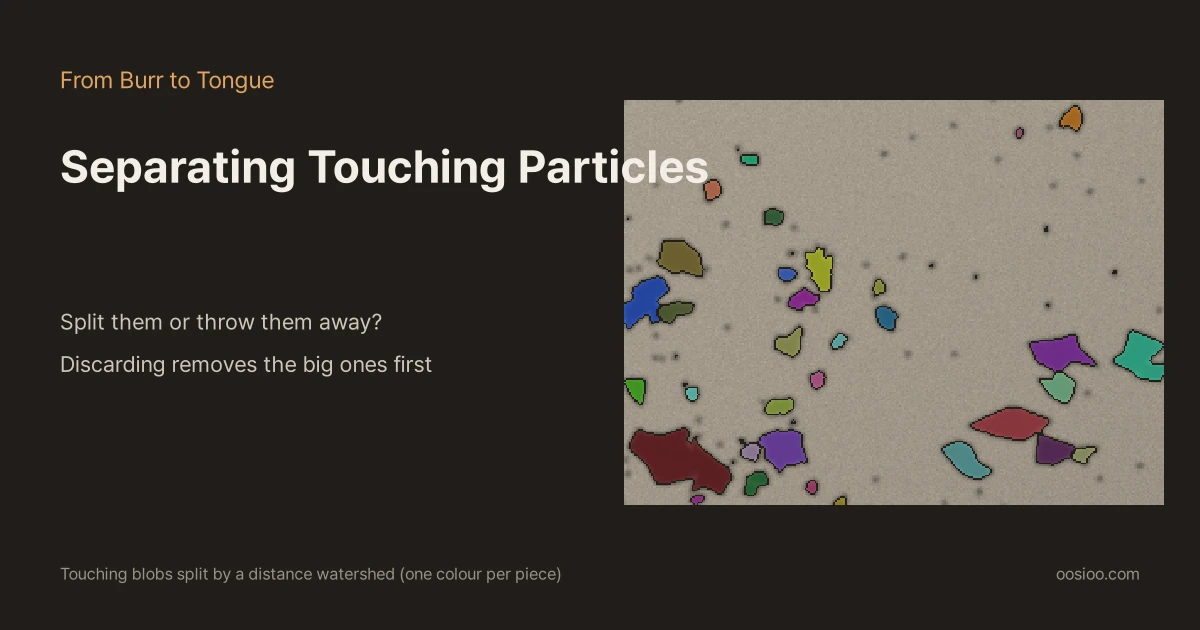
Separating Touching Particles
Should touching coffee particles be split or thrown away? Using fake photos with a known answer, I graded discarding, the distance watershed, coffeegrindsize's breakup, Cellpose-SAM and a U-Net trained on fakes. Even discarding exactly the touching blobs threw out 93% of particles over 1.5 mm and shrank the volume median by 15%, and on the real photo the volume median ranged from 710 to 1,057 µm depending on the method.

The Power of Knowing Together (2) — Information Isn't Power, It's a Bottleneck
It's easy to believe that hoarding information creates power. What it actually creates is a bottleneck. An organization that stops without you isn't a seat of power — it's a prison.
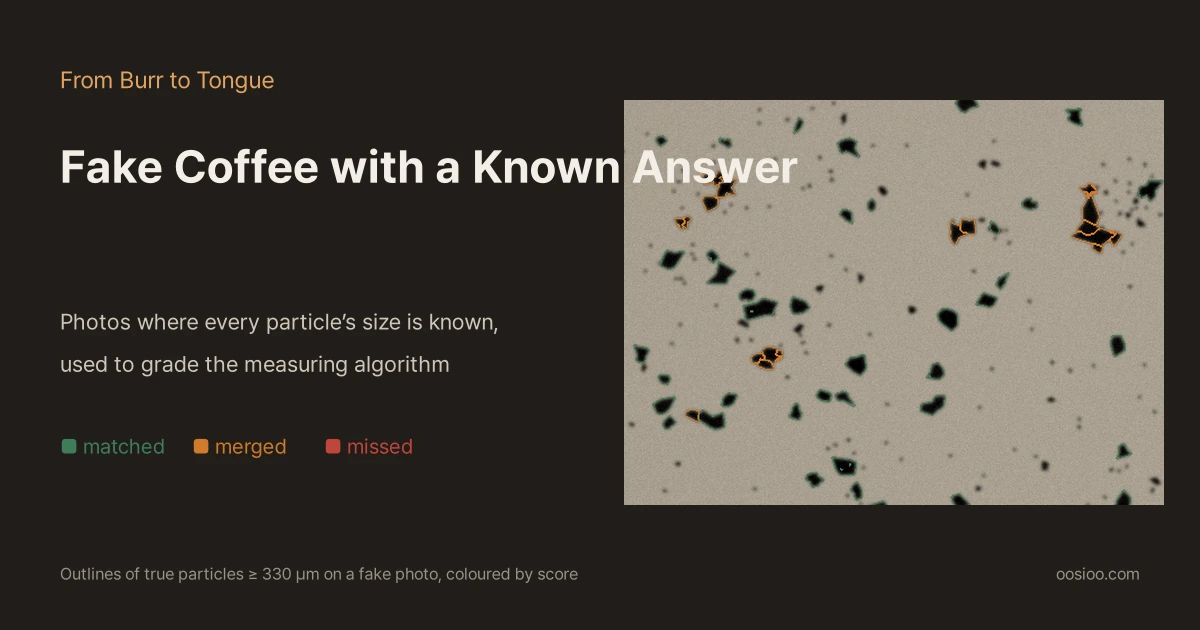
Fake Coffee with a Known Answer
This series has measured Gagné's example photo many times without ever checking whether the numbers are right. I made fake photos in which every particle's size is known, tuned them to the real photo's blur, uneven lighting, noise and shapes, and graded the series' measuring algorithm. A volume-median error of 6% on smooth fakes became 33% on real-like fakes, and most of it came from touching particles caught as one blob.
Cut It Out of Colored Paper
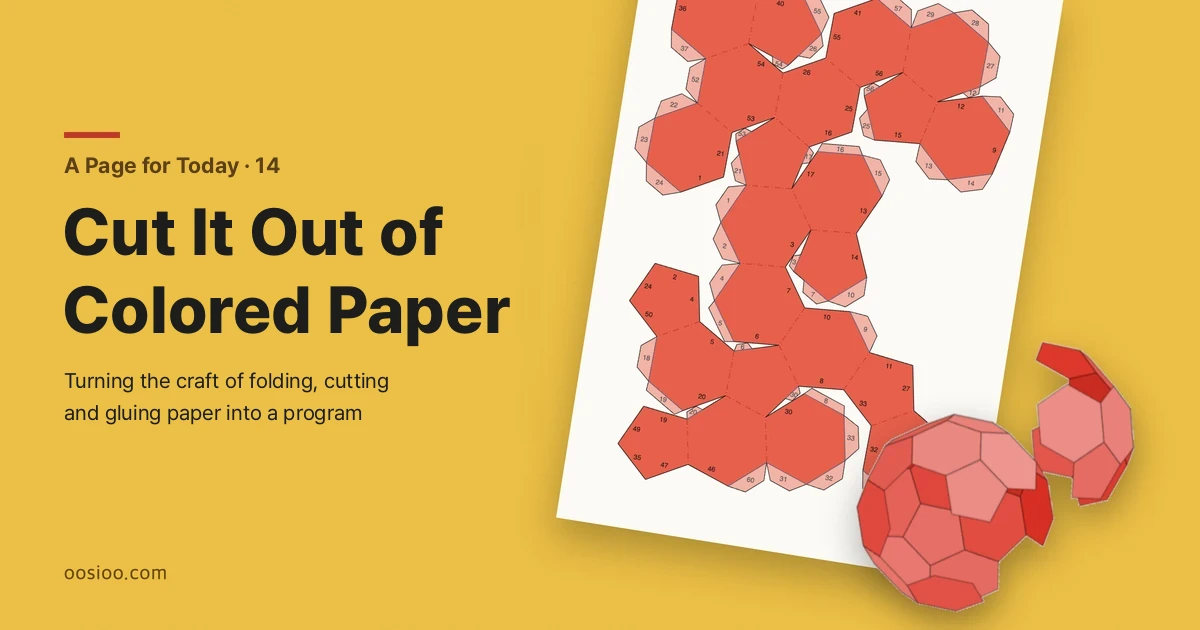
The line in my notebook read, "Cut it out of colored paper." At some point I stopped seeing the colored paper I used to fold as a kid. People who pushed origami all the way folded a rabbit from a single sheet, cut out a star with one snip, and built robots that fold themselves and walk away. After following that research, I borrowed the approach of Anatomy, a Claude skill that explains machines by building them as drawings, and made a skill for papercraft. Give it a shape and it produces a net for colored paper, then checks overlaps, glue tabs and refolding on its own. The fourteenth piece in A Page for Today.
Is a Karaoke Backing Track Just the Original Song With the Voice Removed? — 50 Years of Source Separation, and One Song Split Seven Ways
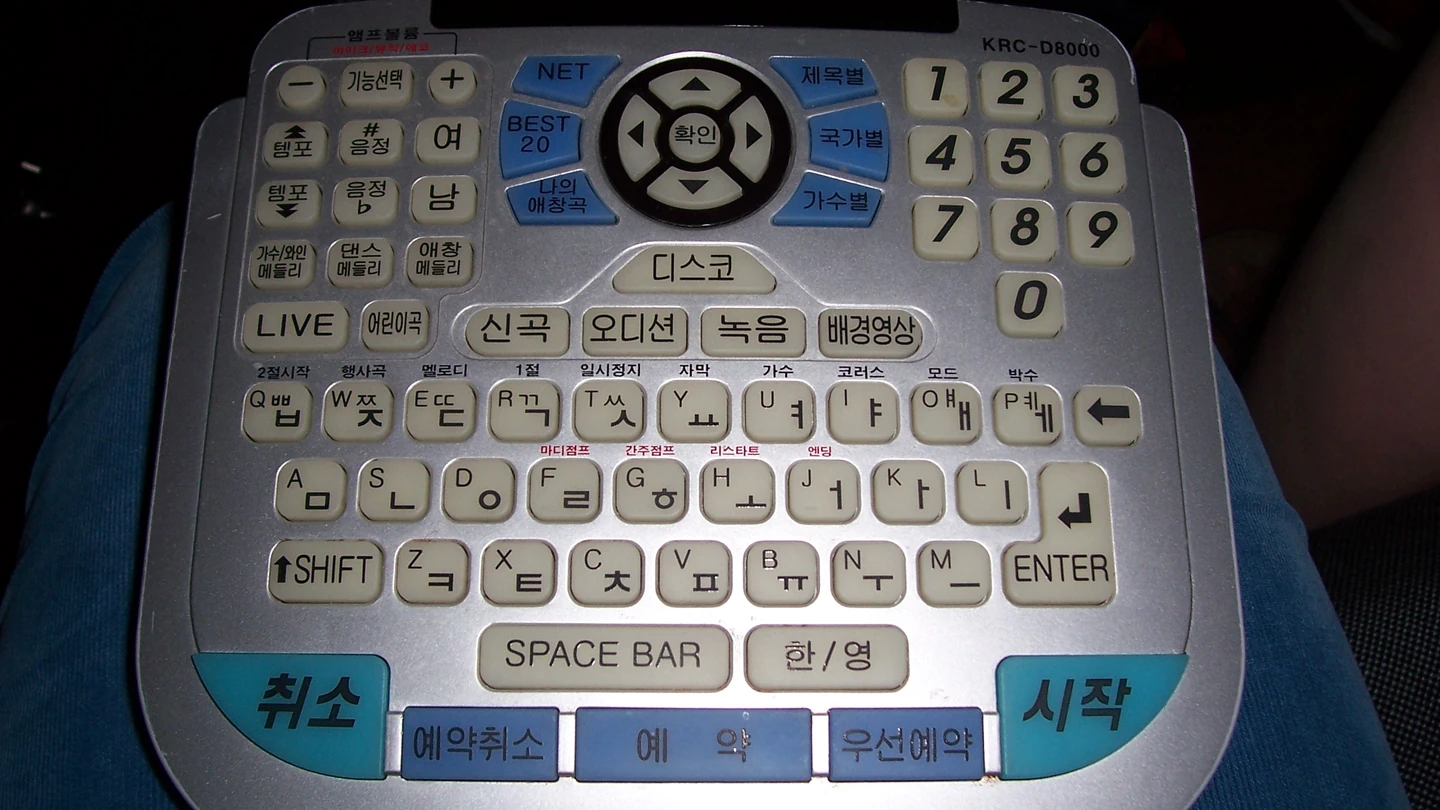
Karaoke backing tracks are not made by erasing the singer from the original. Karaoke companies still transcribe every song by ear and rebuild it from scratch. For decades the common wisdom was that once sounds are mixed, they can't be pulled apart again — and that wisdom collapsed over the past ten years. This piece traces how the technology changed, from a 1970s patent that subtracted the right channel from the left, through matrix factorization and deep learning, to the Beatles' final song. I also split the same songs with seven methods from different eras and scored them.

The Power of Knowing Together (1) — Nothing Can Be Done Alone
A company is a place where people gather to work. So why does someone always end up freeloading, the way it happens in a group project? This is a story about sharing that starts from the fact that no one can do anything alone.

Reading Skin from a Photo, Keeping Only Ingredients with Evidence — An Ingredient Recommender Built to Dodge Where Skin-Analysis Apps Collapsed
Services that use a camera to analyze skin and recommend cosmetics have come and gone for a decade now. We examined where twenty-two prior cases broke down, then built a tool that shows ingredients instead of products — and only ones whose effects are confirmed by randomized controlled trials. It also notes what a photo can never measure, down to numbers that shift with a single light source.
Ride Your Bike at Leisure
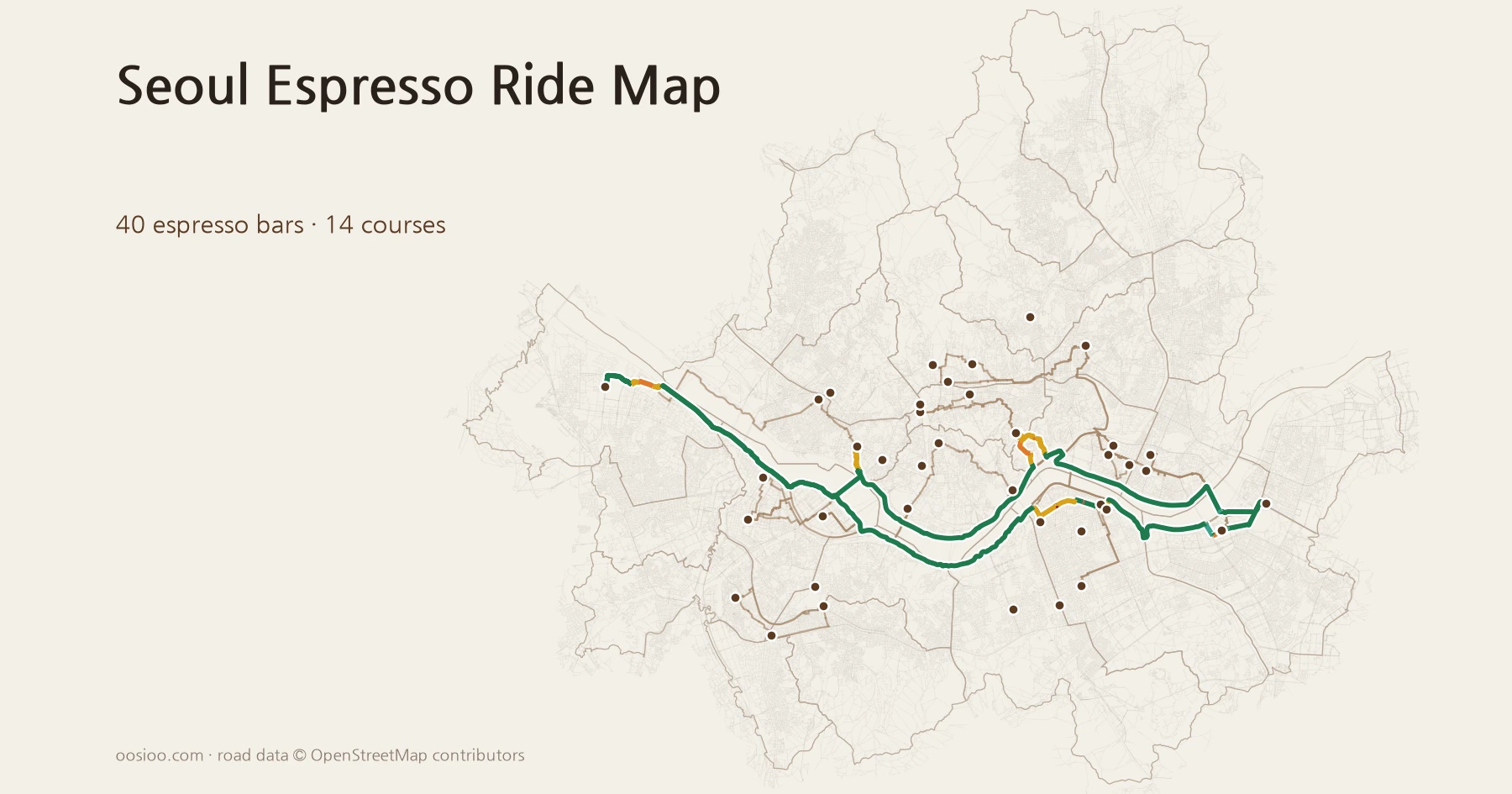
The line in my notebook read, "Ride your bike at leisure." Not long ago there was another death at a marathon. Somewhere along the way recreational sport tilted toward competing on times and gear, and fewer people are taking up cycling. After tracing that trend in numbers, I built courses for an "espresso ride": riding slowly from bar to bar, one espresso at each. I found 40 espresso bars in Seoul, explained how routing works with weights tuned for bikes, and put fourteen courses, from neighborhood loops to a full day, on a Seoul Espresso Ride Map. The thirteenth piece in A Page for Today.
Sieve, Laser, Camera: Why Three Answers?
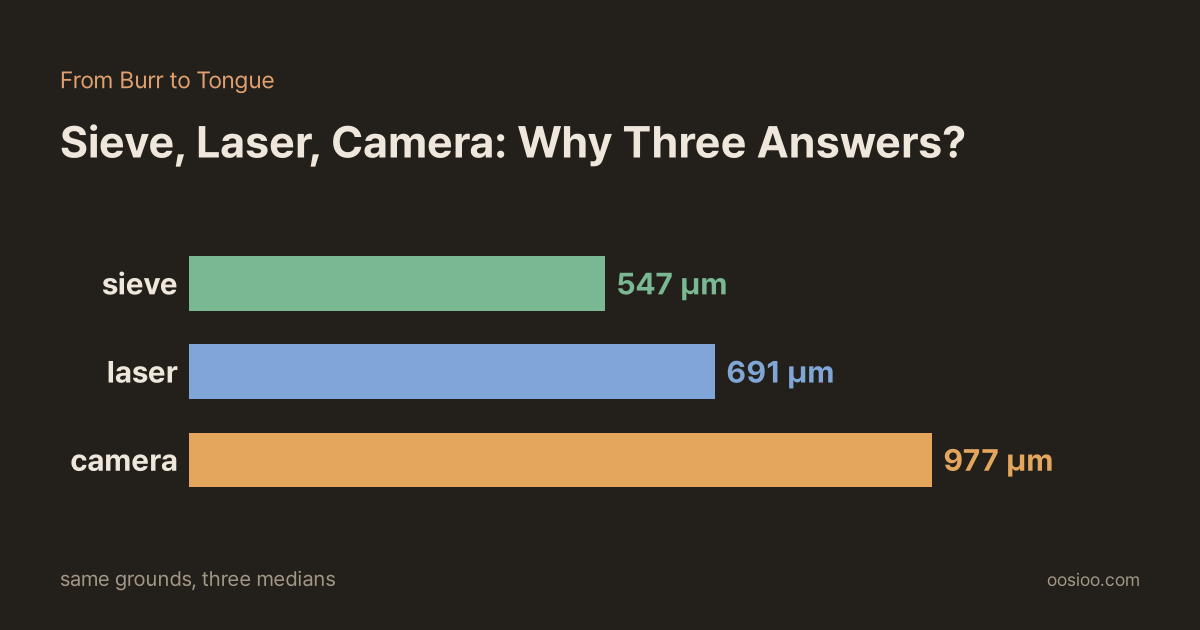
Measure coffee grounds with a sieve, a laser and a camera and you get three answers. Running virtual grounds with known sizes through all three, answers that agree within 1% for spheres split into 547, 691 and 977 µm for coffee-shaped particles. What laser diffraction really measures, and how far the belief that 'the laser is the right answer' holds.

The One Who Gives First (5) — Reciprocity Spreads
Reciprocity spreads from individuals to teams, and from teams to society. But what is never returned is sacrifice. Let's talk about why what looks like a loss is actually the wisest investment.
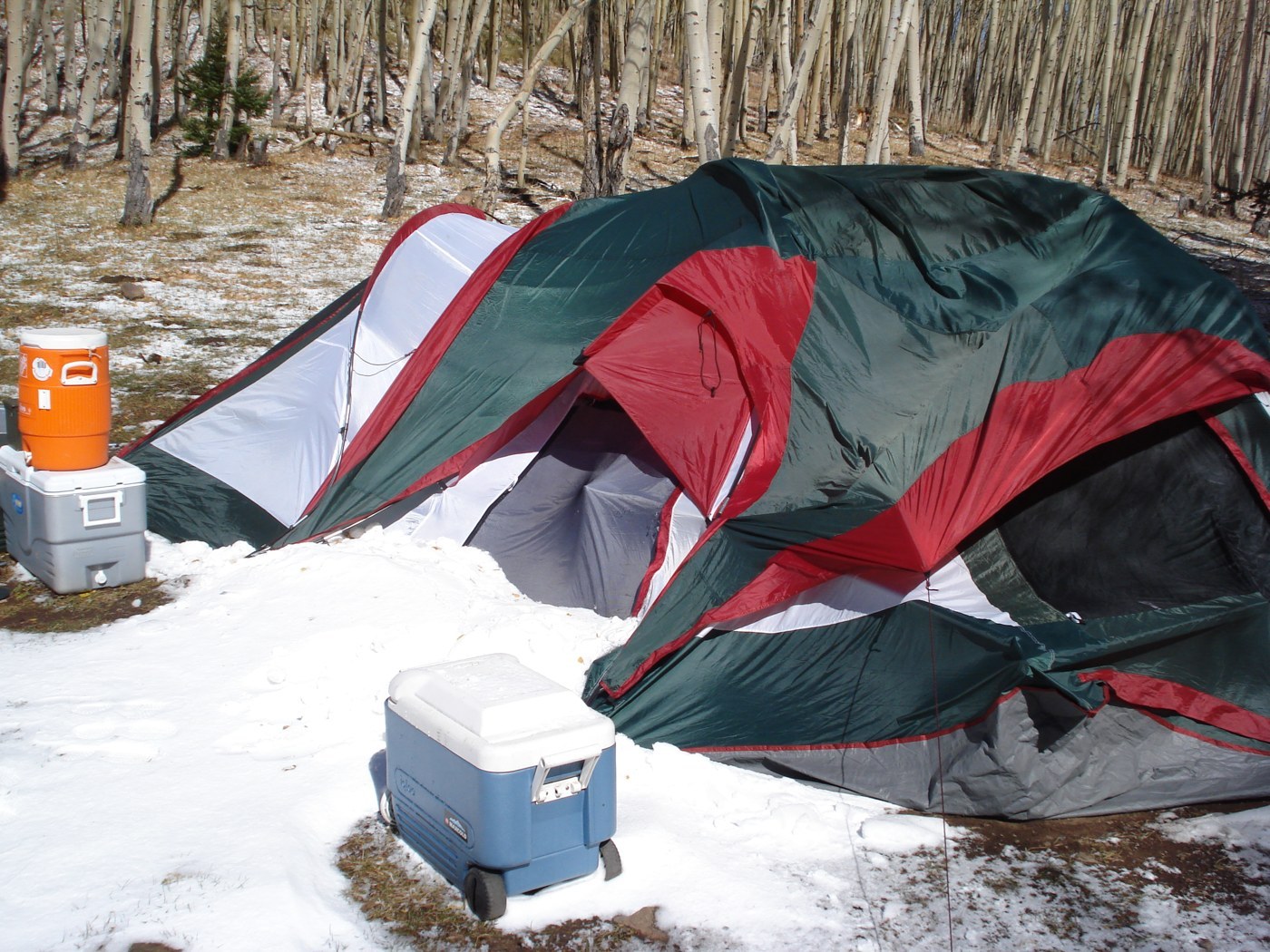
Where Does a Tent Give Way First in a Windy Campsite? — Eight Tents Set Up in a Wind Simulator
I went camping and the wind was far too strong. Using published structures and material figures, I set up eight tents in a simulator: dome, geodesic, tunnel, A-frame, pyramid, family cabin, and two rooftop tents that sit on a car, one fold-out and one wedge. Changing wind direction, pole and fabric material, stake length and ground, guylines and vehicle mass, I worked out what gives way first. In most cases it was the stakes, not the poles, and quartering winds were the weakest direction.