oosioo
Read in English
I open my idea notebook to a random page and lay that day's thoughts on the line I find there. Read in order →
The Story That Fits on One Napkin
How many characters fit on a single square napkin handed out at a restaurant? Between the lie of dividing by area and the honest arithmetic of the floor function, this piece is about how a container called length reshapes the shape of a thought. It's the first entry in A Page for Today, a new series that opens an idea notebook at random.
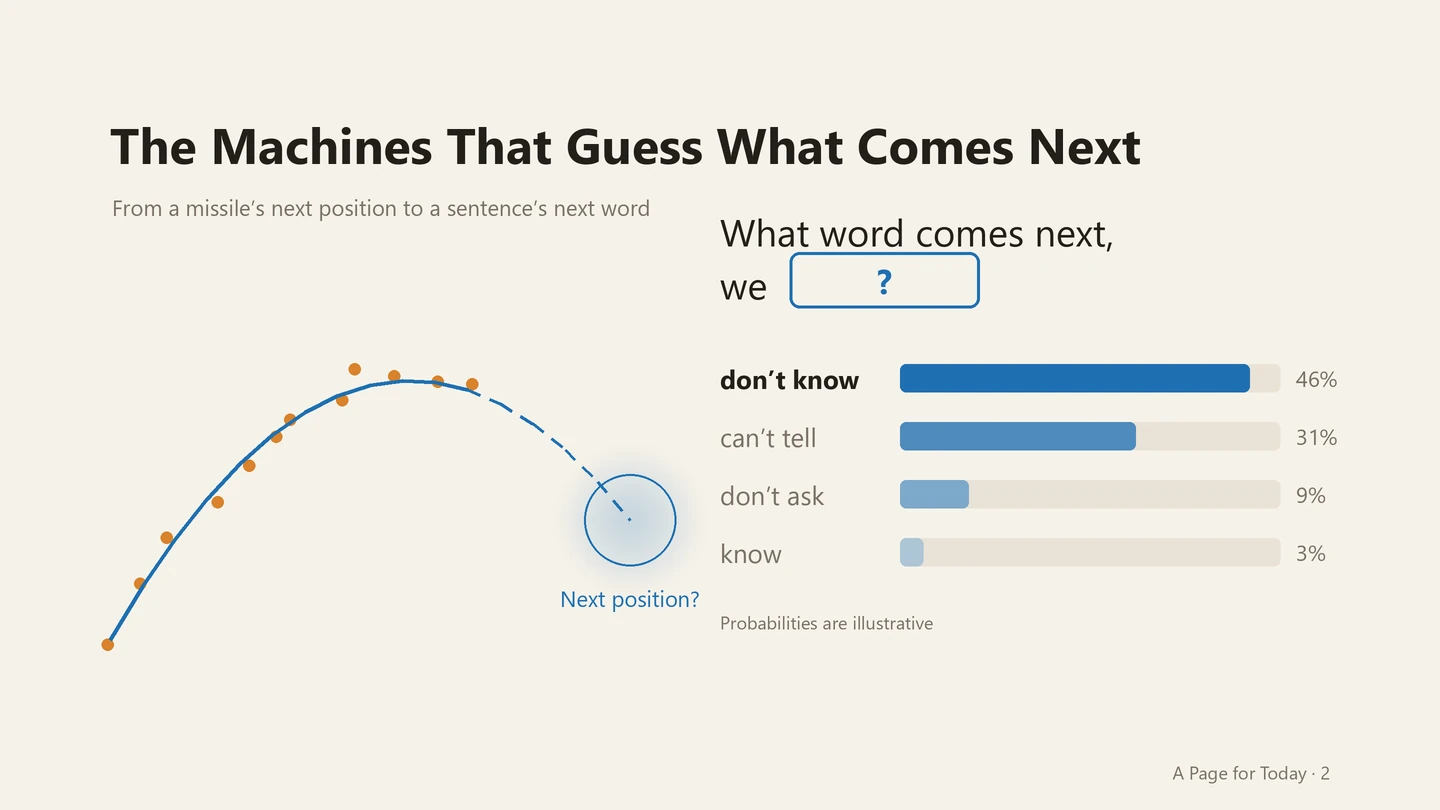
The Machines That Guess What Comes Next
Starting from a line that says no one knows the next word, this piece follows the thread from the Kalman filter that predicts a missile's next position, through weather forecasting and grocery carts, to the LLMs that choose the next word. The second installment of A Page for Today.
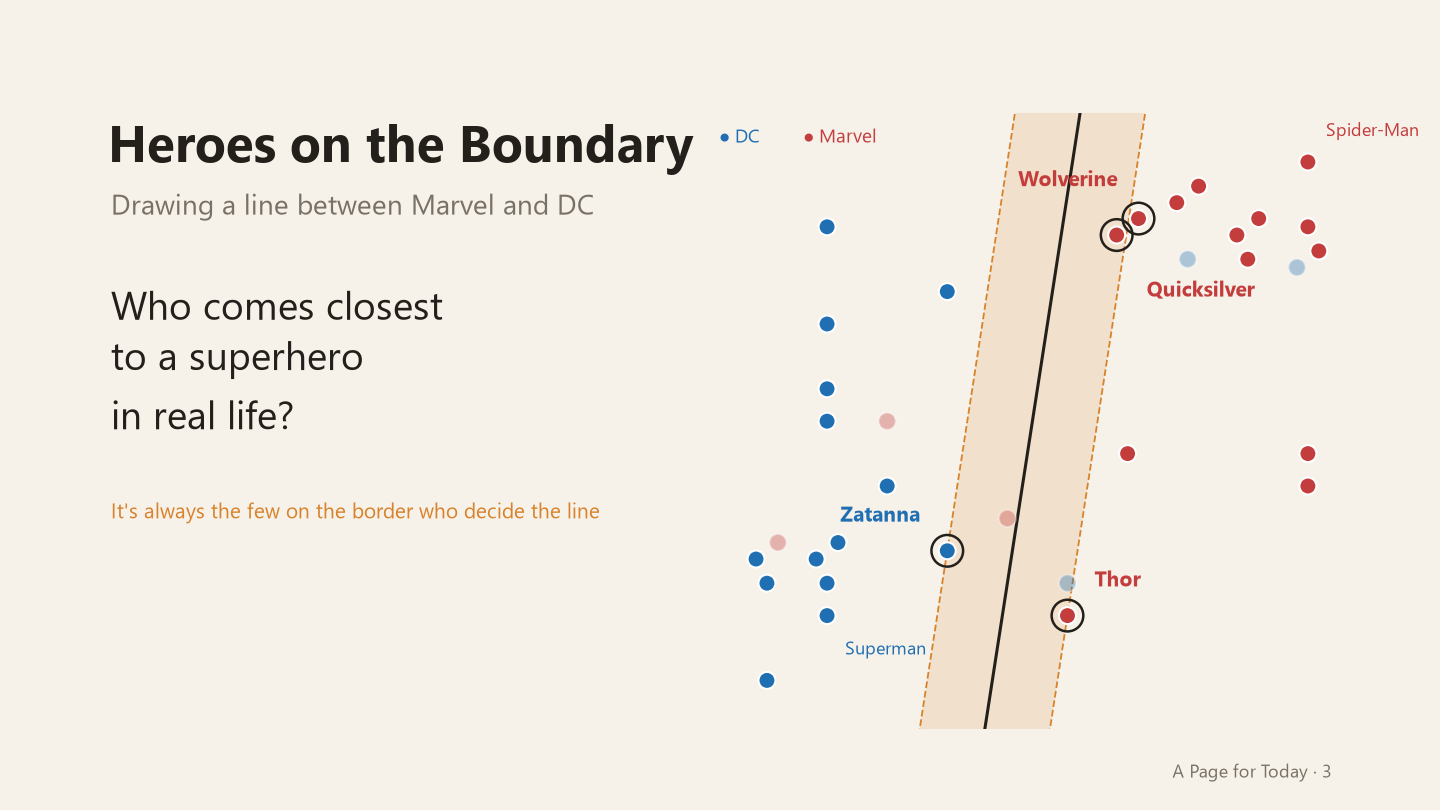
Heroes on the Boundary
Who comes closest to a superhero in real life? Scoring 34 heroes from Marvel and DC to find the line that divides the two worlds, we run into PCA, LDA, and support vector machines, then follow the machines that draw lines in reality, from bankruptcy prediction to facial recognition. The third piece in the A Page for Today series.
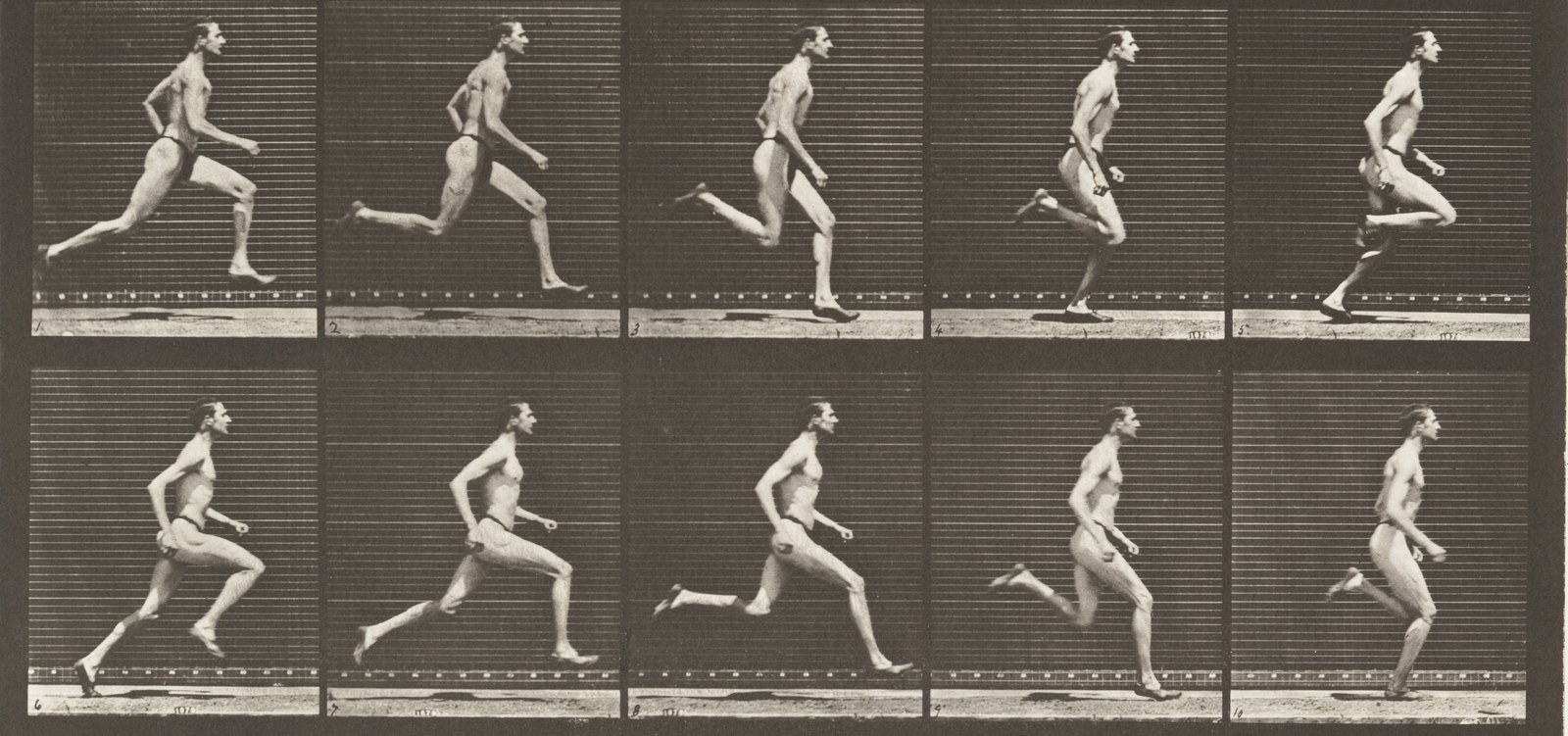
The Run Left in the Sole
The word in the notebook was just one: running. Starting from the Nagoya Asian Games marathon and Korea's running boom, this piece follows how training for a medal differs from running for health, and traces running dynamics — born when the cycling power meter crossed over into running — along with the machine learning used to read them. At the end is an analyzer that works backward from a worn running-shoe sole to read the habits behind it. The fourth installment of A Page for Today.
The Person Who Changed Their Mind at the Altar
Starting from grooms and brides who changed their minds mid-ceremony, this piece looks through statistics at the wavering institution of marriage and the belief in compatibility, and writes about the one value that still doesn't change.
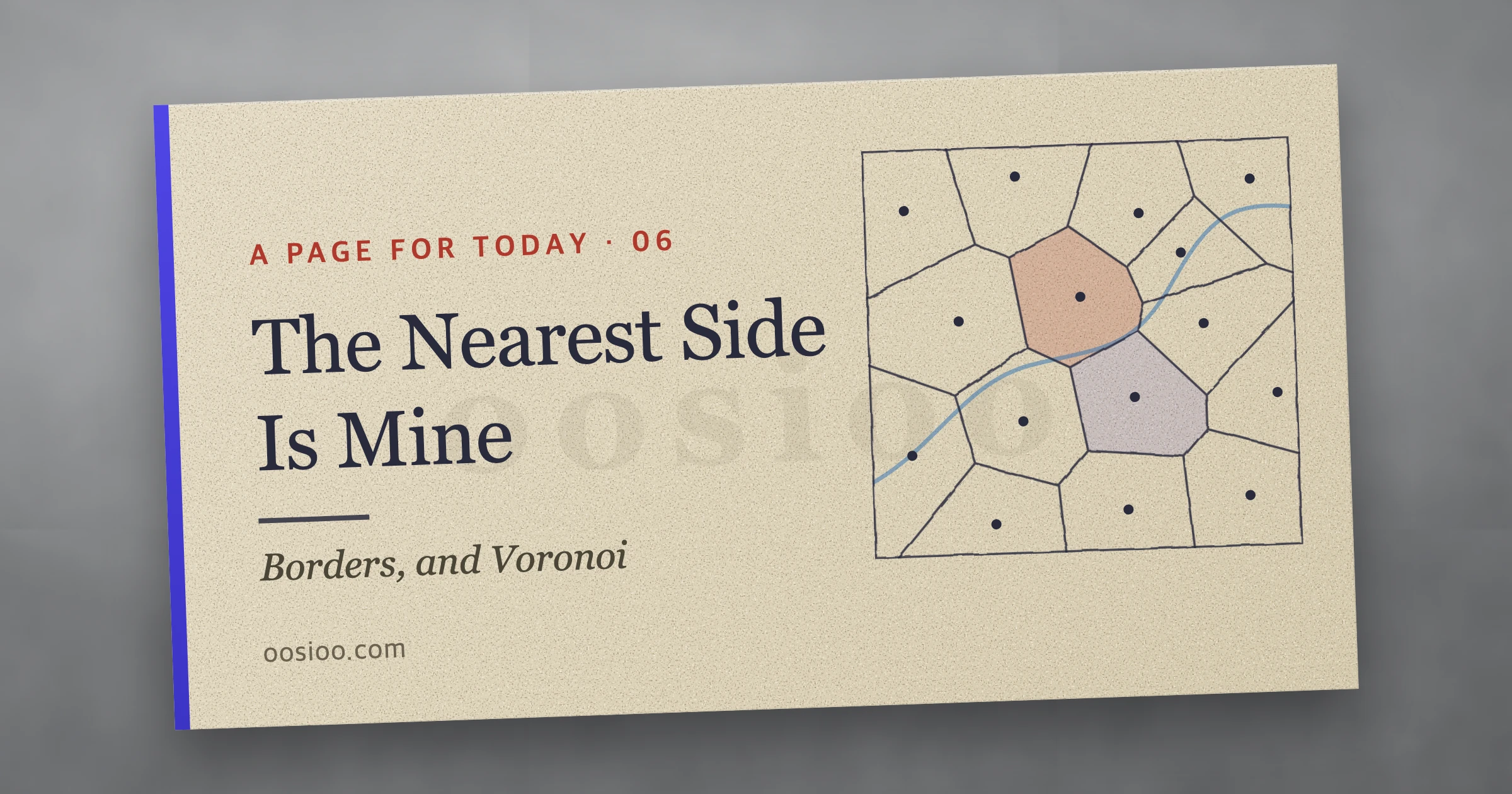
The Nearest Side Is Mine
The word in the notebook was 'border.' This piece maps the disputes still playing out along lines today, traces how mountains and rivers pull borders out of shape, follows what a country living atop a ceasefire line runs into on land and at sea, and looks at the devices that guard borders — and the AI now built into them. Finally, it redraws Africa's ruler-straight colonial borders using Voronoi diagrams. The sixth piece in the A Page for Today series.
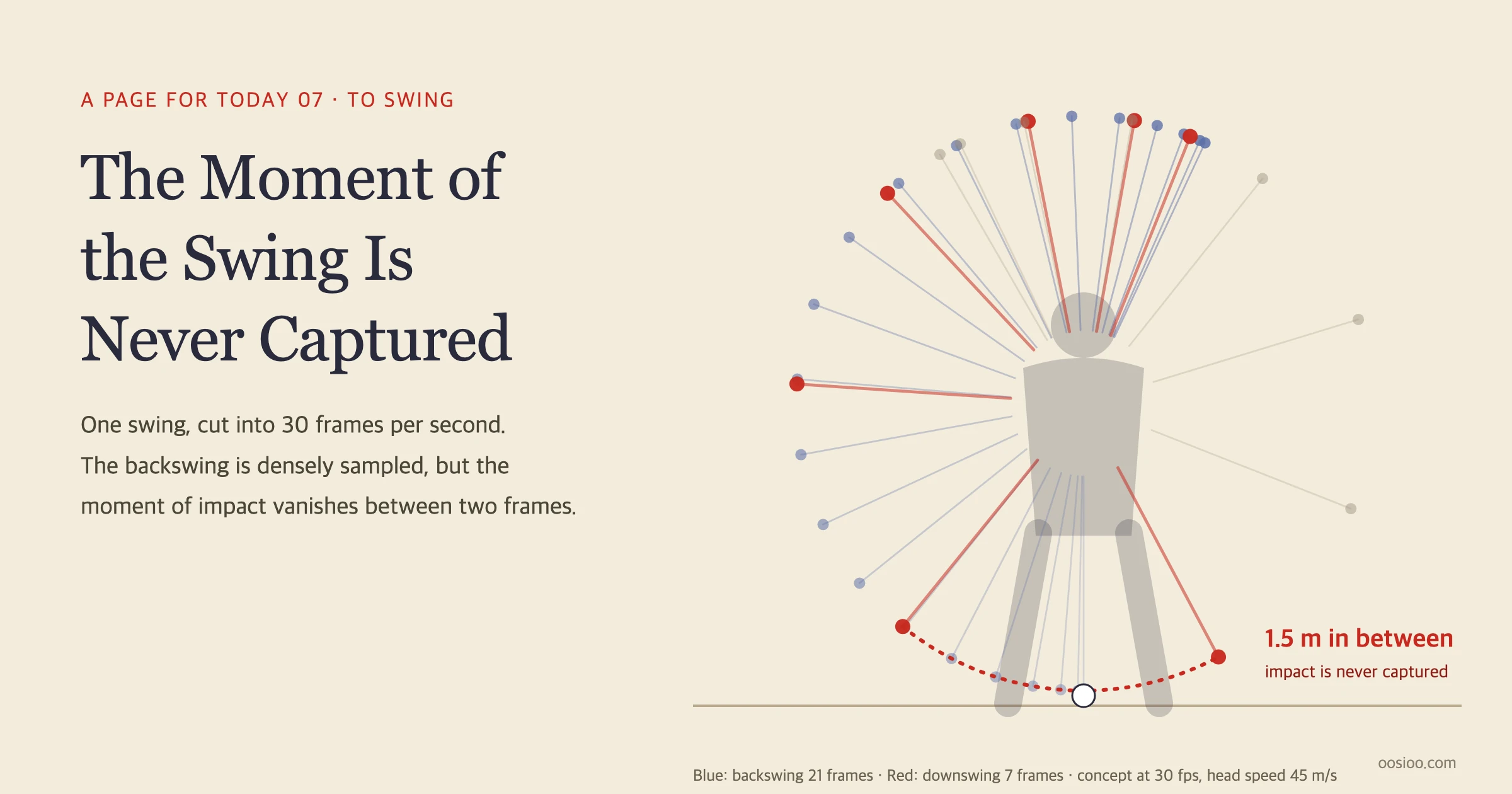
The Moment of the Swing Is Never Captured
The word in the notebook was "to swing." From Muybridge, who photographed a tennis swing with dozens of cameras 140 years ago, to radar built to chase missiles, sensors on the end of a bat, 300-frame-per-second cameras in every ballpark and swing analysis with a single phone, this piece follows the machines that measure a swing. It then sketches a blueprint for a Swing Mirror built from nothing but a webcam and a browser: which libraries and algorithms it would use, and what it would have to give up. Finally, it looks at where the technology can go beyond the stadium. The seventh piece in the A Page for Today series.
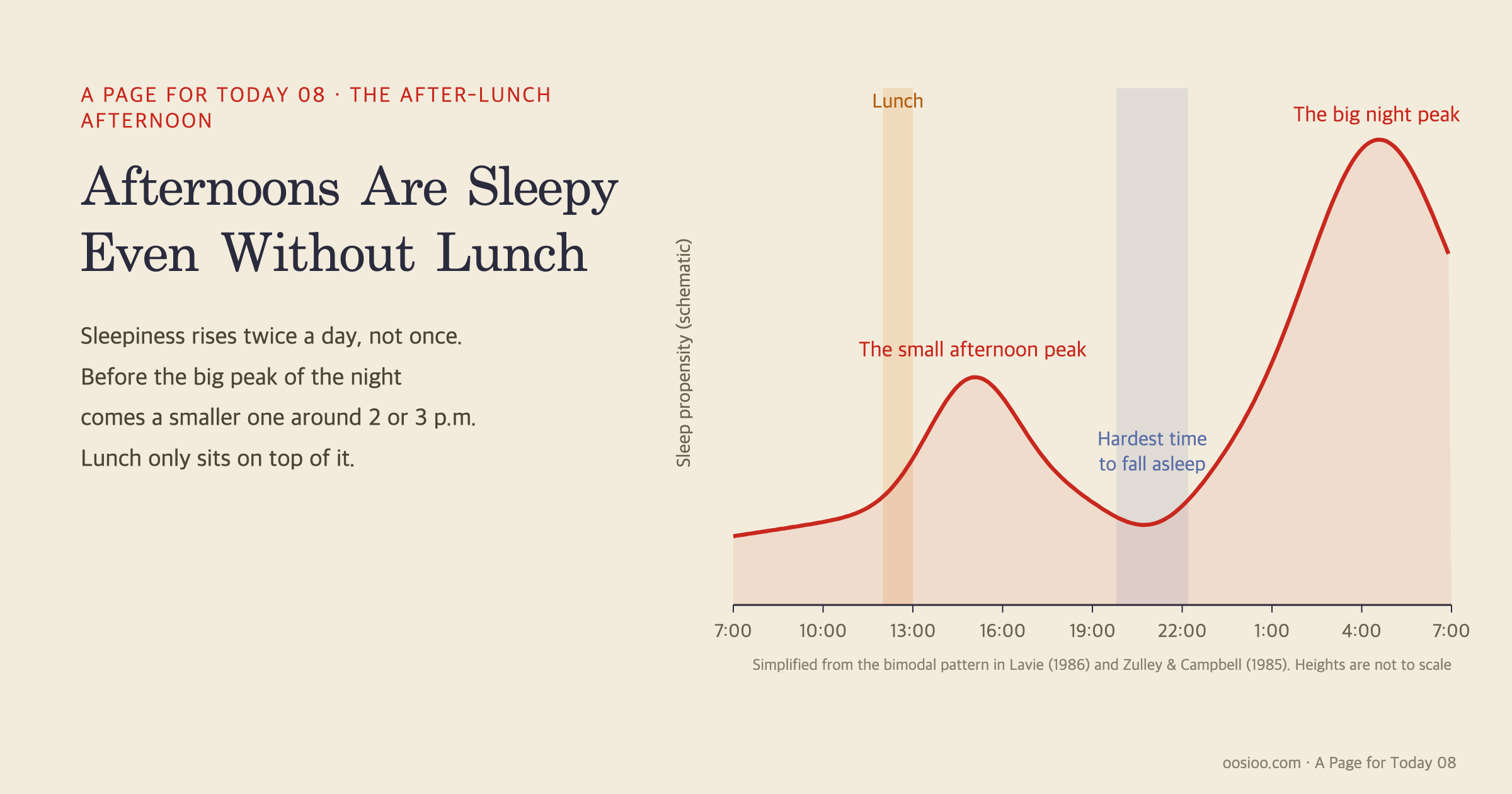
Afternoons Are Sleepy Even Without Lunch
The line in my notebook read, "how to get through the afternoon when sleep comes crashing down after lunch." I trace experiments showing that the afternoon slump arrives even when lunch is skipped and that eating only piles on top of it, check the truth behind folk theories like turkey and blood flow, weigh ten-minute naps against coffee naps, and note the warnings around long or frequent napping. I also look at how a car's eyes catch drowsiness and build my own drowsiness mirror that reads eyelids through a webcam and sounds a warning. The eighth piece in A Page for Today.
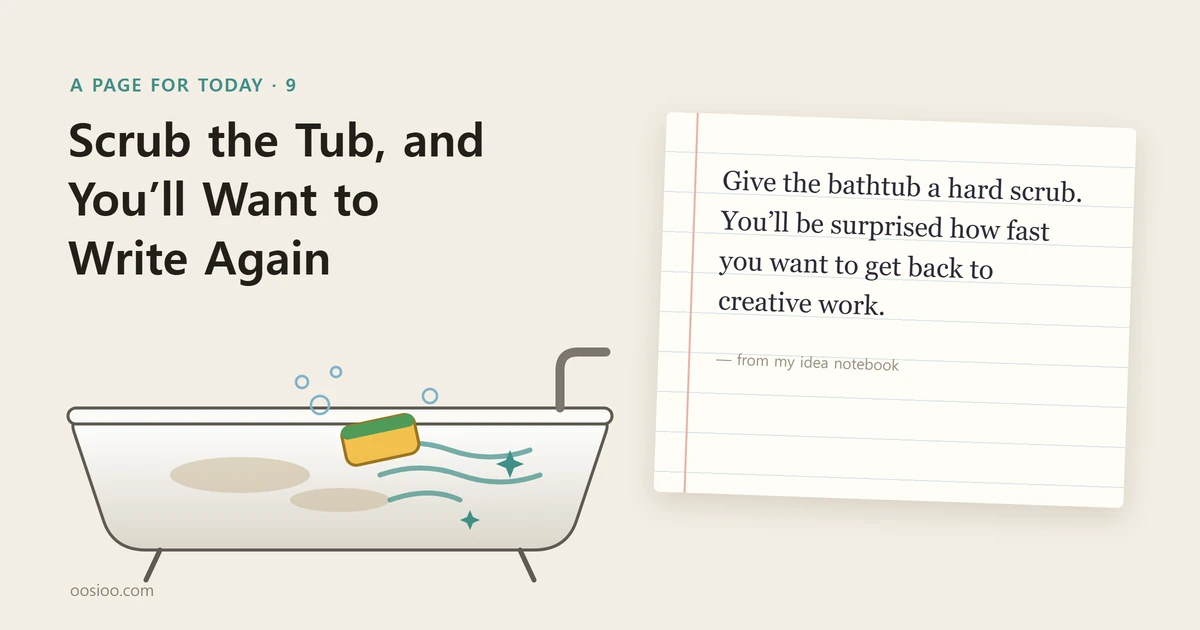
Scrub the Tub, and You'll Want to Write Again
The line in my notebook read: 'Give the bathtub, or the bathroom, a hard scrub. You'll be surprised how fast you want to get back to creative work.' From Agatha Christie plotting her novels while washing up, and experiments where ideas multiplied after a boring task, to six rulers that separate scrubbing work from making work, the economists' task model, why robots still can't scrub a tub, and what happened when people were handed AI. At the end I built a board for sorting work yourself. The ninth essay in A Page for Today.
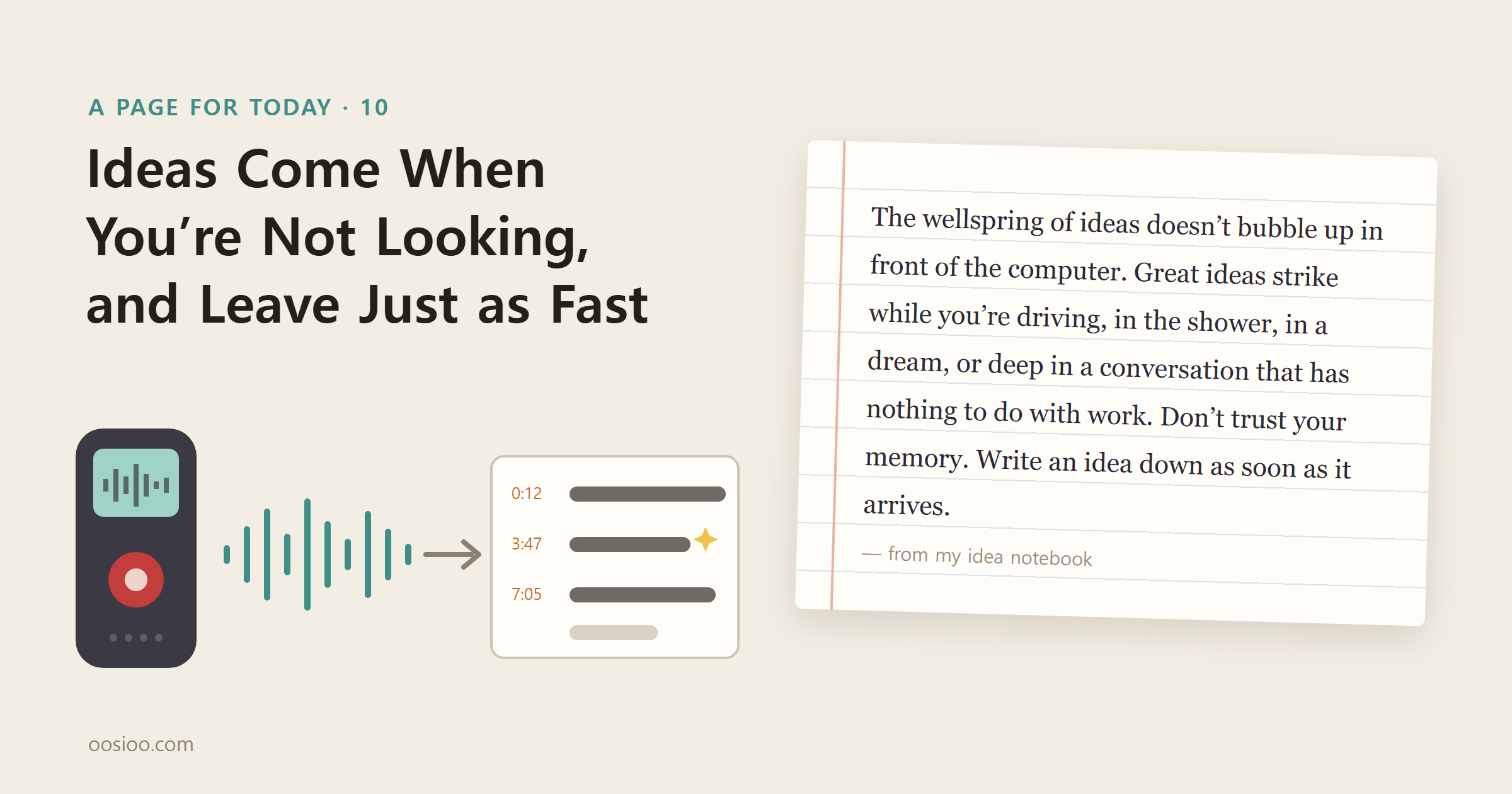
Ideas Come When You’re Not Looking, and Leave Just as Fast
The sentence in my notebook read: “The wellspring of ideas doesn’t bubble up in front of the computer … Don’t trust your memory. Write an idea down as soon as it arrives.” Through physicists’ and writers’ idea diaries, experiments on showers, driving and the 15 seconds before sleep, and a 200-year-old essay on how thoughts take shape as we speak, this post looks at when ideas arrive and why they vanish so fast. Then it turns to the transcription engines that changed my all-day-recorder routine: how they turn sound into text, what happened when I installed one and transcribed a Korean reading, why they hallucinate, and the apps and devices built on top of them. The tenth post in A Page for Today.
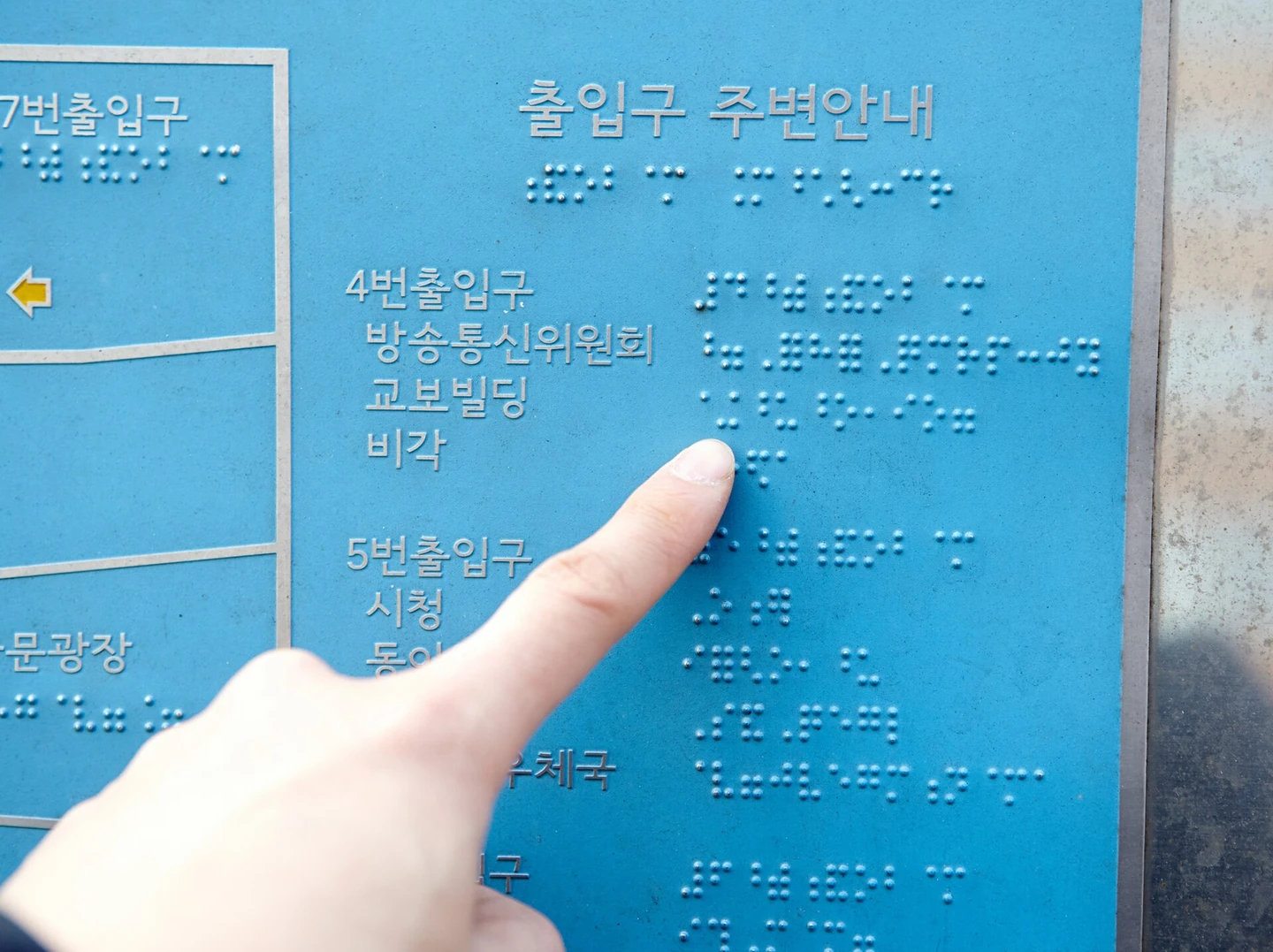
Thinking About the Story of Someone Who Can't Say What They Need to Say
The sentence written in my notebook read: 'There is a person who cannot say what they need to say. Think about their story.' This piece follows the technology that has spoken on people's behalf — from braille and Stephen Hawking's robotic voice to voices rebuilt from family members' speech, devices that turn brain signals directly into sentences, and the difficulties of sign-language translation. I also built a small tool of my own that transcribes speech into braille and lets you tap pictures to speak instead. Finally, it looks at companion animals that can't say they're in pain even when they are, and tomatoes that emit ultrasound when they're thirsty. The eleventh piece in the 'One Page Today' series.

Who Sent the Spam That Told Only the Truth?
The sentence written in the notebook read: 'The internet is overflowing with bad information. But what if the junk mail you just received contains nothing but perfect truth? Who sent it?' This piece traces the cat-and-mouse game from early word-counting spam filters through Bayesian filters, sender authentication, and machine learning, up to AI phishing that has erased its old clumsiness, deepfake video calls, and emails aimed at AI assistants. It examines why well-made lies start with the truth, why opinion manipulation now targets the answers of AI search engines, and closes with five questions to ask whenever you receive information. The twelfth piece in the 'One Page Today' series.
Ride Your Bike at Leisure
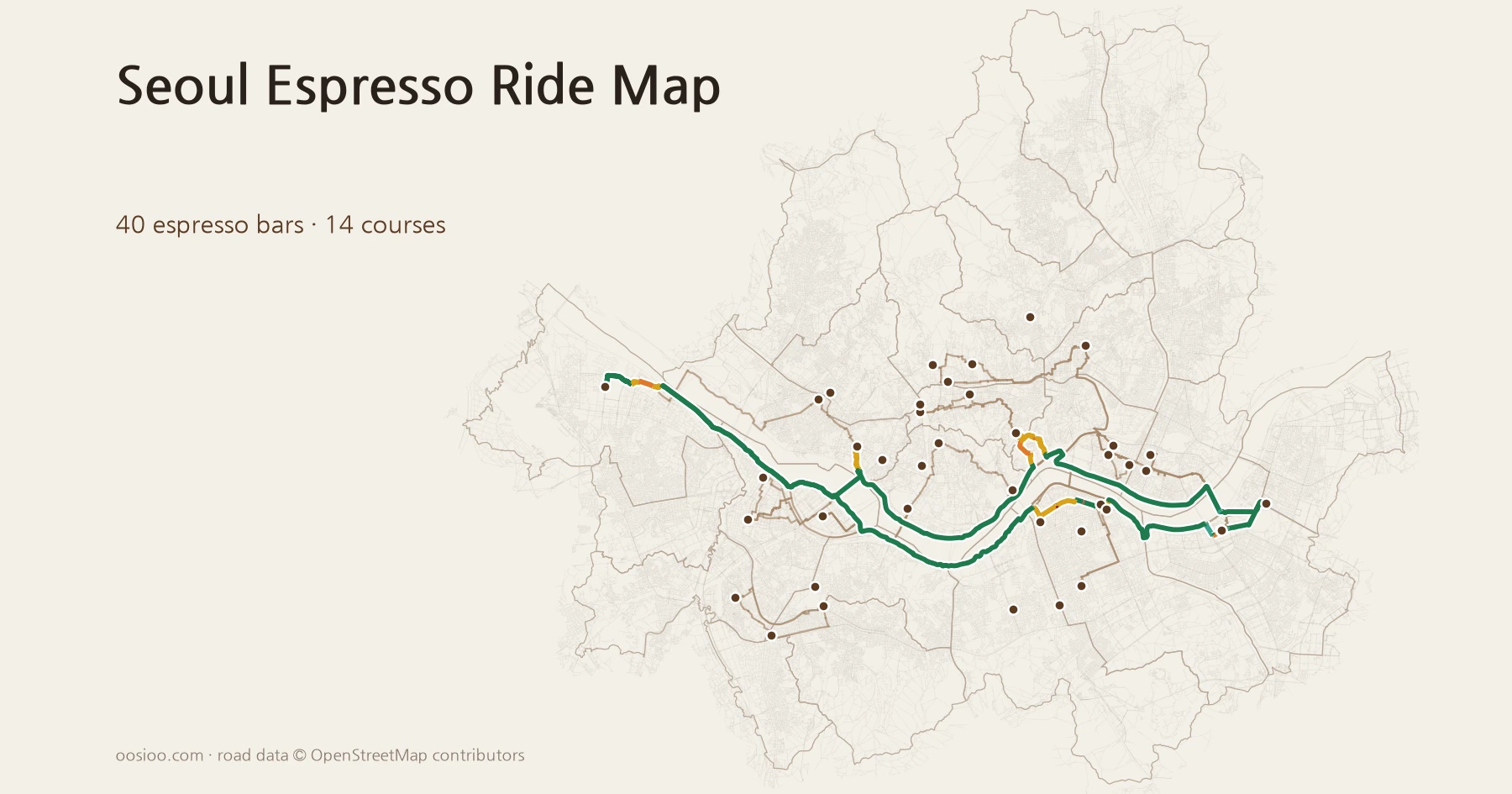
The line in my notebook read, "Ride your bike at leisure." Not long ago there was another death at a marathon. Somewhere along the way recreational sport tilted toward competing on times and gear, and fewer people are taking up cycling. After tracing that trend in numbers, I built courses for an "espresso ride": riding slowly from bar to bar, one espresso at each. I found 40 espresso bars in Seoul, explained how routing works with weights tuned for bikes, and put fourteen courses, from neighborhood loops to a full day, on a Seoul Espresso Ride Map. The thirteenth piece in A Page for Today.
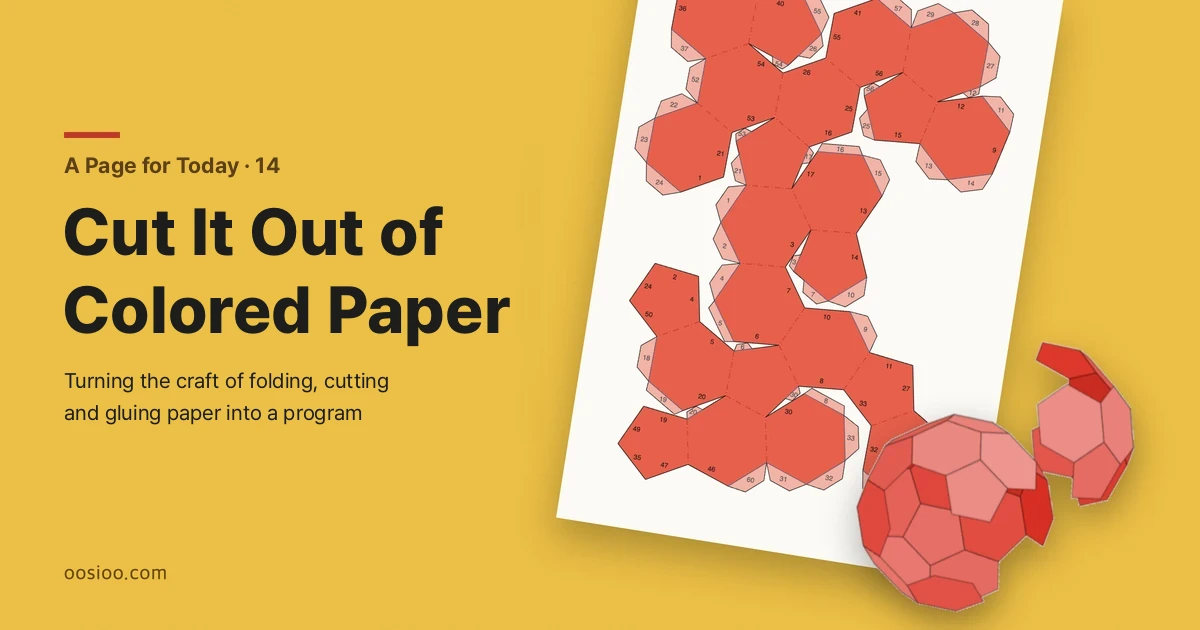
Cut It Out of Colored Paper
The line in my notebook read, "Cut it out of colored paper." At some point I stopped seeing the colored paper I used to fold as a kid. People who pushed origami all the way folded a rabbit from a single sheet, cut out a star with one snip, and built robots that fold themselves and walk away. After following that research, I borrowed the approach of Anatomy, a Claude skill that explains machines by building them as drawings, and made a skill for papercraft. Give it a shape and it produces a net for colored paper, then checks overlaps, glue tabs and refolding on its own. The fourteenth piece in A Page for Today.
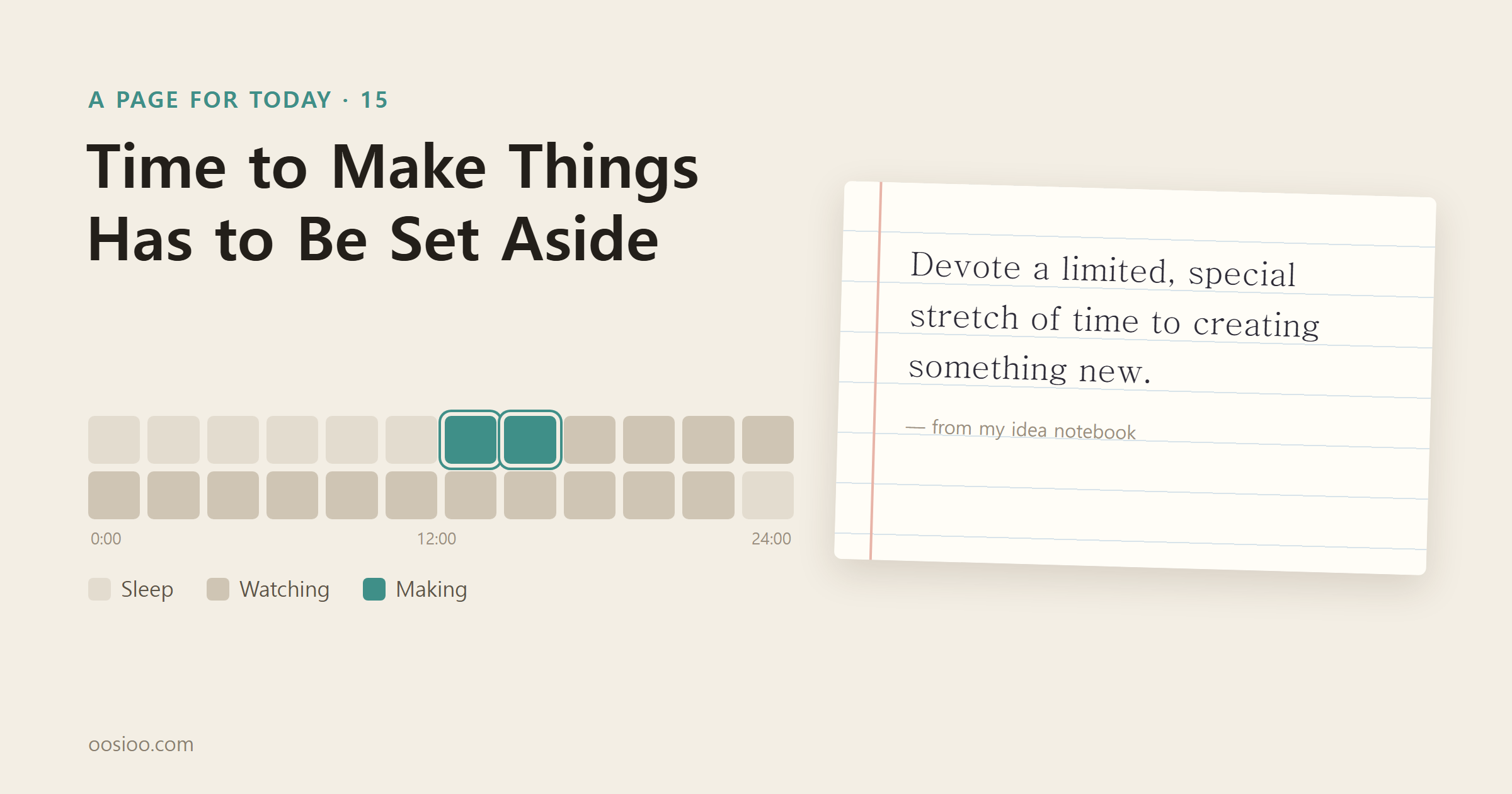
Time to Make Things Has to Be Set Aside
The line in my notebook read, "Devote a limited, special stretch of time to creating something new." These days we spend most of the day looking at things other people made, and with AI making production cheap, the supply grows faster still. I went through studies showing AI beating people on creativity tests and studies showing the best people still ahead, then the claim that plumbers are making a comeback and where it falls short. Finally I set out which hours of the day to set apart, and how, to keep human creativity alive. The fifteenth piece in A Page for Today.
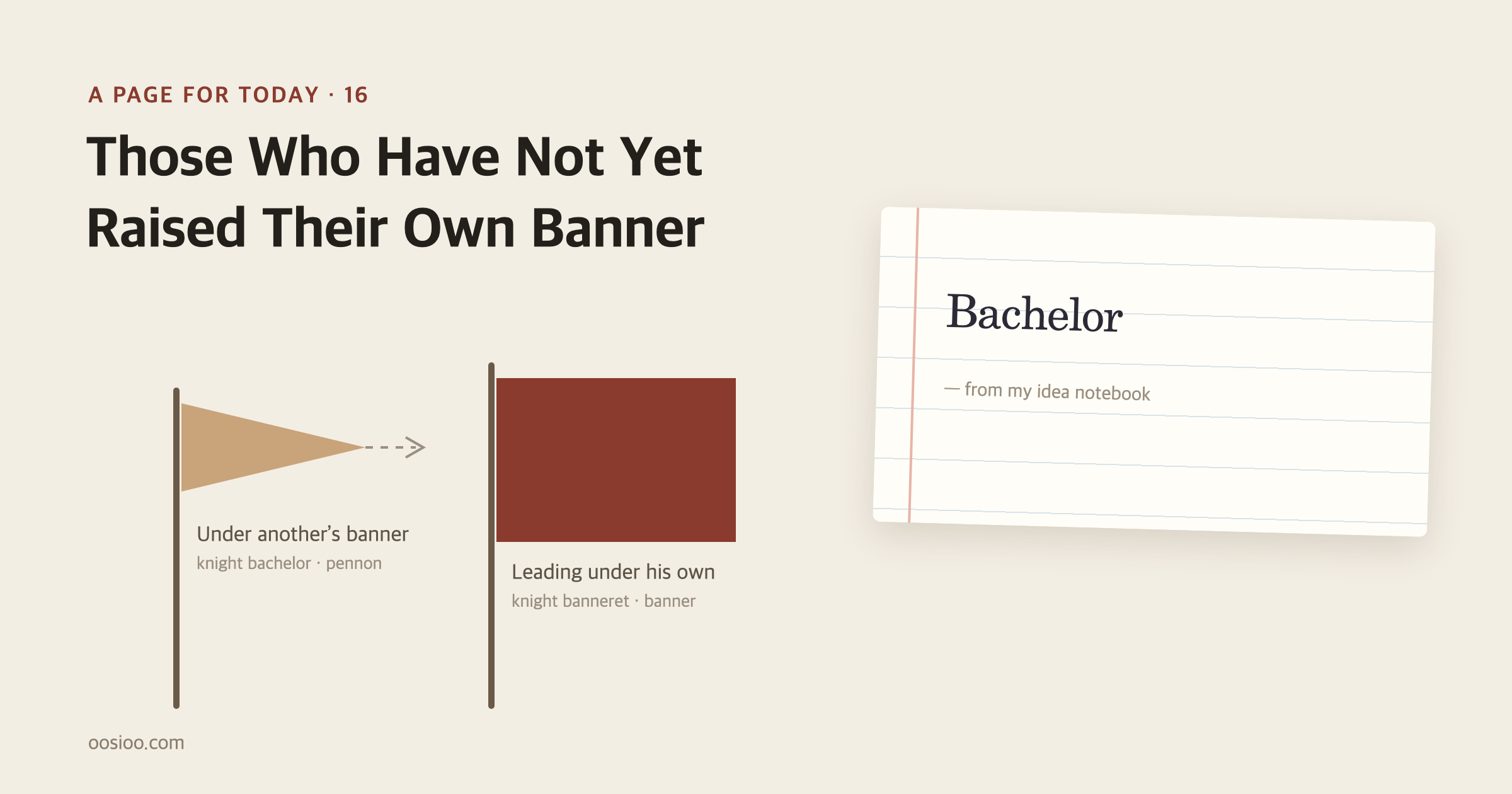
Those Who Have Not Yet Raised Their Own Banner
The word in my notebook was "Bachelor." I had only known it as the bachelor of a bachelor's degree, but it first meant a young knight who could not yet raise his own banner and fought under someone else's. I traced how it came to mean both an unmarried man and a college graduate, then followed the numbers on how many more people in Korea and the United States are not marrying and how many more hold degrees. Finally I sorted out who is saying what about where to focus as entry-level jobs for graduates shrink after AI, and how solid each claim is. The sixteenth piece in A Page for Today.
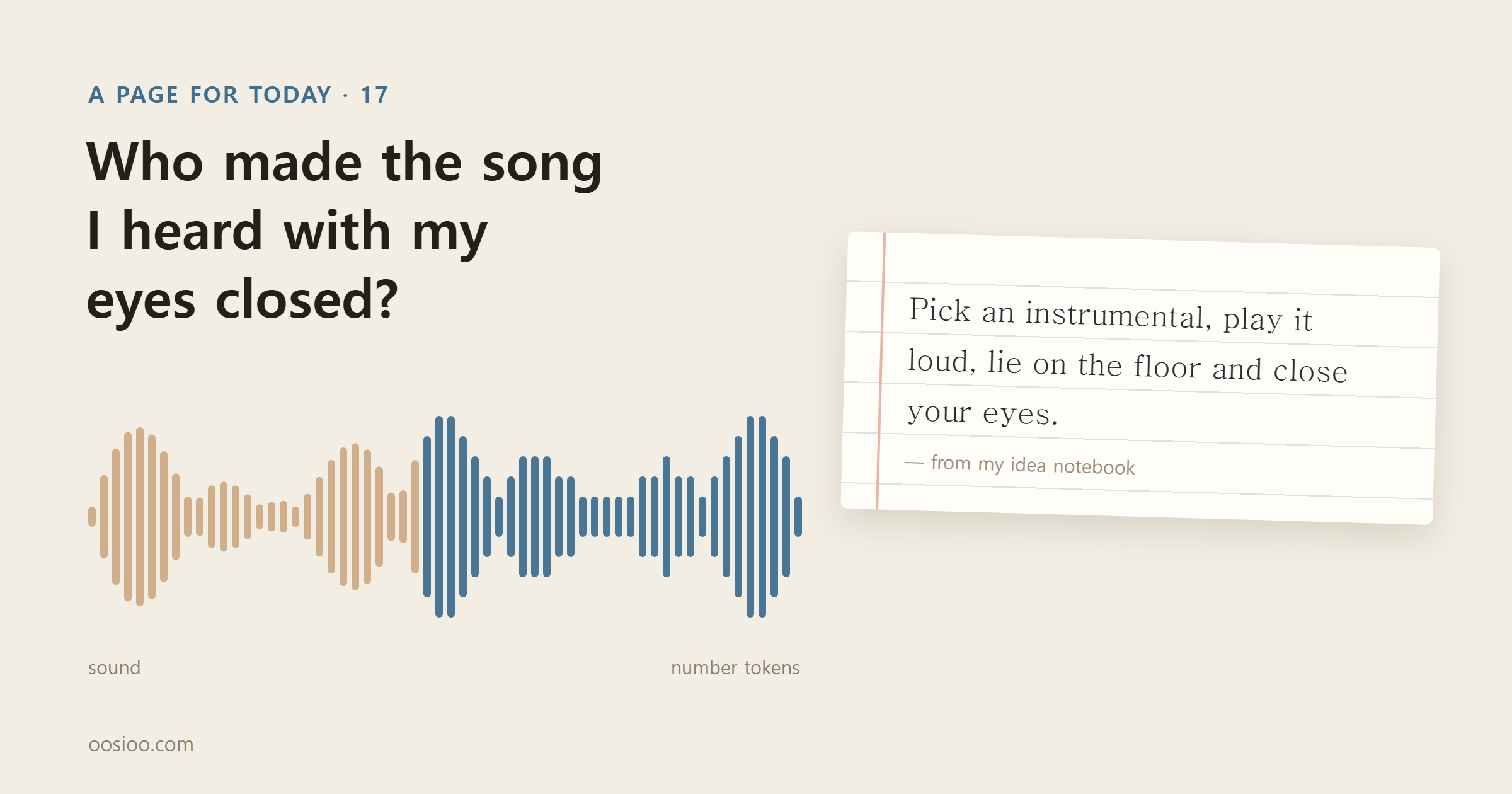
Who Made the Song I Heard with My Eyes Closed?
The sentence in my notebook was "Pick an instrumental, play it loud, lie on the floor and close your eyes." Now that the song might be made by a machine rather than a person, I looked at how far Suno, which turns a few lines of text into a song, has come, and what songwriters fear and gain from it. I walked through the two ways machines turn sound into number tokens to make music and the trends in open-source models on GitHub, then made an instrumental, a theme song and a trot version on a single gaming-laptop GPU and measured time and memory. There is also a guide for anyone who wants to try with a DGX Spark or the graphics card they already have. The seventeenth piece in A Page for Today.
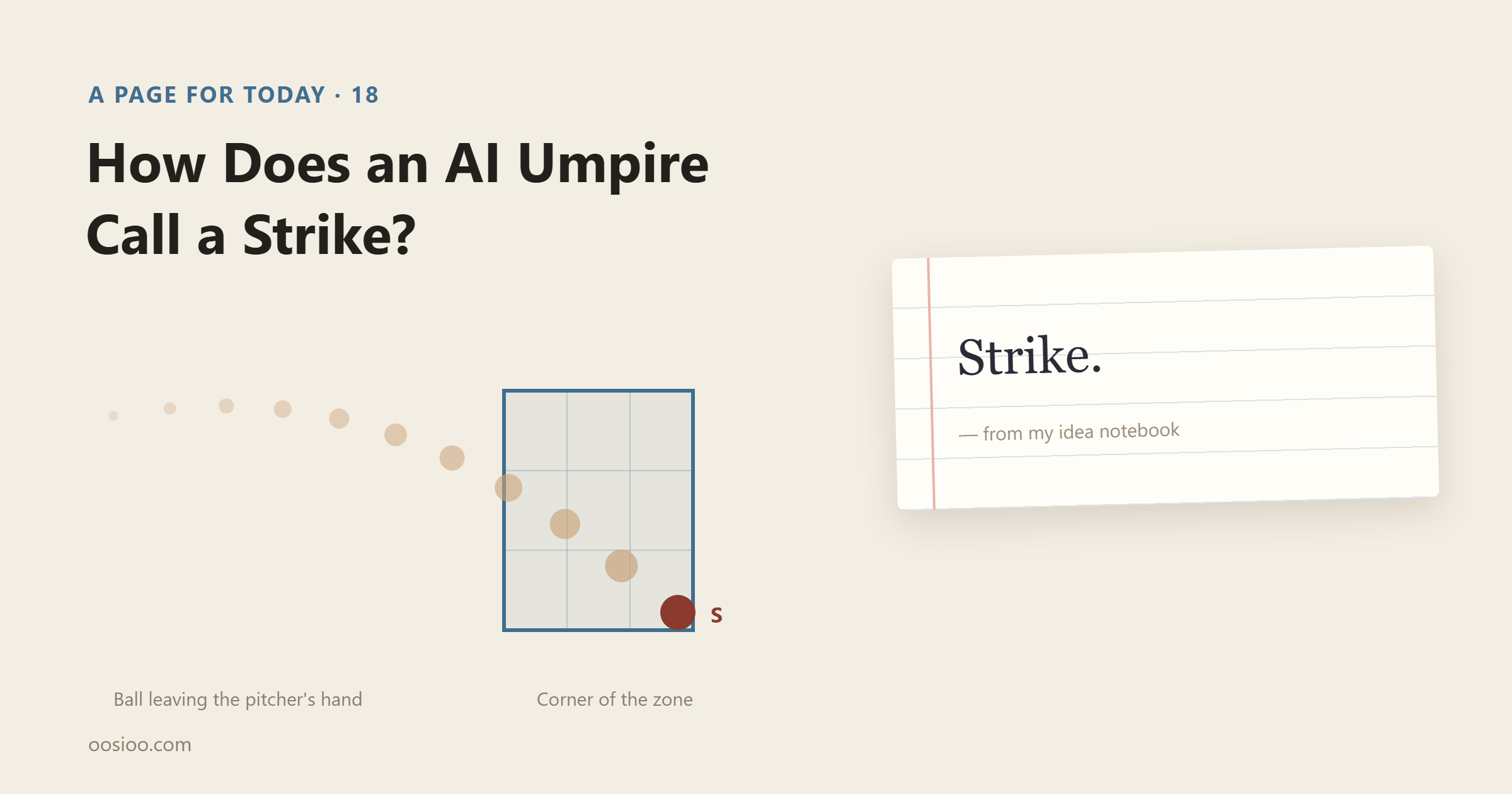
How Does an AI Umpire Call a Strike?
The only thing in my notebook was the word "strike." Since 2024 the KBO, Korea's top professional league, has had a machine call every ball and strike in every game. I walk through how it works, with numbers: cameras track the pitch and produce coordinates, a ratio applied to the batter's height builds the zone, and the call goes to the plate umpire's earpiece as audio. I also look at why MLB brought in the same technology in a different form, the challenge system; which calls are next in line, from checked swings to balls near the foul pole to close plays at first, and what makes them hard; and how far machine officiating has come in tennis, soccer, cricket, gymnastics and F1. There's an interactive tool for placing pitches yourself and watching the zone move as the batter's height changes. The eighteenth piece in A Page for Today.
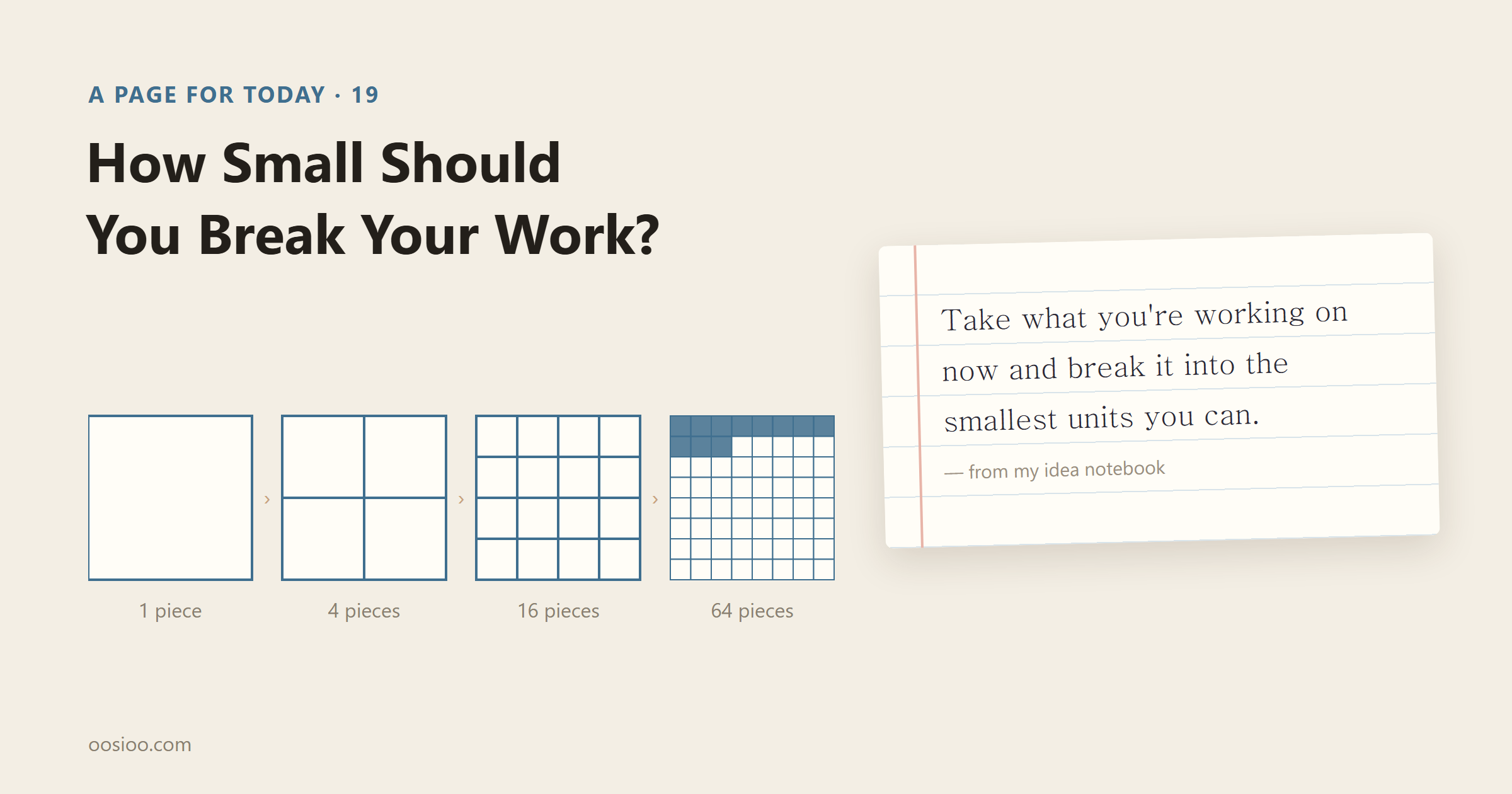
How Small Should You Break Your Work?
My notebook said: take what you're working on now and break it into the smallest units you can. I followed, with numbers, how breaking work down has changed it: Descartes's second rule, Adam Smith's pin factory, Ford's assembly line, and Galaxy Zoo, where 100,000 people split the classification of 900,000 galaxies. I also gathered research on why small pieces feel easier: children given near goals, schedules that get more accurate once you list the steps, and a coffee card with two stamps already on it. Alongside them are the warnings the same people left behind: communication costs that grow as you divide, a division of labor that makes people smaller, and the urge to rest at every milestone. The nineteenth piece in A Page for Today.
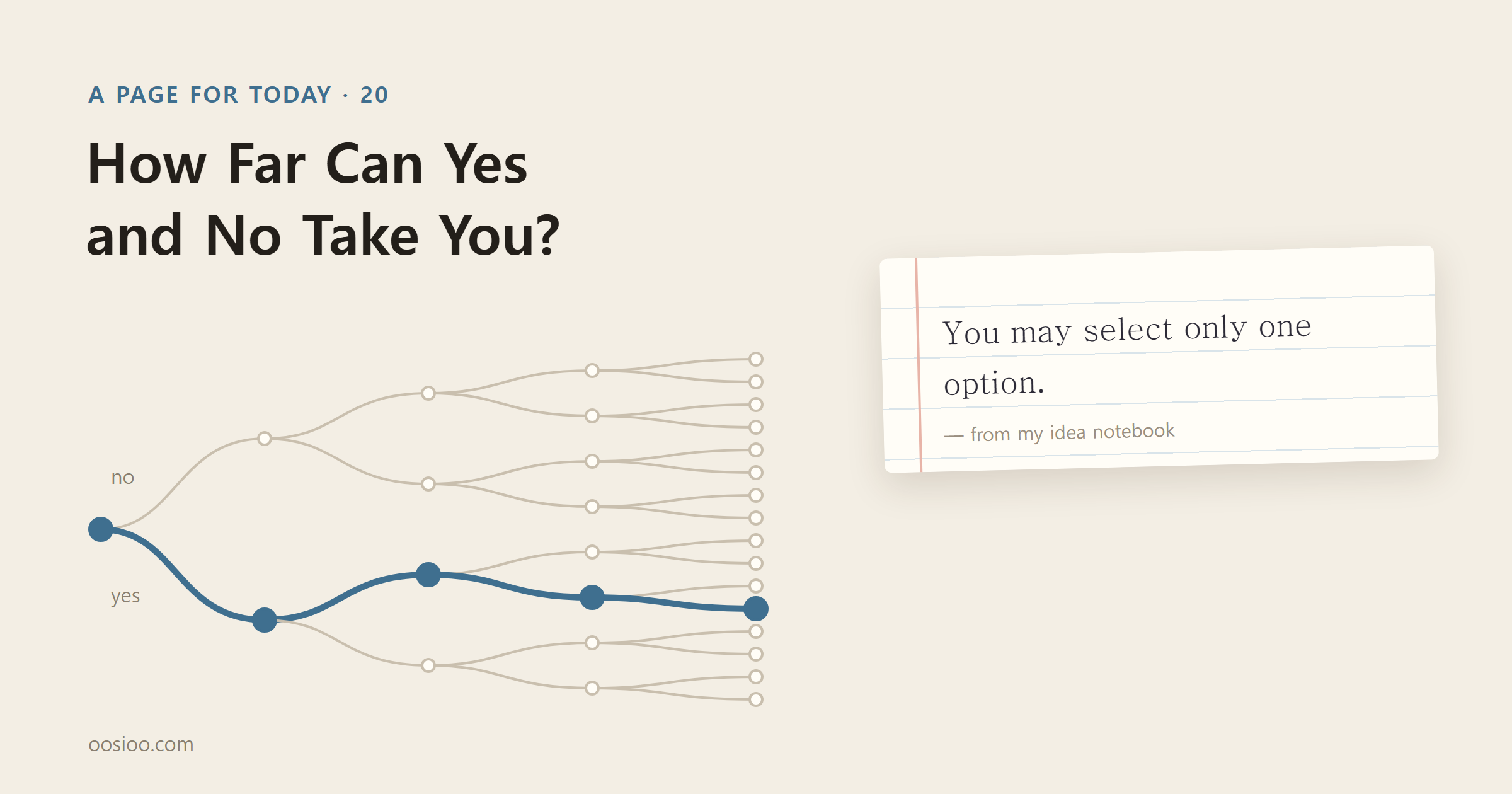
How Far Can Yes and No Take You?
My notebook said: you may select only one option. Picking one of two makes a problem as simple as it gets. I followed the power of yes and no from twenty questions, which picks one in a million with twenty answers, to Jev, the much-discussed new model that writes nothing and only judges. I lay out five ways to solve big problems with weak binary judges (repeat, split, pool, filter, compare) and wire the Altman Z-score, the Piotroski F-score, a trend rule and the Kelly formula into four gates of an investment judge, with a playground that runs it on 400 made-up companies. The twentieth piece in A Page for Today.
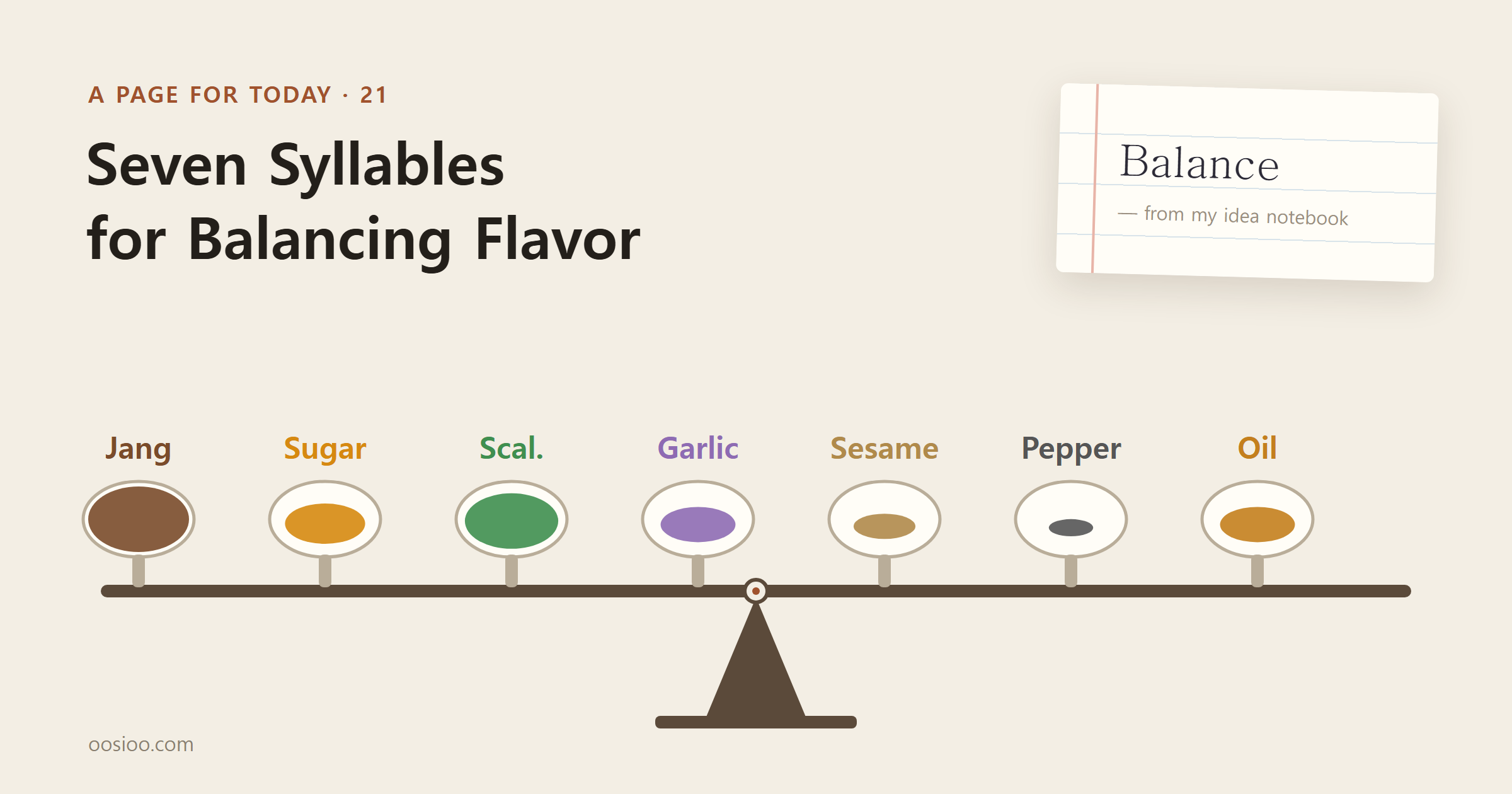
Seven Syllables for Balancing Flavor
My notebook held a single word: balance. That evening I happened to mix chili crab paste with tomato pasta sauce into a well-balanced plate. Flavor is a total art form, the five tastes plus smell, texture and even pain, and tastes push and pull on each other: salt suppresses bitterness, sweet and sour suppress each other, and umami multiplies. By way of electronic tongues that try to measure taste in numbers, I turned the seven syllables Korean cooks use to remember seasonings, jang-seol-pa-ma-kkae-hu-cham, into an 18-sauce dictionary that rescales spoon counts to your amount of food, compares your own sauce with a target, and finds a good ratio for mixing two sauces. The twenty-first piece in A Page for Today.
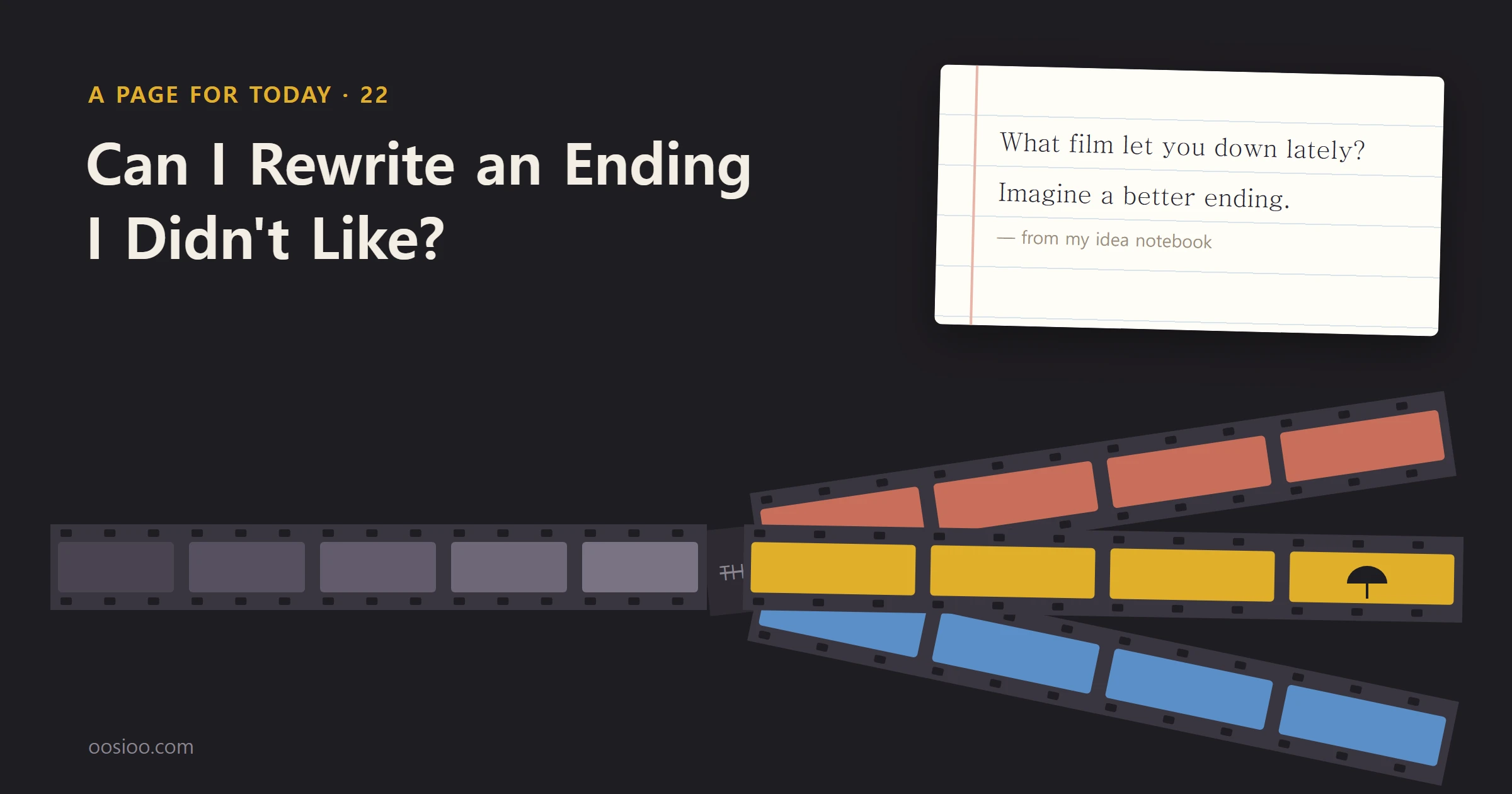
Can I Rewrite an Ending I Didn't Like?
My notebook asked: what film let you down lately? Imagine a better ending. Wanting to rewrite endings is old, as an unfinished Dickens novel, a musical whose audience votes on the murderer and more than 18 million fan works show. AI has made this old game something anyone can play in seconds, and services like Wrtn's Crack have turned it into a market. But how far is it fine to rewrite someone else's ending? Following copyright for AI output, the gray zone of fan fiction and the divided reactions to AI-revived voices of people who have died, I drew a line, and added a playground with a short story written by AI from the start whose ending you can rebuild 81 ways. The twenty-second piece in A Page for Today.
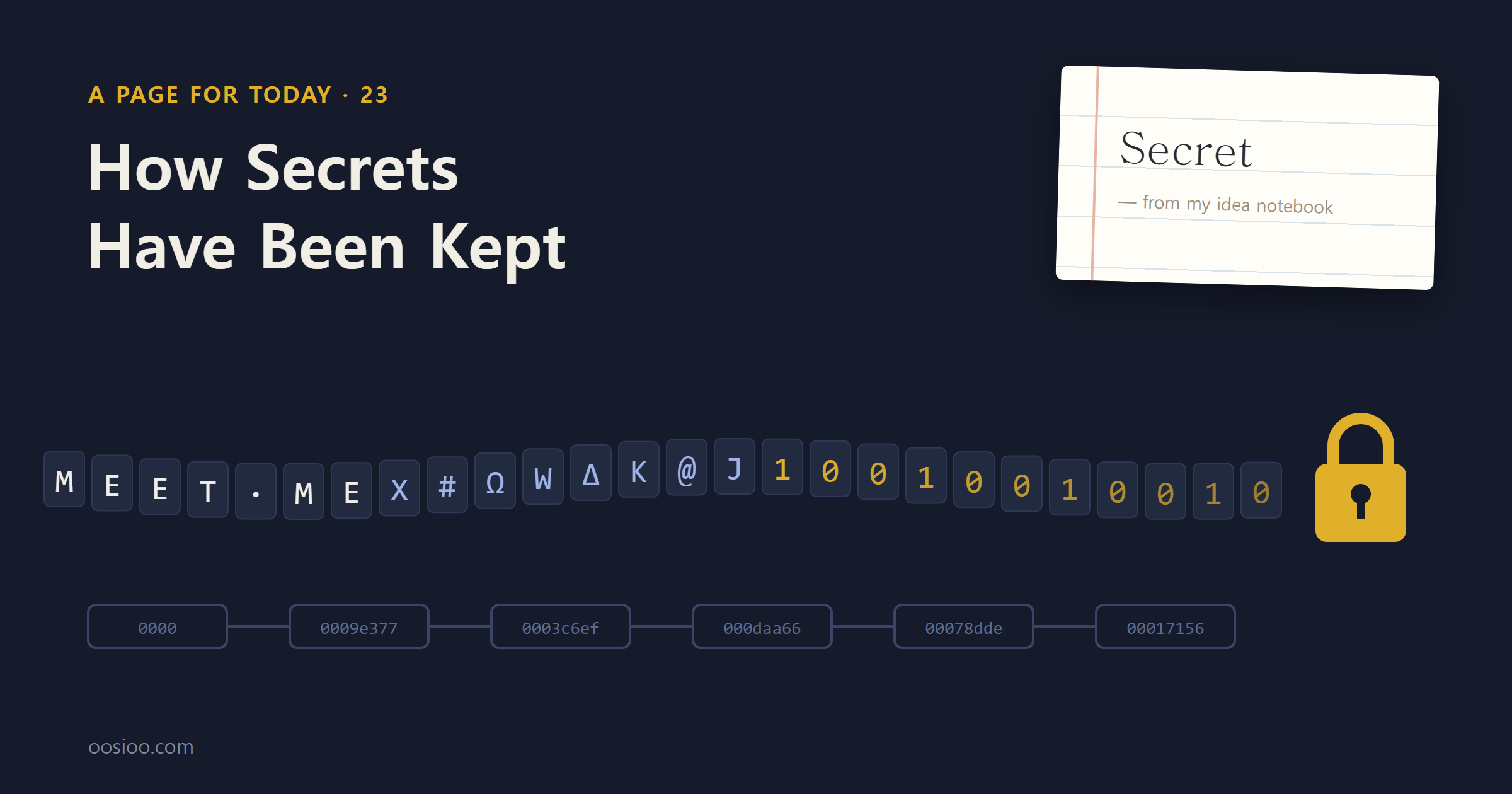
How Secrets Have Been Kept
My notebook held a single word: secret. The best way to keep a secret is to write it down nowhere and keep it only in memory, but most secrets have to be passed on. From a message tattooed on a slave's head and Caesar's letter shift to Enigma, frequency hopping and North Korea's numbers stations, I follow how people have hidden and scrambled secrets. Then I look at proving instead of hiding, as Bitcoin does, computing without opening through homomorphic encryption, and the quantum computers that threaten today's public-key cryptography, along with the move to post-quantum cryptography. A playground lets you try frequency analysis, a hash chain, a homomorphic sum and a quantum clock. The twenty-third piece in A Page for Today.
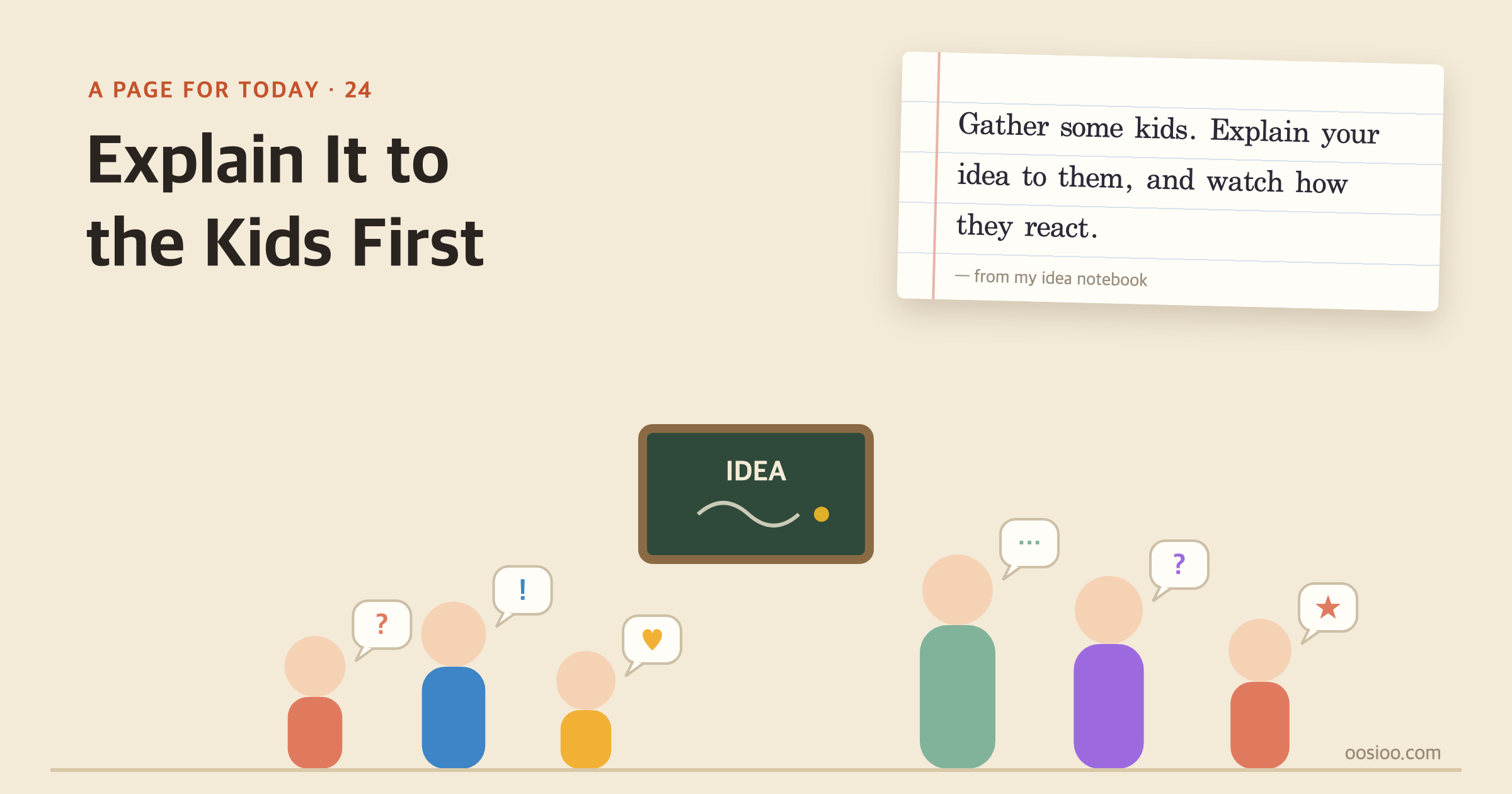
Explain It to the Kids First
My notebook said: gather some kids, explain your idea to them, and watch how they react. Products aimed at one generation are harder to make than they look, because the people making them are rarely in that generation. I compare cases that asked and watched their audience, like Sesame Street and Lego, with cases that pretended to be a friend, like Facebook's Lifestage and Pepsi's protest ad, and look at today's numbers on how each generation's media are drifting apart. Then I cover how to use generational labels carefully, quick ways in such as reverse mentoring, and attempts to ease generational conflict from the other side, from care homes merged with nurseries to students sharing homes with older people. A playground lets you guess age, period and cohort effects. The twenty-fourth piece in A Page for Today.